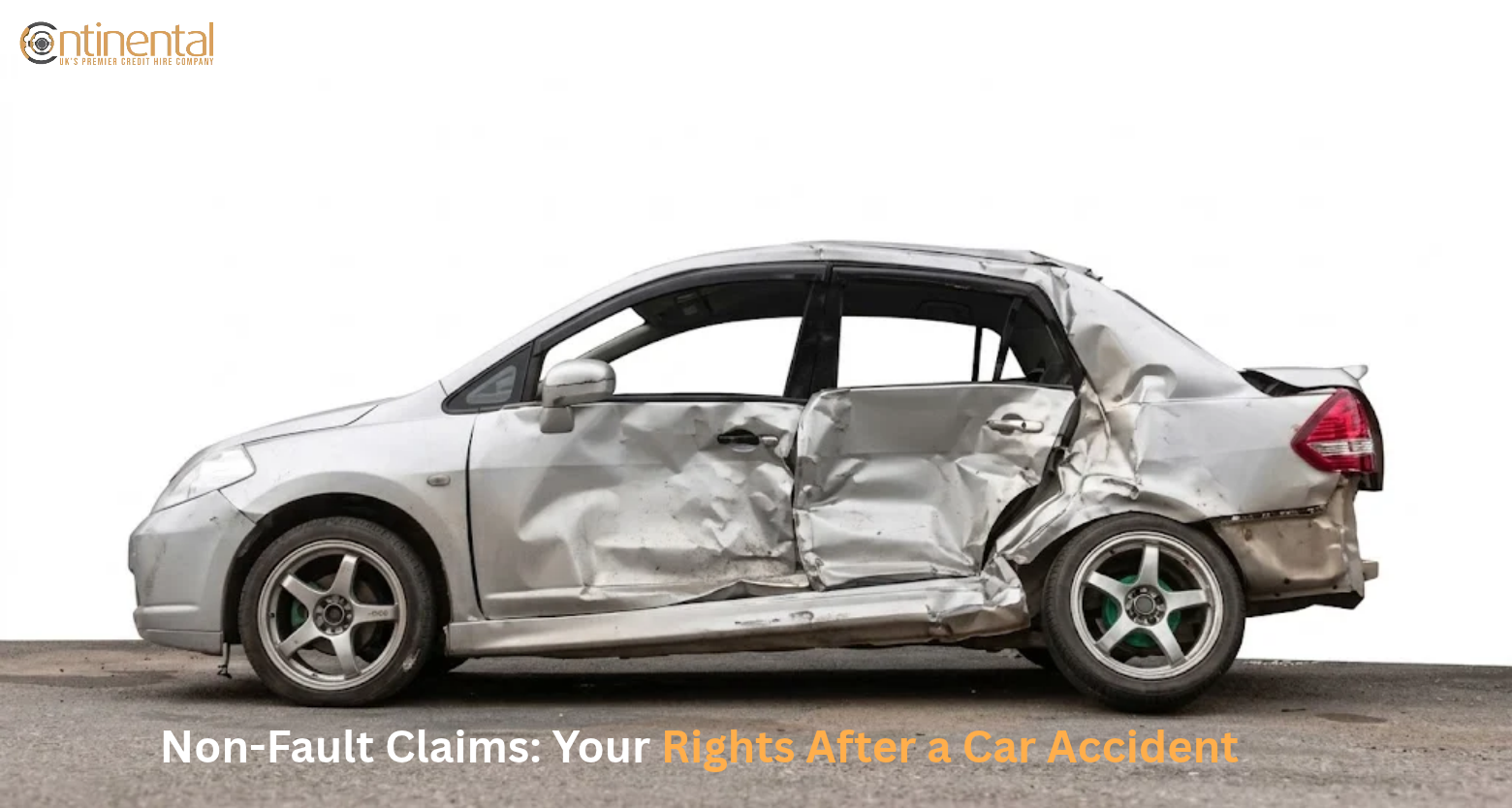
Non-Fault Claims: Your Rights After a Car Accident
A non-fault accident car hire UK service gives you a replacement car

Home » Automotive Blog » Understanding Phantom Witness Fraud in Motor Insurance Claims
Phantom witness fraud is the use of a false or misleading witness account to support an insurance claim after a road accident. The person presented as an independent witness may not have been at the scene, or may have a hidden connection to someone involved. This can make an innocent motorist appear responsible for a collision they did not cause. It may occur in staged or intentionally caused collisions, but a witness appearing later or giving an unusual account is not, by itself, evidence of fraud. This guide explains what phantom witnesses are, warning signs, and how the accident scene and witness account can be checked.
Phantom witness fraud describes a situation where someone is presented as an eyewitness when their account of the accident may not be genuine. The person may claim to have watched the collision when they were not actually there. In another situation, they may have been nearby but give a false version of what they saw.
“Phantom witness” helps describe suspected false witness evidence, but it is not itself a separate criminal offence under UK law. If someone knowingly provides false information to support a dishonest claim, the conduct may fall within wider fraud or other offences depending on the circumstances. Under the Fraud Act 2006, knowingly making a dishonest false representation with the required intention can amount to fraud by false representation.
This distinction matters. A witness who gets something wrong is not automatically committing fraud. Fraud involves dishonesty and the required intention. A genuine person can remember an accident incorrectly, especially after a sudden or stressful collision.
One possible form involves a person being presented as a witness even though there is no genuine eyewitness account behind the evidence. The identity itself may be fabricated, or another person’s details may be used. Supporting paperwork could also be false or misleading.
The key issue is whether the person actually witnessed the accident and whether the information supplied about them is genuine.
A different situation involves a real person who did not witness the collision but agrees to provide an account saying that they did. In a dishonest arrangement, that person could have a connection with someone involved in the claim. They might also be offered money or another benefit for taking part.
However, a witness knowing one of the parties does not automatically make their evidence false. A personal connection does not automatically make a witness’s evidence false or unreliable. Their relationship simply becomes something that may need to be considered when assessing credibility.
Fake witness evidence can form part of wider crash-for-cash fraud.
UK insurance guidance describes crash-for-cash activity as involving accidents that are deliberately staged, induced or fabricated to create fraudulent claims. An induced accident can involve a fraudster deliberately causing a collision with an innocent motorist and then presenting that driver as responsible.
For example, a driver may brake suddenly to cause a rear-end collision. If a false witness is then introduced, that person could be used to support an inaccurate account of how the collision happened.
The witness therefore becomes another piece of evidence supporting the dishonest version of events. A disputed witness account does not prove that a crash-for-cash scheme exists. The circumstances and evidence need to be investigated before such a conclusion can be reached.
One unusual detail does not prove that a witness is fake. Suspicion becomes more reasonable when several parts of the account do not fit the available evidence. The witness’s identity, timing, location, and description of the accident can all be checked against other information.
If a witness was not reported at the time of the accident but comes forward later, their evidence may be examined more carefully. This is especially so if their identity emerges only after a disagreement develops over fault. For example, their details may only emerge after the insurers begin arguing about who caused the collision.
That timing alone is not evidence of dishonesty. A genuine witness might leave before details are exchanged, find the relevant person later, or decide to come forward after learning that their evidence could help. The important question is whether there is a reasonable explanation for the delay.
The wording of a witness statement may sometimes raise questions, particularly if the description seems to closely support one party’s version of events. However, the writing style should not be treated as proof that a statement is false. A solicitor or another professional may help prepare or record a witness statement.
Instead, look at the facts being described.
Does the person explain where they were standing? Can their account be matched with the road layout? Do their observations fit the timing and sequence of the collision?
These questions are more useful than simply deciding whether the statement sounds formal.
A witness may be based some distance from the location where the accident occurred. That does not make the person suspicious by itself. People travel for work, shopping, appointments, family visits and many other reasons. The key consideration is whether the witness has a credible explanation for being at the scene.
Questions about a witness’s address, employment or movements should be dealt with through the insurer, solicitor or appropriate investigator. Drivers should use the appropriate channels rather than trying to obtain private information themselves.
A witness needs to have had a reasonable opportunity to see the event they describe. Consider the position they say they occupied.
Could they see the vehicles clearly? Was anything blocking their view? Were they facing the right direction? Was the distance realistic?
A person can be genuinely present but still have had only a limited view. For example, a witness standing around a blind corner may have seen the aftermath but not the moment of impact. That distinction can be important when assessing their evidence.
The witness’s description should be compared with other available information.
Potential areas to check include:
One incorrect detail does not establish fraud. People can make honest mistakes when recalling a stressful event. However, several unexplained contradictions can justify closer investigation.
Another point worth examining is how closely the witness’s version matches one driver’s account. A genuine witness may agree with one driver’s description because that is what they actually saw.
The concern arises when the statement contains details that the witness could not reasonably have known from their claimed position, or when the account changes to match new information later provided by another party.
Again, this requires investigation rather than an immediate accusation.
A witness statement should not normally be judged on one detail alone. The insurer or solicitor may cross-check the evidence against photographs, vehicle damage, dashcam or CCTV footage, witness information and the drivers’ accounts of what happened.
This broader approach is important because a genuine witness can make mistakes, while a convincing false statement can contain apparently accurate details.
The question is therefore not simply whether the witness supports one side. It is whether their identity, location, observations, and account are consistent with the other evidence.
Digital evidence can help test whether a supposed witness could have been at the accident scene and whether their account fits the available facts. However, no single recording, location record, or online profile should be treated as automatic proof of fraud.
Investigators normally compare several sources of information. This can reveal whether the witness’s claimed location, timing, and description are consistent with the accident.
Dashcam recordings can provide valuable visual evidence of the events surrounding a collision. A front-facing camera may capture the vehicles, road position, and events leading up to the impact. A rear camera can provide another view of what was happening behind the vehicle.
CCTV can also be useful. Cameras outside shops, businesses, car parks, and other premises may have recorded the road or pavement around the accident. If a witness says they were standing near the collision, investigators may compare the claimed position with available footage.
The timing matters too. A recording showing the road before, during, and shortly after the accident may help establish whether the person was actually present. However, CCTV has limits. Cameras may not cover the exact location, recordings may be overwritten, and poor lighting or image quality can make identification difficult.
Modern vehicles and mobile devices can create records that help establish movements and timing.
Depending on the case, relevant information may include:
For example, location information may indicate that a person’s phone was somewhere else around the time of the collision.
However, mobile phone mast data does not normally provide the same level of precision as GPS. A phone connecting to a particular mast does not necessarily place someone at one exact point.
Likewise, a phone’s location does not always prove where its owner was. Someone else may have been carrying the device. For this reason, location information is best treated as one part of the evidence rather than a standalone answer.
Digital files can sometimes contain information about when and how they were created.
Photos, videos and documents may have metadata showing details such as:
This can sometimes help investigators establish whether a photograph or recording fits the timeline being presented. Metadata also has limitations. Some information can be removed when a file is edited, converted, or shared.
Dates can also reflect later processing rather than the moment an event occurred. Therefore, metadata should be checked alongside the original file and other evidence.
Publicly available social media information can sometimes reveal relationships that were not disclosed in a claim. For example, investigators may identify connections between a supposed independent witness and someone involved in the accident.
They may look for publicly visible evidence of:
This type of information can raise questions about whether a witness is genuinely independent. However, having a social media connection does not prove that a witness has given false evidence. People can know each other without being involved in fraud.
Specialist insurance investigation teams may use wider information sources when examining suspicious claims. The purpose is to test the evidence and identify links that may otherwise be missed.
The strongest investigations do not depend on one digital clue.
Evidence | What it may help establish | Important limitation |
Dashcam | What happened on the road and when | May not capture the whole scene |
CCTV | Whether people or vehicles were present | Coverage and retention periods vary |
GPS/location data | Possible movements around the relevant time | Accuracy and availability vary |
Mobile network data | Broad location information | Usually less precise than GPS |
File metadata | Possible file creation or device details | Data may be removed or altered |
Public social media | Possible relationships or associations | A connection does not prove fraud |
The aim is to compare the evidence, not to declare a witness fraudulent because of one inconsistency.
Providing deliberately false evidence to support an insurance claim can have serious consequences for everyone involved. The outcome depends on what happened, the evidence available, and whether criminal or civil proceedings follow.
A person who makes an honest mistake is not in the same position as someone who knowingly provides false information to obtain money.
Knowingly making a false representation dishonestly may amount to fraud by false representation under the Fraud Act 2006.
The Act provides for a maximum sentence of 10 years’ imprisonment on conviction on indictment, as well as the possibility of a fine. The actual sentence depends on the circumstances of the offence and the court’s decision.
Other offences may also be relevant depending on what the person did and whether the matter reached court. For example, conspiracy to defraud can apply in appropriate cases where people work together as part of a dishonest scheme.
Perjury is different again and should not be treated as an automatic charge whenever a witness lies. It concerns false statements made in circumstances covered by the relevant law.
Fraud can also affect the civil claim itself. A court may find that a claimant has been fundamentally dishonest. This can have serious consequences for the claim and the costs position.
For example, the Qualified One-Way Costs Shifting protection available in many personal injury cases can be affected where a claim is found to be fundamentally dishonest. Under the Civil Procedure Rules, a court can permit costs orders against the claimant to be enforced in such circumstances.
Giving dishonest evidence may lead to consequences for a witness, depending on the circumstances and their role in the proceedings. If false evidence has been given to a court, further legal action may be considered.
A concern over false evidence from one witness can raise broader issues within the case. If the witness’s evidence was important to proving liability, questions about that person’s credibility may affect the wider claim.
An insurer may review the wider circumstances of the case, including:
This does not mean that finding one problem automatically makes every part of a claim false. Each issue should be assessed on its own evidence.
Proven insurance fraud can create long-term problems. Insurers may record confirmed fraud information within relevant industry systems, including the Insurance Fraud Register (IFR), where its criteria are met.
The consequences can include difficulty obtaining insurance in the future, cancellation or refusal of cover, and closer scrutiny of later applications. The precise effect depends on the circumstances and the insurer’s procedures.
A person should therefore never assume that a false witness statement is a harmless way of strengthening a claim. The potential consequences can be far greater than the value of the original claim.
Motor insurance accounts for the highest volume of identified insurance fraud cases in the UK.
The latest Association of British Insurers figures, published on 6 October 2026, show that insurers detected £1.34 billion of fraudulent insurance claims during 2025. Motor insurance accounted for 55% of detected fraudulent claims, with 51,900 fraudulent motor claims worth £625 million identified.
2025 figure | Detected fraud |
Total insurance fraud detected | £1.34 billion |
Detected fraudulent motor claims | 51,900 |
Value of detected motor fraud | £625 million |
Motor’s share of detected fraudulent claims | 55% |
The figures show why insurers invest heavily in identifying suspicious claims. The ABI reported that the total value of detected insurance fraud increased by 14% from the previous year, even though the number of detected fraudulent claims fell slightly.
For motor insurance, the number of detected fraudulent claims was also lower than the previous year, while the value remained substantial. This points to an important issue for motorists: fraud investigations are not limited to obviously staged collisions.
Insurers may examine unusual witness evidence, inconsistent accounts, exaggerated losses, and other information when assessing whether a claim is genuine.
A supposed independent witness can appear to strengthen a disputed claim. That is why insurers may examine more than the statement itself. They can compare the witness’s account with the physical scene, recordings, timing, location information, and other available evidence.
The purpose is not to reject a claim simply because something looks unusual. Instead, the aim is to establish whether the whole account remains credible when checked against independent evidence. For an innocent motorist facing a disputed claim, this is an important distinction.
You do not need to prove that a witness is fraudulent yourself. Your priority should be to preserve the evidence you already have and tell your insurer or legal representative about anything that appears inconsistent.
If you think a witness has given an inaccurate account, do not confront them or try to investigate them yourself. Keep your evidence safe and raise the concern with your insurer or solicitor.
If it is safe, take clear photographs of the accident scene. Photograph the wider accident scene, including the road layout, junction, lane markings, signs, nearby buildings, and the positions of the vehicles.
If you have dashcam footage, save the original file as soon as possible. This can prevent important footage from being overwritten.
If someone genuinely saw the collision, ask for their contact details if it is safe and appropriate. Record their name and contact information accurately. Do not tell a witness what to say or ask them to support your version of events. A genuine witness should give an account of what they personally saw.
If a witness later appears and something about their evidence concerns you, tell your insurer. Be specific.
For example, explain if their:
If you believe you were deliberately targeted in a crash-for-cash incident, you can also report your concerns to the police and the Insurance Fraud Bureau’s reporting service. The ABI advises motorists who suspect a crash-for-cash incident to gather information, take photographs when safe, and report their concerns.
If you have legal representation, give your solicitor the evidence and explain why you believe the witness account needs checking. They can decide what action is appropriate.
In civil proceedings, Part 18 allows a party to seek clarification or further information about matters in dispute where the requirements of the rule are met. It should not be treated as a general method for interrogating a witness.
Witness statements used in civil proceedings are normally verified by a statement of truth. Making or causing a false statement without an honest belief in its truth can potentially lead to contempt proceedings.
The table below is a guide to possible warning signs, not a fraud test. A genuine witness can make mistakes, while a suspicious-looking witness may have a perfectly reasonable explanation.
Point to check | Genuine witness | Possible concern |
Presence | There is a reasonable explanation for being at the location | Their claimed presence cannot be explained clearly |
Account | Describes what they personally observed | Includes details they may not have been able to see |
Timing | The reason for coming forward can be explained | Their involvement appears later without a clear explanation |
Identity | Their basic identity and contact details can be checked | Important details are unclear or inconsistent |
Connection | Any relationship with the parties is disclosed | A relevant connection appears to have been hidden |
Viewpoint | Their position gave them a reasonable view | Their claimed position appears blocked or unsuitable |
Other evidence | Their account broadly fits the available evidence | Their version conflicts with reliable evidence |
None of these points proves that someone is a phantom witness. They simply identify areas that may deserve further checking.
You cannot control what another person says after a collision. However, you can make your own account easier to verify. A dashcam can preserve events that may otherwise depend on memory. After an accident, save the footage before it is overwritten.
Likewise, photographs taken safely at the scene can preserve details that may later change, such as vehicle positions, road conditions, or visible damage.
Keep your accident documents together. This can include:
Most importantly, keep your account truthful and consistent. If you remember something differently later, explain the change rather than guessing. Do not add details simply because they appear to support your claim.
If you suspect fraud, report the specific concern to the appropriate organisation. You do not need to prove fraud yourself before raising a genuine concern.
Phantom witness fraud can make a genuine accident claim more difficult, especially when a false account is used to challenge liability. However, a late witness or unusual statement does not prove fraud on its own. The safest approach is to preserve your evidence, record what you know, and raise specific concerns with your insurer or solicitor. Dashcam recordings can provide useful visual evidence of the events surrounding a collision. You should also avoid confronting a witness or attempting your own investigation. If you need practical help after a non-fault accident, Continental Car Hire can explain the accident-management support available for eligible cases.
A witness can correct or clarify their evidence. If the statement is already being used in proceedings, the process for changing it depends on the claim stage and the court’s directions.
Yes. Insurers can examine disputed witness evidence and compare it with photographs, CCTV, dashcam footage, vehicle damage and other accident information.
Keep your own evidence and explain the concern to your insurer or solicitor. Avoid contacting, threatening or questioning the witness yourself, as this could complicate the matter.
CCTV may help establish whether someone was present at a particular location and time. However, camera coverage, image quality, and recording periods can limit what it proves.
Yes. A passenger can give evidence about what they saw. Their relationship with a driver should be disclosed and considered alongside the other available evidence.
A false witness account may affect a liability dispute, especially where little other evidence exists. However, insurers and courts can assess the statement against the wider evidence.
Potentially. Deliberately false information may lead to criminal or civil consequences, depending on the conduct, where the statement was made, and the circumstances of the case.
You can report your concerns to your insurer and provide supporting evidence. Suspected insurance fraud can also be reported to the Insurance Fraud Bureau through its reporting service.
A fraud concern may lead to further checks or delay, but it does not automatically make a genuine claim invalid. Your evidence and truthful account still matter.
Yes. Witness evidence can be questioned or challenged through the appropriate legal process. The exact procedure depends on the stage of the claim and type of proceedings.
If you have been involved in a non-fault accident and need help with claim management, a replacement vehicle, recovery, storage or accident repairs, Continental Car Hire can assess your circumstances and explain the support that may be available.
CCH also provides credit hire and PCO replacement vehicles for eligible cases. Its services include fast claim management and dedicated claim handlers, helping customers deal with the practical side of a road traffic accident.
With 22+ years of experience and a 200+ vehicle fleet, Continental Car Hire can assess your circumstances and explain what support may be available. CCH also offers a free consultation, while eligible customers may be able to access replacement-vehicle support without upfront hire costs, depending on the claim circumstances.
Need Support After a Non-Fault Accident? Call Continental Car Hire at +44 208 743 7469.
A non-fault accident car hire UK service gives you a replacement car

A non-fault accident car hire UK service gives you a replacement car

A non-fault accident car hire UK service gives you a replacement car
A non-fault accident car hire UK service gives you a replacement car
A non-fault accident car hire UK service gives you a replacement car
A non-fault accident car hire UK service gives you a replacement car
Copyright © 2026 Continental Car Hire Ltd. All Rights Reserved.
Continental Car Hire Ltd is authorised and regulated by the Financial Conduct authority (FRN 711301)