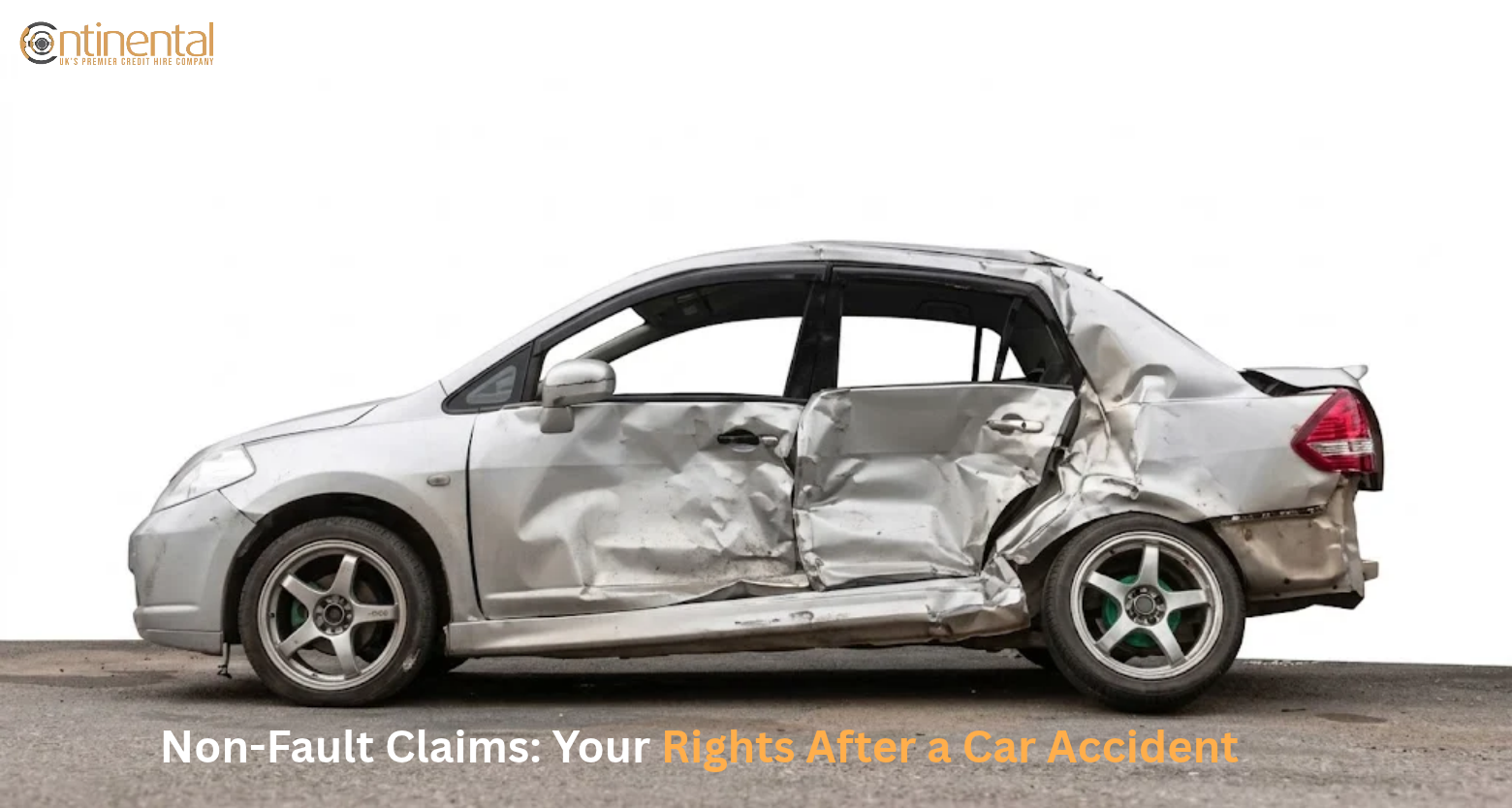
Non-Fault Claims: Your Rights After a Car Accident
A non-fault accident car hire UK service gives you a replacement car

Home » Automotive Blog » How to Check If a Car Has Been in an Accident in the UK
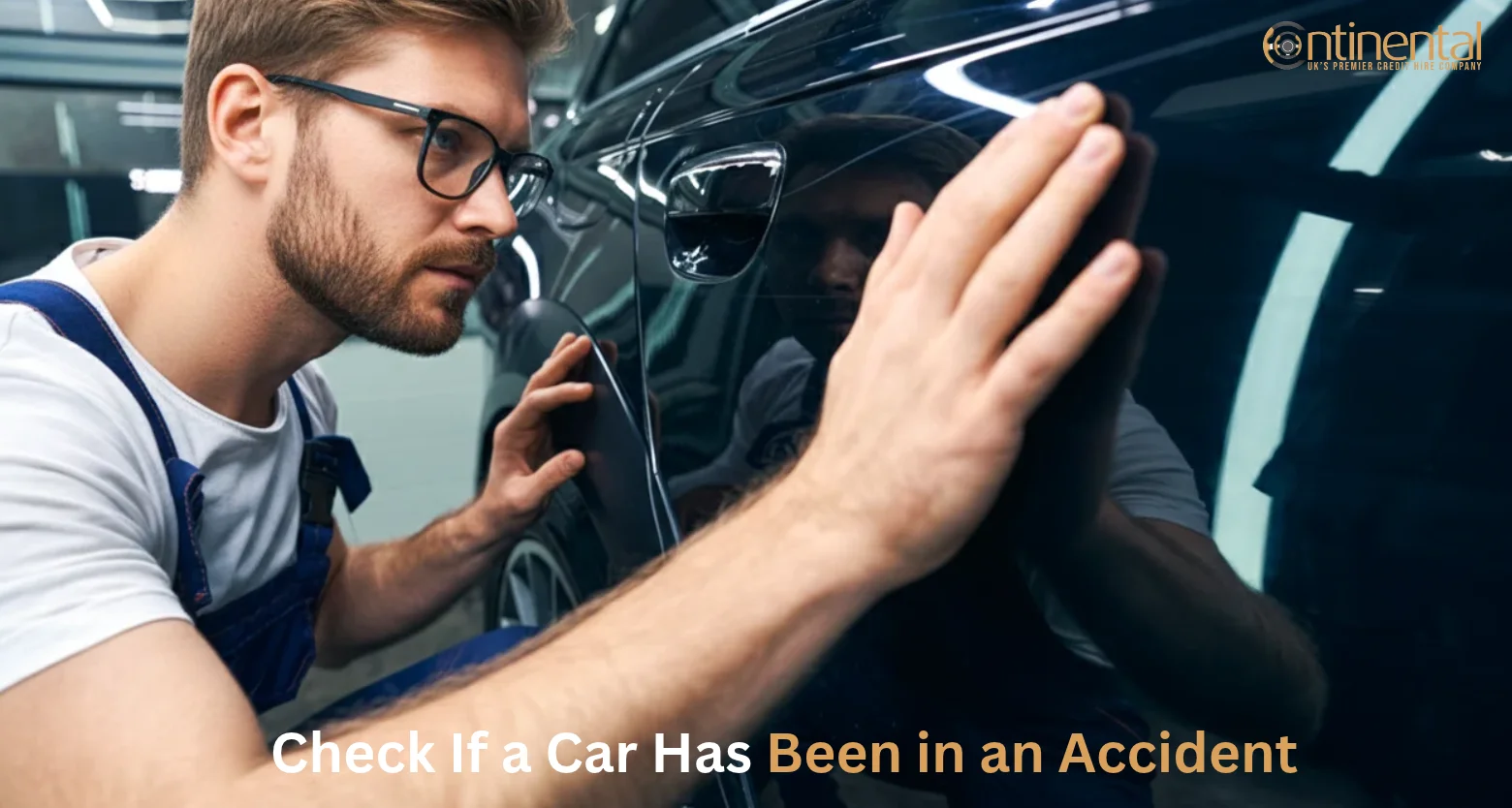
The most reliable way to check if a car has been in an accident is to combine MOT, DVLA, V5C, VIN, history, and physical checks rather than rely on one record. A free check can reveal useful information, but it cannot prove that a car has never been damaged.
If you are considering a used car, start with its registration number. Check the MOT history and DVLA information before you view it. Then, compare the V5C with the vehicle and check the VIN. You should also look for any recorded write-off history. Finally, inspect the car for signs of previous repairs. If the records and vehicle do not match, pause the purchase and investigate further.
You do not need to pay for a vehicle history report before carrying out the basic checks. Check the registration number, MOT history, DVLA information and V5C before buying a used vehicle.
Before viewing the car, ask the seller for the:
You can then compare the information supplied by the seller with the official records. This can quickly highlight basic inconsistencies before you spend time or money on the vehicle.
The free GOV.UK MOT history service is a useful starting point. Using the registration number, you can see previous MOT results, including whether the vehicle passed or failed and the mileage recorded at each test. For vehicles tested in England, Scotland and Wales, the service can also show where tests were carried out and which parts failed or had minor problems.
Look through the full history rather than checking only the latest MOT. Pay attention to:
These records can help you understand how the vehicle has been maintained and whether further questions are needed.
However, MOT history is not the same as accident history. An MOT records the result of a vehicle test at a particular time. It does not provide a complete record of every collision, repair or bodywork job. Therefore, a car with a clean MOT history may still have had accident damage repaired previously.
The GOV.UK vehicle enquiry service lets you check information held by DVLA using the vehicle’s registration number. Depending on the vehicle, this can include its tax and SORN status, MOT expiry, date of first registration, last V5C issue date, year of manufacture, engine size, fuel type and emissions information.
Compare these details with the seller’s advert and the vehicle itself.
For example, if the seller describes a particular engine or model but the DVLA record shows something different, do not ignore it. First establish whether the information is simply incorrect or whether there is a more serious issue with the vehicle’s identity or documentation.
The V5C, commonly called the log book, is another important part of the check. Ask to see it before buying and compare its details with the car and the information you have already checked.
GOV.UK advises buyers to make sure the details in the V5C match the vehicle. You should also check the vehicle identification number and engine number against the information recorded in the log book.
Pay attention to:
Also check that the V5C itself appears genuine. GOV.UK advises buyers to check the document for the appropriate DVL watermark and provides specific guidance on potentially stolen V5C documents.
One important point is often misunderstood: the registered keeper is not necessarily the legal owner of the vehicle. The V5C records the registered keeper, so you should not treat the document alone as proof of ownership.
Free government checks are a good starting point, but they may not tell you everything about a vehicle’s accident history. If a vehicle has been recorded as an insurance write-off, that history can be particularly important before you buy it.
A vehicle can be written off when an insurer decides it should not be repaired in the normal way. Some written-off vehicles can later be repaired and returned to the road, while others must not return to road use. GOV.UK advises buyers to carry out additional checks when considering a repaired written-off vehicle.
The current categories you may encounter are A, B, S and N.
Category | Meaning | Can it return to the road? |
A | Vehicle is assessed as a total loss and is for scrap | No |
B | Vehicle cannot return to the road, although some parts may be salvaged | No |
S | Repairable structural damage | Yes, if properly repaired |
N | Repairable non-structural damage | Yes, if properly repaired |
GOV.UK guidance identifies Category A and B vehicles as write-offs that are treated as waste, while Category S means repairable structural damage and Category N means repairable non-structural damage.
A Category S or N history therefore does not automatically mean the car is currently unsafe. However, it does mean you should investigate how the vehicle was damaged and how it was repaired.
A write-off category tells you the classification of the vehicle’s damage. It does not, by itself, give you a complete repair history.
For example, Category S tells you that the vehicle had structural damage that was considered repairable. It does not tell you exactly which components were damaged, who repaired them, or how well the work was completed.
That is why GOV.UK recommends checking the vehicle’s history and documentation and considering an independent inspection when buying a repaired written-off vehicle.
Being involved in an accident does not automatically mean the car will be written off. A vehicle may have been damaged in a collision and then repaired without being classified as a total loss. This can happen with less severe damage, particularly where the repair does not result in an insurance write-off.
A repair may also have been handled privately rather than through an insurance claim.
So, a vehicle with no recorded write-off does not necessarily have a clean accident history.
This is one reason you should combine official records with a physical inspection. A history check tells you what has been recorded; it cannot guarantee that every previous repair or accident will appear in the available data.
If you are considering a previously written-off vehicle, check that you can obtain suitable insurance before completing the purchase. GOV.UK’s consumer guidance warns that insurance for a repaired written-off vehicle can sometimes cost more and that not every insurer will automatically provide cover.
Therefore, do not base your decision only on the purchase price. Check the vehicle’s past, repair quality, insurance status and current condition before making a decision.
Important: The official DVLA and MOT systems discussed above mainly relate to Great Britain. The vehicle-testing arrangements in Northern Ireland differ from those elsewhere in the UK, with the Driver & Vehicle Agency (DVA) responsible for testing and separate MOT history information. GOV. UK MOT service states that Northern Ireland results available online date from 2017, while DVA is responsible for vehicle testing there.
The registration number, VIN, and V5C work together to confirm that the vehicle you are viewing matches its official records. They do not all provide the same information, so it is useful to understand what each one tells you.
The registration number is usually the easiest way to begin a UK vehicle check. It provides access to GOV.UK MOT history and DVLA vehicle information and is also widely used by private vehicle-history companies.
Before viewing the car, compare the registration number and vehicle details supplied by the seller with the information held by DVLA.
If something does not match, do not simply assume that it is an accident-related problem. It could be an error in the advert or another administrative issue. However, you should understand the difference before continuing with the purchase.
The VIN, or Vehicle Identification Number, is a unique identifier for the vehicle. Confirm that the VIN shown on the vehicle and the V5C are identical.
GOV.UK specifically advises buyers to check the VIN and engine number and make sure they match the details in the log book. According to the Department for Transport, the VIN can help when checking a vehicle’s history.
This is important because a history check is only useful if you are checking the correct vehicle. A VIN can help identify the vehicle and can be used with some history-check services, but the VIN itself is not a public database of every accident or owner.
Searches for “previous owners” often lead people to VIN checks. However, there is an important distinction between an owner and a registered keeper.
The V5C records the registered keeper and the number of previous keepers. It does not act as a public ownership register. DVLA also states that information about a current or previous registered keeper must be requested separately. If you are requesting information about somebody else’s vehicle, you generally need to show reasonable cause.
So, you cannot simply enter a VIN and obtain a public list of everyone who previously owned the car. Before buying a used car, check that the V5C, registration, VIN, and history details are consistent. If you need specific registered-keeper information, DVLA has a separate request process.
Online checks can show what information has been recorded about a vehicle. They cannot replace looking carefully at the actual car.
This matters because accident damage may have been repaired without becoming an insurance write-off. A privately repaired vehicle, for example, may not have the same recorded history as a vehicle that was declared a total loss.
The aim of a physical inspection is not to prove that an accident happened from one small defect. Instead, look for several signs that may justify further questions or a professional inspection.
Walk around the vehicle in good daylight and look at the panels from different angles.
Possible signs of previous repair work can include:
These signs do not prove that the car has been in an accident. A panel may have been replaced because of a parking scrape, corrosion, or another type of damage. However, several inconsistencies in the same area are worth investigating.
Look at headlights, rear lights, mirrors, windows, badges, and exterior trim. A single replacement component is not automatically evidence of a collision. However, if one headlight looks substantially newer than the other and the surrounding bodywork also appears repaired, ask the seller for an explanation.
The same applies to other recently replaced components. The main point is not just whether the part appears new, but “Why does it look different, and does the explanation fit the vehicle’s history?”
More serious accident damage can involve areas beneath the visible body panels. GOV.UK recommends that buyers considering a repaired written-off vehicle have it inspected by an independent expert or engineer who can identify structural damage.
As a buyer, you should not try to make a professional judgement about structural repairs from a quick visual inspection alone. Instead, look for anything that appears inconsistent or poorly repaired and arrange a proper inspection if you have concerns.
Driving the car may reveal problems that are difficult to spot while it is parked. It is sensible to pay attention to how the car steers, brakes and behaves on the road.
For example, notice whether there is:
These symptoms have many possible causes and do not automatically mean the vehicle has suffered accident damage. A qualified inspection is more appropriate if you suspect a problem that cannot be explained during the viewing.
Free government checks are an important starting point, but they do not contain every type of information that could matter when buying a used vehicle.
A private vehicle history check can bring together additional data and may identify issues such as a previous write-off, stolen status, outstanding finance, or a mileage discrepancy. GOV.UK specifically recommends considering a private history check when assessing a repaired written-off vehicle.
Outstanding finance is not the same as accident history, but it is an important part of checking a used car before purchase. A private history check may show whether finance is recorded against the vehicle. This can help you identify a potential problem before handing over your money.
Citizens Advice also recommends considering a private history check because it can reveal whether money is still owed on the vehicle, alongside other serious history issues. Do not assume that an ordinary MOT or DVLA check will provide the same information as a commercial history check.
A vehicle history check may also identify whether a vehicle has been reported stolen. This is another reason to compare the physical vehicle with its documents. GOV.UK advises buyers to check the V5C and make sure the vehicle details match the information provided by the seller and DVLA. If the vehicle identification details do not match, stop and establish why before proceeding.
Mileage is another important part of a vehicle’s history. Compare the current odometer reading with the mileage recorded during previous MOT tests and with any available service or repair records. A noticeable discrepancy with no clear explanation should be examined more closely.
However, a mileage discrepancy does not automatically prove that the odometer has been deliberately altered. Recording errors can happen, so the seller should have an opportunity to explain an inconsistency. The important point is to establish a credible history before you buy.
A private history check can provide useful additional information, but it should not be treated as a guarantee that a vehicle has never been damaged. The information available depends on the data sources used by the provider and what has previously been recorded about the vehicle.
A more complete approach is to combine:
No single report can replace all of these checks.
Ask to see the available service history, invoices, and repair records.
These documents can help explain:
A missing invoice does not automatically mean that a repair never happened. Likewise, a complete service history does not prove that a vehicle has never been in an accident. Use the documents as another part of the overall picture rather than treating one record as conclusive evidence.
Once you have checked the online records, compare them with the actual vehicle. This final step can reveal inconsistencies that a database search alone may not explain.
Check that the:
A difference in the records does not by itself confirm that the car has been accident-damaged. Ask the seller for an explanation and verify the information before proceeding.
The current odometer reading should make sense when compared with previous MOT readings and service records.
A sudden unexplained change deserves further investigation. However, an incorrect MOT mileage entry does not automatically mean the odometer has been deliberately altered because recording errors can occur.
Look at the overall mileage pattern rather than relying on one figure.
Service invoices and repair records can help explain changes in the vehicle’s condition.
Look for evidence of:
If the seller says the vehicle has never had bodywork, but the records or physical inspection suggest otherwise, ask for clarification.
A missing invoice does not prove that work was never completed. Likewise, a complete service history does not prove that a car has never been involved in an accident.
Accident history is not the only safety issue worth checking before buying a used car.
GOV.UK provides a vehicle recall service that allows you to check for safety recalls using the registration number. You can also check recalls by manufacturer, model and year if you do not have the registration number.
A recall does not mean the vehicle has been in an accident. It means the manufacturer or relevant authority has identified a safety issue that may require attention.
Therefore, treat recall information as a separate part of your pre-purchase check.
An independent inspection can be particularly useful when the vehicle has a recorded write-off, unexplained repair signs, or inconsistencies between its documents and physical condition.
Obtaining an independent expert report or having a repaired written-off vehicle inspected by an engineer who can identify structural damage.
This can be more useful than trying to decide the condition of a repaired vehicle from photographs or a short viewing.
The exact inspection will depend on the provider and service level, but a professional assessment can help identify problems that may not be obvious during a normal viewing.
This may include checks of:
An inspection should not be treated as a guarantee that a vehicle will never develop a fault. Its purpose is to give you a more informed assessment before you commit to the purchase.
Consider stopping the buying process until you have more information if:
You do not need to prove that something is wrong before taking a step back. If important information cannot be verified, it is reasonable to delay the purchase until you have clearer evidence.
A car should not be judged by one MOT advisory, one replaced panel or one previous repair alone. Instead, consider the history, documentation, physical condition and seller’s explanation together.
A previously repaired vehicle is not automatically unsafe. GOV.UK notes that some written-off vehicles can be repaired and returned to the road, although buyers should carefully check the repair quality, history and condition before purchasing.
Likewise, a vehicle with no recorded write-off is not automatically accident-free. Some damage may never appear in the records available to you.
The key question is therefore not simply:
“Has this car ever had an accident?”
It is:
“Can I verify the car’s history and condition before deciding to purchase it?”
If the answer is no, carry out more checks or arrange an independent inspection before paying.
Knowing how to check if a car has been in an accident means looking at more than one record. Use the registration number to check MOT and DVLA information, then verify the V5C and VIN against the car. Next, investigate any recorded write-off, finance, stolen status, mileage, or repair concerns. Finally, inspect the car and consider an independent inspection when something does not add up. Most importantly, remember that no single history check can reveal every previous accident. Combining official records, history information, and physical checks gives you a much clearer picture before buying.
For UK vehicles, start with GOV.UK for official MOT and DVLA information. These checks are free, although they do not provide a complete accident-history report.
There is no single checker that reveals everything. GOV.UK is the official starting point, while private history services can provide additional information from other data sources.
You do not need a dedicated app for the main official checks. GOV.UK provides online services for MOT history, vehicle information, and safety recalls using the registration number.
Check the V5C, MOT history, service records, and any available repair invoices. Compare their details with the vehicle and ask the seller to explain any gaps or inconsistencies.
Yes. You can use a free VIN decoder to verify basic vehicle information, but this does not guarantee a complete accident history. Additional records may require a paid history report.
For cars, motorcycles and vans, GOV.UK provides MOT results from 2005 onwards. In Northern Ireland, online results are available from 2017 onwards.
It can. GOV.UK says insurance for a previously written-off vehicle may sometimes cost more, and some insurers may not automatically provide cover.
Yes, where the vehicle is repairable and has been properly repaired. However, passing an MOT does not prove that previous accident repairs were completed correctly.
It may, depending on the records available to the particular provider. However, not every accident is recorded, so a clean history report cannot prove that no damage occurred.
Ask whether the car has suffered accident damage, been written off, or received bodywork, and request any available repair invoices or documentation that supports the vehicle’s history.
If you are reading this because your car has just been damaged in an accident that wasn’t your fault, your top priority is staying mobile. With over 22 years of experience and a fleet of more than 200 vehicles, Continental Car Hire specializes in getting drivers back on the road quickly. If your vehicle is currently undergoing repairs or damage assessment, you could be eligible for a replacement vehicle in as little as 90 minutes with zero upfront hire costs. Call Continental Car Hire right now on +44 208 743 7469 for your free, no-obligation consultation.
A non-fault accident car hire UK service gives you a replacement car

A non-fault accident car hire UK service gives you a replacement car
A non-fault accident car hire UK service gives you a replacement car
A non-fault accident car hire UK service gives you a replacement car
A non-fault accident car hire UK service gives you a replacement car
A non-fault accident car hire UK service gives you a replacement car
Copyright © 2026 Continental Car Hire Ltd. All Rights Reserved.
Continental Car Hire Ltd is authorised and regulated by the Financial Conduct authority (FRN 711301)