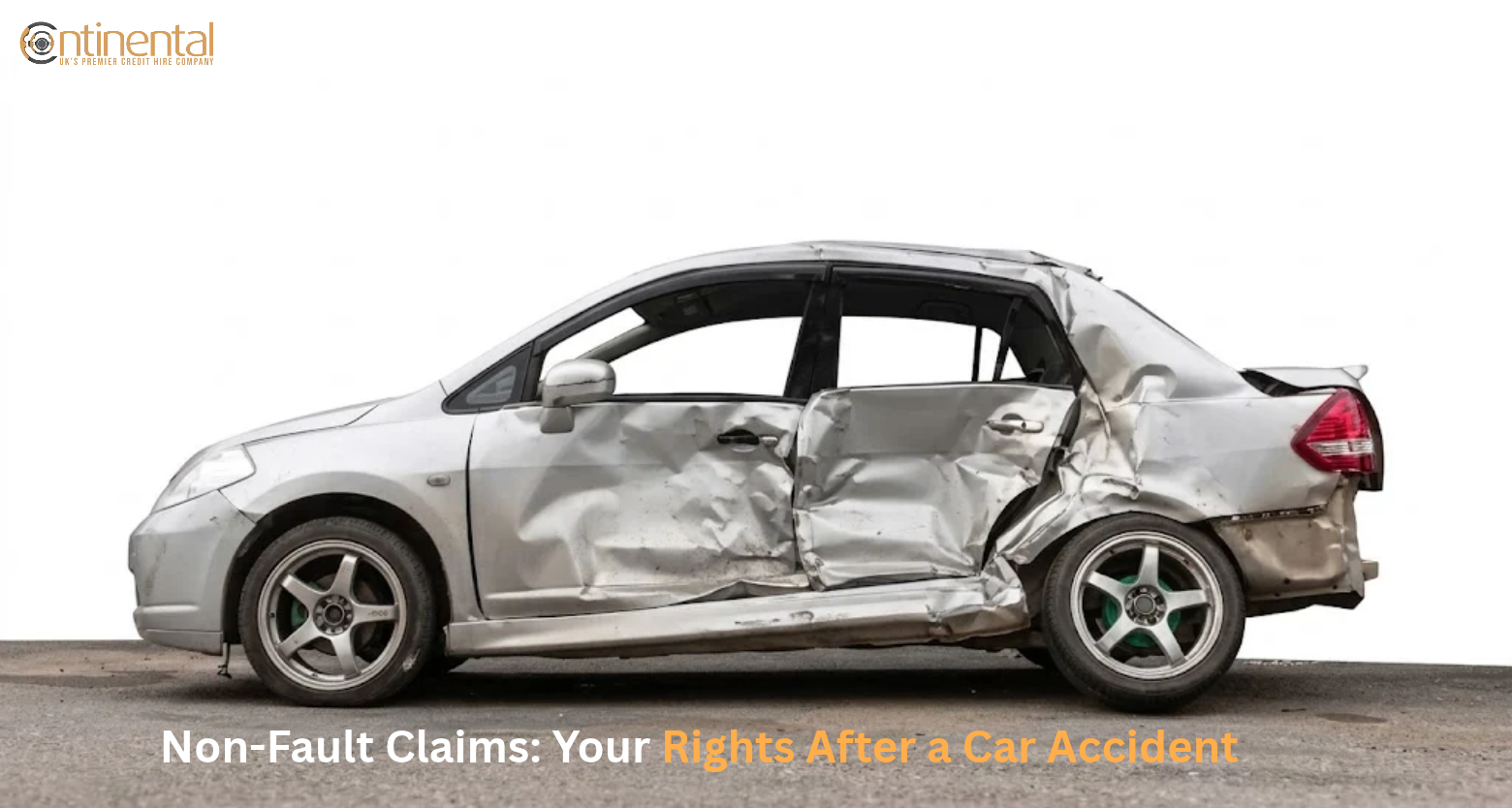
Non-Fault Claims: Your Rights After a Car Accident
A non-fault accident car hire UK service gives you a replacement car
Home » Automotive Blog » Fault Claim Explained: What Happens When You’re Responsible for an Accident
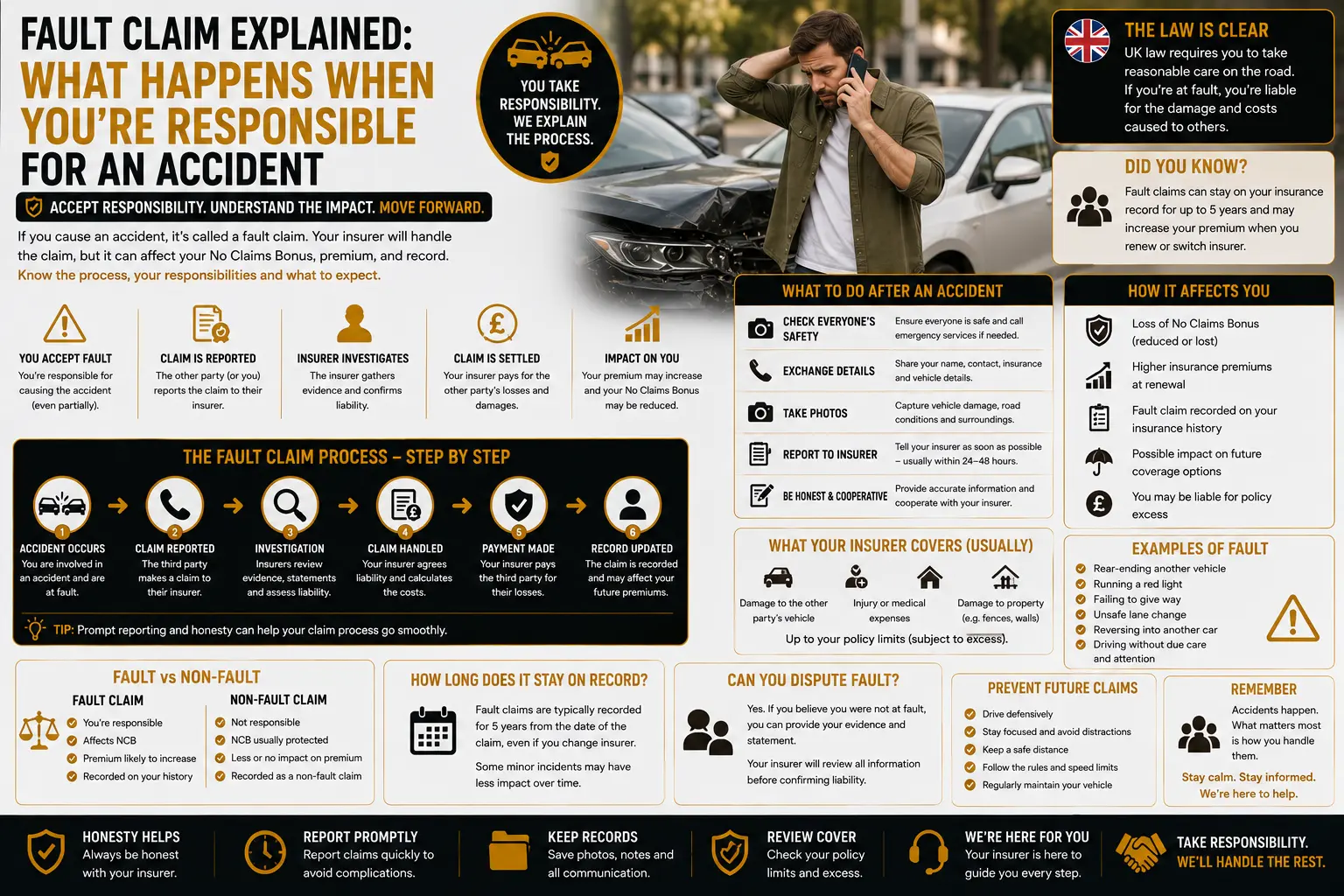
A fault claim can feel stressful, but your insurance is there to deal with the financial side of the crash. If you caused an at-fault accident, your insurer will usually handle covered costs claimed by the other driver. Comprehensive cover may also pay for damage to your own car. You still have to pay for your excess. Your no-claims bonus and future premium may also change. This guide explains what happens next and what you should do.
A fault claim usually means your insurer has paid costs that it cannot recover from another party. This often happens when you cause the accident.
However, the term can be confusing. An insurer may also record a claim as fault when nobody can be made to repay its costs. For example, this could happen if an unknown driver damages your parked car and leaves.
So, “fault” on an insurance record does not always mean a court decided you were to blame.
Start with safety. Stop the car and check whether anyone is hurt. Call emergency services if needed.
When it is safe, collect useful details:
Do not start arguing on the spot. Give your insurer the facts and let the evidence speak.
You should report the accident to your insurer promptly. This may still be required even if you do not plan to make a car insurance claim yourself.
Your insurer will normally deal with covered losses caused to the other person.
A third-party claim may include:
This is one of the main reasons motor insurance exists. Serious accident claims can become very expensive, so the insurer handles them under the policy terms.
You would not normally receive the other driver’s repair bill and have to pay it yourself when the claim is covered.
This depends on the cover you bought.
With comprehensive insurance, damage to your own car may be covered. Your insurer can arrange repairs or settle the loss under your policy.
Third-party-only insurance is different. It normally deals with damage you cause to other people, not repairs to your own vehicle.
Always check your policy before assuming your own damage is covered.
Your policy excess is the part of your own covered claim that you pay.
For example:
Repair cost: £2,000
Total excess: £400
Insurer pays: £1,600
Your excess may include a compulsory amount and any voluntary amount you chose.
When you caused the crash, there is normally no other driver from whom to recover that excess. Check your policy because the exact terms can vary.
A fault claim can reduce an unprotected no-claims discount. How much you lose depends on your insurer and policy.
The Financial Ombudsman says an unprotected discount is often stepped back after a fault claim. Insurers should explain their own method in the policy.
A protected no-claims bonus can help. It may protect the number of discount years after an allowed number of claims. However, it does not freeze the price of your insurance.
Your next insurance premium may rise, but there is no fixed increase.
Insurers look at many factors when setting a price. Your claims record is one of them.
This means a protected no-claims discount does not guarantee the same renewal quote. Your discount may stay protected while the starting price of the policy changes.
It is worth comparing quotes when renewal arrives.
Not every accident has one driver who is fully responsible.
Insurance liability can sometimes be split between both sides. The insurers may agree that each driver carries part of the responsibility.
Evidence can make a big difference. Dashcam footage can help insurers understand what happened and settle disputes more clearly.
Do not assume a disputed crash will automatically end as 50/50. The result should depend on the facts and available evidence.
Ask the insurer why it recorded the fault claim against you. Find out what evidence it used.
If something is missing, provide it. Useful proof may include dashcam video, photos, witness details, or a clear account of the road layout.
If you still disagree, use the insurer’s complaint process. You may be able to take an eligible unresolved complaint to the Financial Ombudsman Service. The Ombudsman does review disputes about fault records and no-claims discounts.
A fault claim does not mean you personally have to manage every cost after a crash. Your insurer should handle covered claims from the other side, while your own repair depends on the cover you bought. You may have to pay an excess, and your discount or renewal price may change. If blame is shared, evidence can affect how responsibility is divided. Keep photos, footage, and other records from the start. Clear evidence gives your insurer the best chance to reach the right outcome.
Tell your insurer about the accident. It will usually handle covered costs claimed by the other driver. Your own car depends on your level of cover.
Yes, covered third-party losses are normally handled by your insurer. This can include car damage or injury costs. Policy terms still apply.
Comprehensive insurance may cover your own car. Third-party-only cover normally does not. Check your policy for the exact cover.
You may pay an excess when claiming for your own vehicle. The amount depends on your policy. It does not normally work as a payment towards the other driver’s repairs.
It can reduce an unprotected discount. Protected cover may preserve your discount within its limits. Your renewal price can still change.
It may become more expensive at renewal. Claims history is one factor insurers can consider. There is no fixed increase for every driver.
The insurers may agree to split responsibility. Evidence will help decide the outcome. Costs may then be divided between both sides.
Yes, this can happen if the insurer cannot recover its costs. Insurance use of the word “fault” is therefore wider than simple blame. You can ask the insurer to explain its decision.
Yes, you can ask the insurer to review its decision. Send any evidence that supports your version of events. You can use the complaints process if the dispute remains.
Focus on exchanging details and recording what happened. Avoid arguing or guessing about blame. Give your insurer an accurate account afterwards.
A non-fault accident car hire UK service gives you a replacement car

A non-fault accident car hire UK service gives you a replacement car
A non-fault accident car hire UK service gives you a replacement car
A non-fault accident car hire UK service gives you a replacement car
A non-fault accident car hire UK service gives you a replacement car
A non-fault accident car hire UK service gives you a replacement car