
Non-Fault Claims: Your Rights After a Car Accident
A non-fault accident car hire UK service gives you a replacement car
Home » Automotive Blog » Loss Adjuster Explained: What They Do During an Insurance Claim
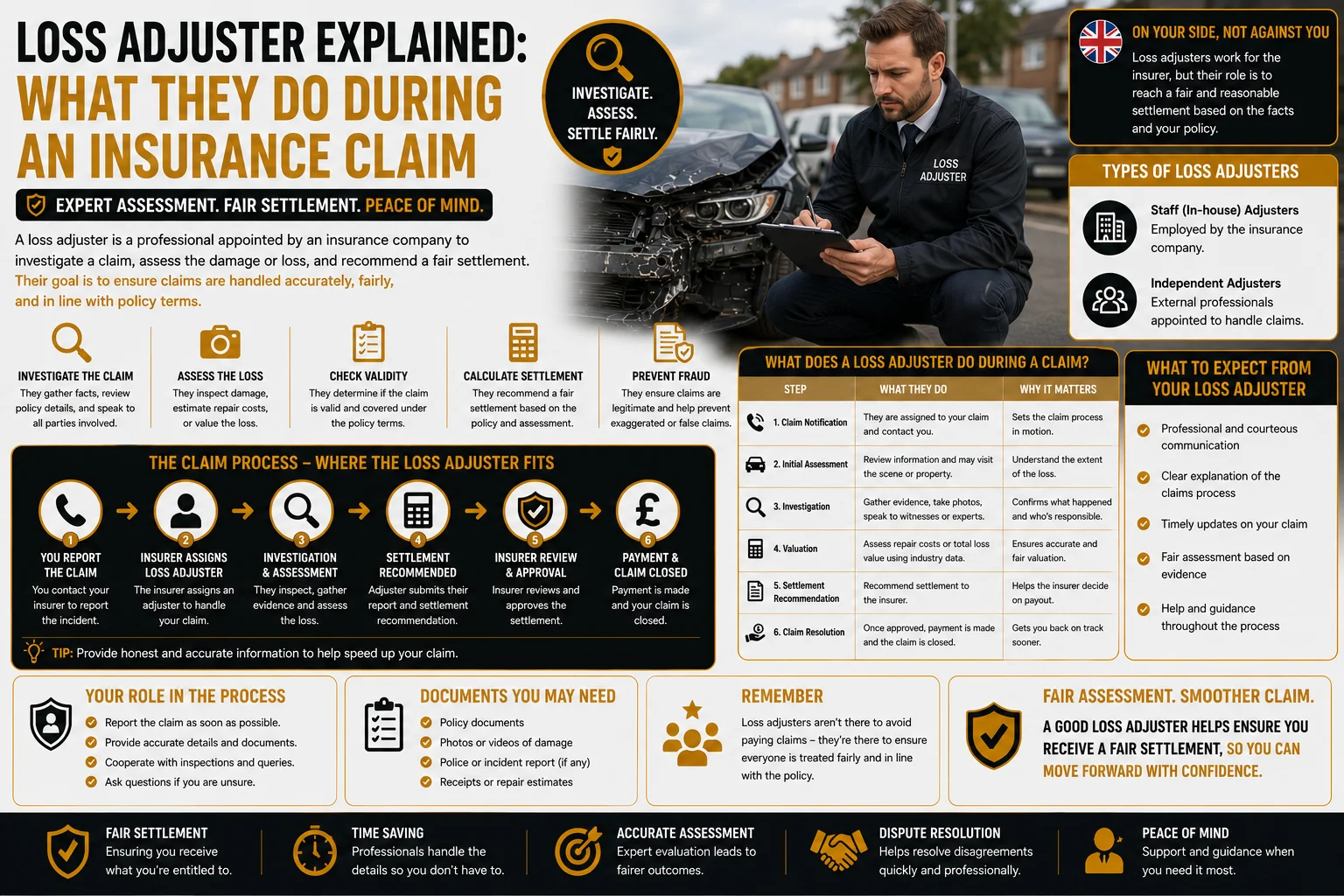
Loss adjuster involvement can feel worrying when you make a claim. In most cases, the insurer wants a closer look at the loss. The specialist may inspect damage, check your cover, and review costs. They may also ask for photos, receipts, and repair quotes. Their report can shape the next steps and the amount offered. This guide explains what happens, how to prepare, and what to do if you disagree.
The specialist checks what happened and how much was lost. They compare the damage with the coverage in your policy. They may also look at repair or replacement costs.
This insurance claim assessment helps the insurer understand the claim. CILA says adjusters may review the cause, loss, and policy cover before reporting back.
An insurer may want more detail before settling a claim. This is common when damage is large or hard to price. It can also happen when the cause needs more checks.
An appointment does not mean fraud is suspected. The aim is often to gather clear facts and values. A claim investigation can involve evidence, the cause, and the events around the loss.
The meeting is usually quite simple. The adjuster may inspect the damage and take photos. They will also ask what happened.
Have these ready if they apply:
Give clear answers. If you are unsure, say so. A short timeline can also help keep things clear.
The records will depend on your claim. You may need photos, invoices, or repair quotes. Proof that you owned an item can also help.
Keep copies of anything you send. Good records can make the damage assessment quicker and easier.
Usually, the insurer makes the final decision under your policy. The adjuster checks the facts and gives their findings. ABI says this work can include checking the damage, cover, and likely claim value.
The report can affect the final insurance settlement. Ask how any key figure was reached if it looks wrong.
The value depends on your loss and policy terms. Repair costs, replacement costs, limits, and excess may all matter. The age or state of an item may matter too.
Not every policy pays claims in the same way. Check your cover and ask for a clear cost breakdown. This way, you can spot an error easily.
Write a short account of what happened. Keep it factual and in date order. Then gather the records that support your claim.
You can also:
Do not rely on guesswork if you are not sure of the answer. Clear facts are far more useful than a long story.
An adjuster is commonly appointed by the insurer. A loss assessor is usually hired by the person making the claim. The assessor can help present and manage their side of the case.
If you choose an assessor, check the service first. Make sure you also understand any fees.
Ask the insurer to explain the point you dispute. Correct any factual errors and send more proof where useful. Another repair quote may help if the cost estimate is wrong.
If the problem remains, use the insurer’s complaint process. Eligible disputes may later be taken to the Financial Ombudsman Service. It can look at complaints about how an insurer handled a claim.
A loss adjuster can have a key role in how your claim moves forward. Their work checks the facts, damage, costs, and policy cover. Good records ensure that the process moves smoothly. Ask questions when a figure does not make sense. Correct mistakes with proof rather than guesses. Being prepared helps you stay in control of your claim.
They check what happened and review the damage. They also look at the policy and claim costs. Their findings are then sent to the insurer.
The insurer may need more detail about the claim. This often happens with large or complex losses. It does not always indicate a problem.
They may ask when the loss happened and what caused it. They may also ask what was damaged. Keep your answers clear and accurate.
Show useful photos, receipts, and repair quotes. You may also need significant evidence to prove your ownership. The exact records will depend on the claim.
The adjuster may suggest a value from the evidence. The insurer normally makes the final decision. Your payment can also be affected by the policy terms.
There is no one-size-fits-all timeline for all cases. A complex claim may need more checks or expert reports. Ask the insurer for an update if needed.
The adjuster may report concerns about coverage or evidence. The insurer normally makes the claim decision. Ask for written reasons if your claim is declined.
Ask how the amount was worked out first. Compare it with your quotes and records. Raise any clear error with the insurer.
An insurer commonly appoints the adjuster. A policyholder usually hires a loss assessor. The assessor helps the policyholder manage their side of the claim.
Ask for the reasons behind the finding. Send proof that supports your view. Use the insurer’s complaint process if you remain unhappy.
A non-fault accident car hire UK service gives you a replacement car

A non-fault accident car hire UK service gives you a replacement car

A non-fault accident car hire UK service gives you a replacement car

A non-fault accident car hire UK service gives you a replacement car
A non-fault accident car hire UK service gives you a replacement car

A non-fault accident car hire UK service gives you a replacement car