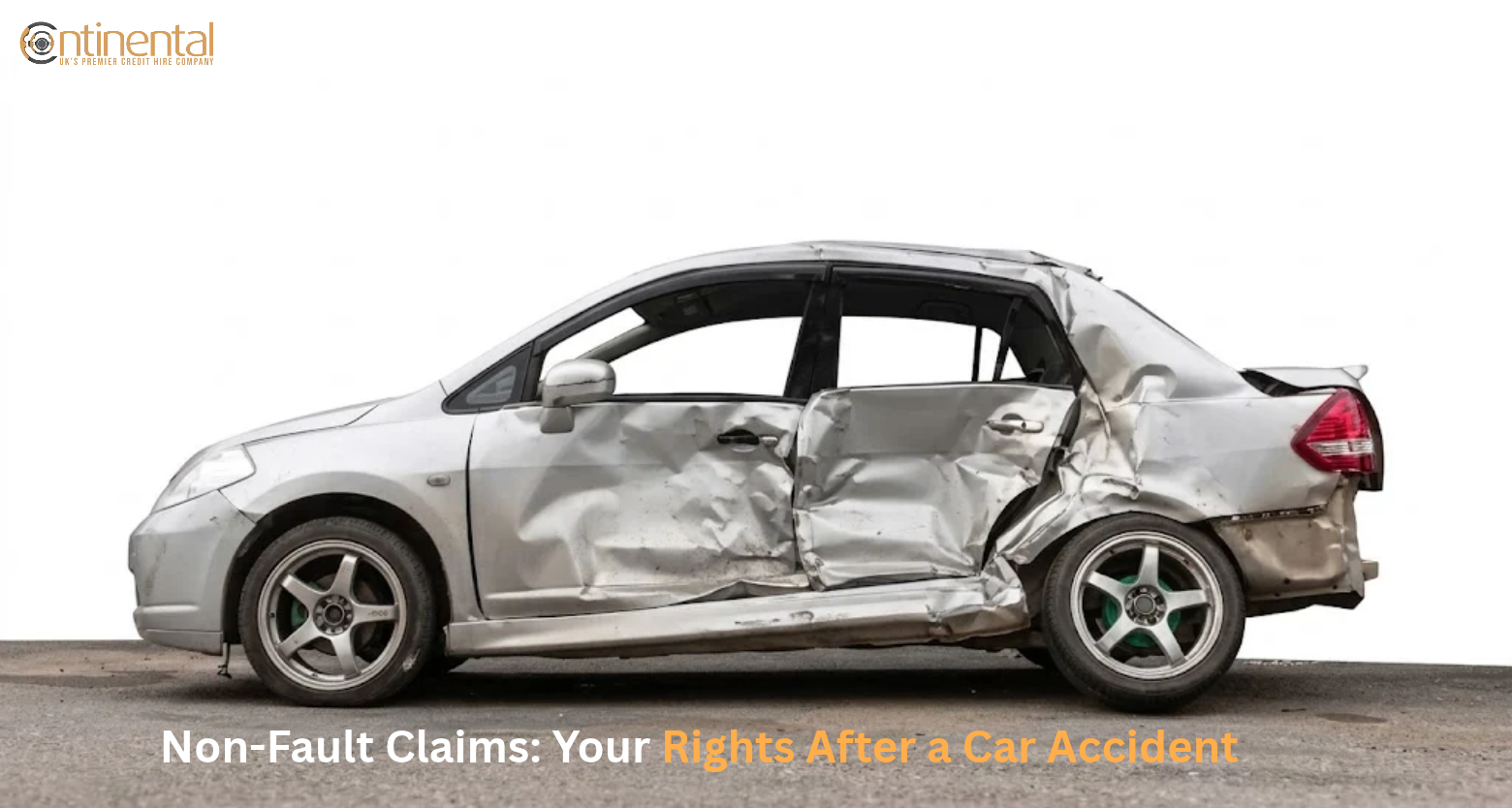
Non-Fault Claims: Your Rights After a Car Accident
A non-fault accident car hire UK service gives you a replacement car

Home » Automotive Blog » Non-Fault Claim: How to Claim When Another Driver Is Responsible
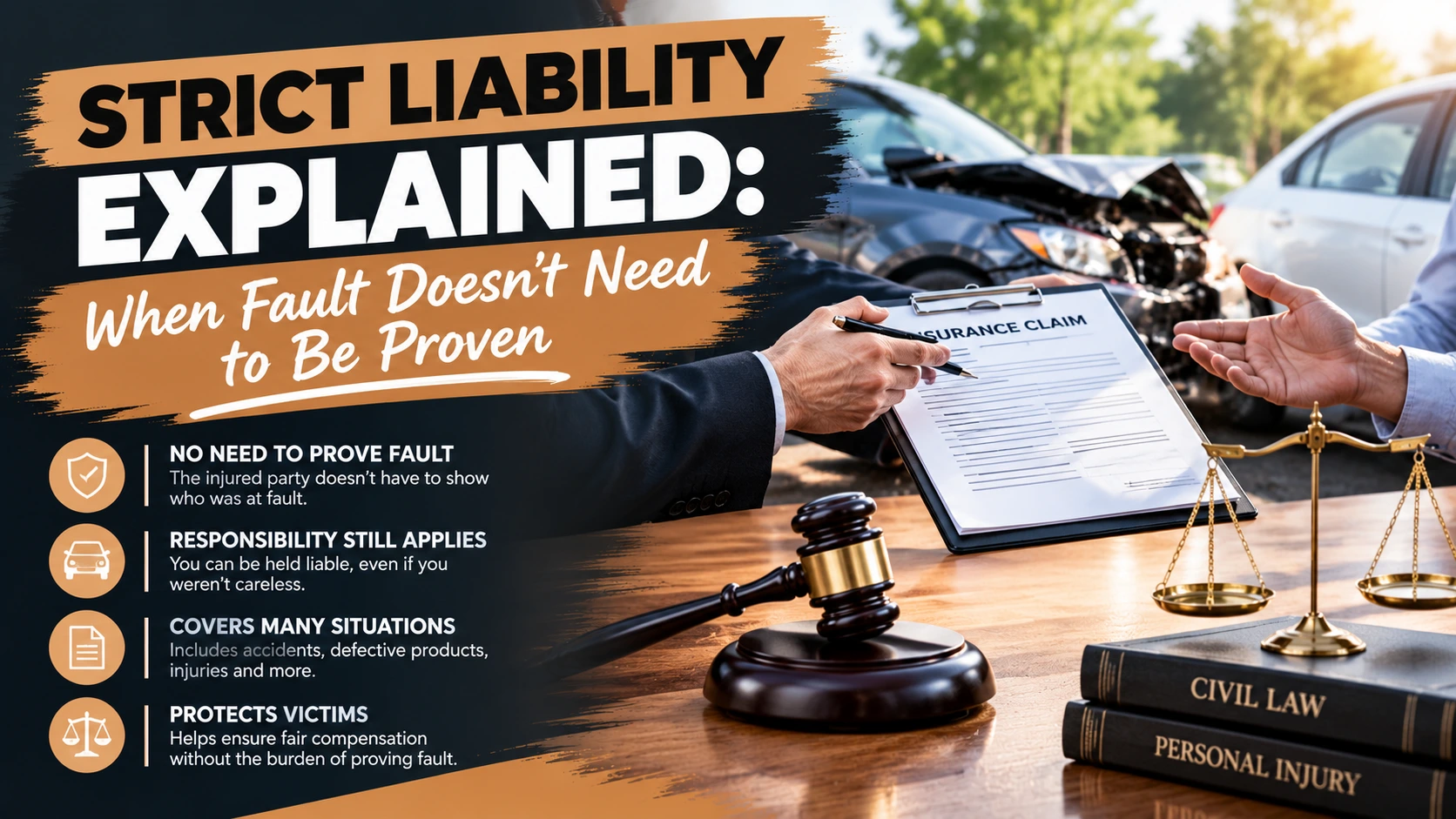
Strict liability can make a person or business legally responsible without proof of carelessness or intent. However, the claimant or prosecutor must still prove the legal elements of the rule. That can surprise owners who believe taking every reasonable precaution always protects them. In some areas, it does not. Parliament and the courts use strict liability where certain risks need stronger public protection or clearer responsibility. This guide explains the main UK rules, criminal examples, valid defences and practical steps businesses can take. It also shows why reasonable care may not always be enough.
Strict liability means fault is not always part of the legal test. A person may therefore be liable even if negligence or intent cannot be proved.
Harm plus causation is useful shorthand, but it is not the full test. The claimant must still prove every element required by law.
For example, a product claim needs a defective product, qualifying damage and a link between both. Under the Consumer Protection Act 1987, a defect exists where product safety falls below what people are generally entitled to expect.
Negligence asks whether reasonable care was missing. Intentional harm involves deliberate conduct. Strict liability can apply without proving either one.
Therefore, saying “we took reasonable care” may not defeat the claim if carelessness is not part of the legal test.
Strict liability places some risks on those who create or control them. It can also give stronger protection where proving hidden failures would otherwise be difficult.
Consumers cannot usually inspect factories or production lines. Product law can therefore focus on whether the product was defective rather than forcing someone to prove exactly where negligence happened.
For instance, warnings, instructions and expected use can all affect whether a product meets the required safety standard.
Some costs stay with the activity that creates the risk. As a result, businesses have a stronger reason to improve safety, controls and insurance.
However, strict liability does not apply to every business risk. A law or established legal rule must create that liability first.
UK strict liability appears in separate areas of law rather than one single rule.
English law does not use a wide rule covering every dangerous activity. Instead, Rylands v Fletcher creates a much narrower rule for certain dangerous escapes from land.
A producer can face liability for damage caused by a defective product without proof of negligence. The main question is whether the product provided the safety people were entitled to expect.
Animal liability depends on the species and the conditions set by the Animals Act 1971. Therefore, owners are not automatically liable for every injury caused by an animal.
Some criminal and regulatory offences do not require proof of mens rea for every element. Mens rea simply means a guilty state of mind, such as knowledge or intent.
A business can sometimes commit an offence without deliberately breaking the law. However, this does not mean every regulatory offence has no defence.
Many laws allow a business to show that reasonable precautions or proper due diligence were used.
Strict or near-strict duties can appear in several regulated areas.
Environmental offences may focus heavily on whether prohibited pollution or waste activity occurred. However, some laws also contain due diligence or other statutory defences.
Health and safety law is also more complex than a simple strict liability rule. Some duties are absolute, while others depend on what was reasonably practicable.
Underage sales are another example. Certain offences involving restricted products can arise without proving deliberate wrongdoing, although reasonable-precaution and due-diligence defences may be available.
Strict liability can still have defenses, but no single defence works in every case.
However, force majeure is mainly a contract term. It should not be treated as a general defence to every strict liability claim.
Businesses should review strict liability risks before an accident, offence or claim occurs. Prevention still matters even where reasonable care does not provide a complete defence.
Do not assume standard commercial insurance covers every strict liability risk. Check the policy limits, exclusions and special conditions. Pay particular attention to products, pollution, animals and hazardous activities.
The business activity described to the insurer should also match what the company actually does. Otherwise, the expected cover may not respond to the loss.
Supplier and contractor agreements should reflect where the real risks sit. Indemnity clauses can make one business responsible for agreed losses. Meanwhile, matching insurance requirements can help support those promises.
However, a private contract cannot simply remove statutory duties. Therefore, risk managers should review supplier terms, insurance, product records and compliance controls together.
Strict liability means taking reasonable care is not always enough to defeat a claim. First, identify the exact legal rule involved. Then check the evidence, possible defences, insurance and contracts.
For business owners, the safest next step is to review policies, supplier agreements and higher-risk activities before a loss occurs. However, if the issue follows a road accident, different motor insurance and liability rules normally apply. In that situation, specialist accident support may be more relevant than general business risk advice.
Can you be liable even if you were not negligent?
Yes. Strict liability can apply without proof of negligence. However, the claimant must still prove the other legal requirements of the claim.
Is strict liability automatic?
No. It removes some fault questions, but the claimant or prosecutor must still establish the facts required by the relevant law.
Does Rylands v Fletcher apply to every dangerous activity?
No. The modern rule is narrow and normally requires unusual land use, an escape and foreseeable damage of the relevant type.
Are manufacturers strictly liable for defective products?
They can be. The Consumer Protection Act 1987 allows qualifying claims for damage caused by defective products without requiring proof of producer negligence.
Can missing warnings cause a product liability claim?
Yes. Instructions and warnings can affect whether a product provided the level of safety people were generally entitled to expect.
Are dog owners always strictly liable for bites?
No. Domestic animal claims depend on the Animals ACTs, including dangerous characteristics and, in some cases, what the keeper knew.
What does mens rea mean?
Mens rea means the mental element of an offence, such as knowledge or intent. Some strict liability offences do not require it for every element.
Can underage sales create strict liability?
Yes, some offences can arise without proving deliberate wrongdoing. However, reasonable-precaution or due-diligence defences may still be available.
Does business insurance always cover strict liability?
No. Cover depends on the policy wording, limits and exclusions. Businesses should check any specific statutory or higher-risk exposure with their insurer.
Can contracts protect a business from strict liability?
Contracts can allocate some costs through indemnities and insurance requirements. However, they cannot automatically remove statutory duties or stop claims by third parties.
Strict liability can affect many areas of business, but for motorists, the immediate concern after an accident is often who will deal with the claim and how they will stay mobile while their vehicle is off the road.
If you have been involved in a non-fault accident, Continental Car Hire can support eligible drivers with claim guidance and a like-for-like replacement vehicle. With 22 years of experience, the team offers a free initial consultation, with rapid vehicle support potentially available within around 90 minutes, subject to eligibility, location, and availability. Call +44 208 743 7469 for assistance.
A non-fault accident car hire UK service gives you a replacement car
A non-fault accident car hire UK service gives you a replacement car
A non-fault accident car hire UK service gives you a replacement car
A non-fault accident car hire UK service gives you a replacement car
A non-fault accident car hire UK service gives you a replacement car
A non-fault accident car hire UK service gives you a replacement car
Copyright © 2026 Continental Car Hire Ltd. All Rights Reserved.
Continental Car Hire Ltd is authorised and regulated by the Financial Conduct authority (FRN 711301)