Home » Automotive Blog » Non-Fault Claim: How to Claim When Another Driver Is Responsible
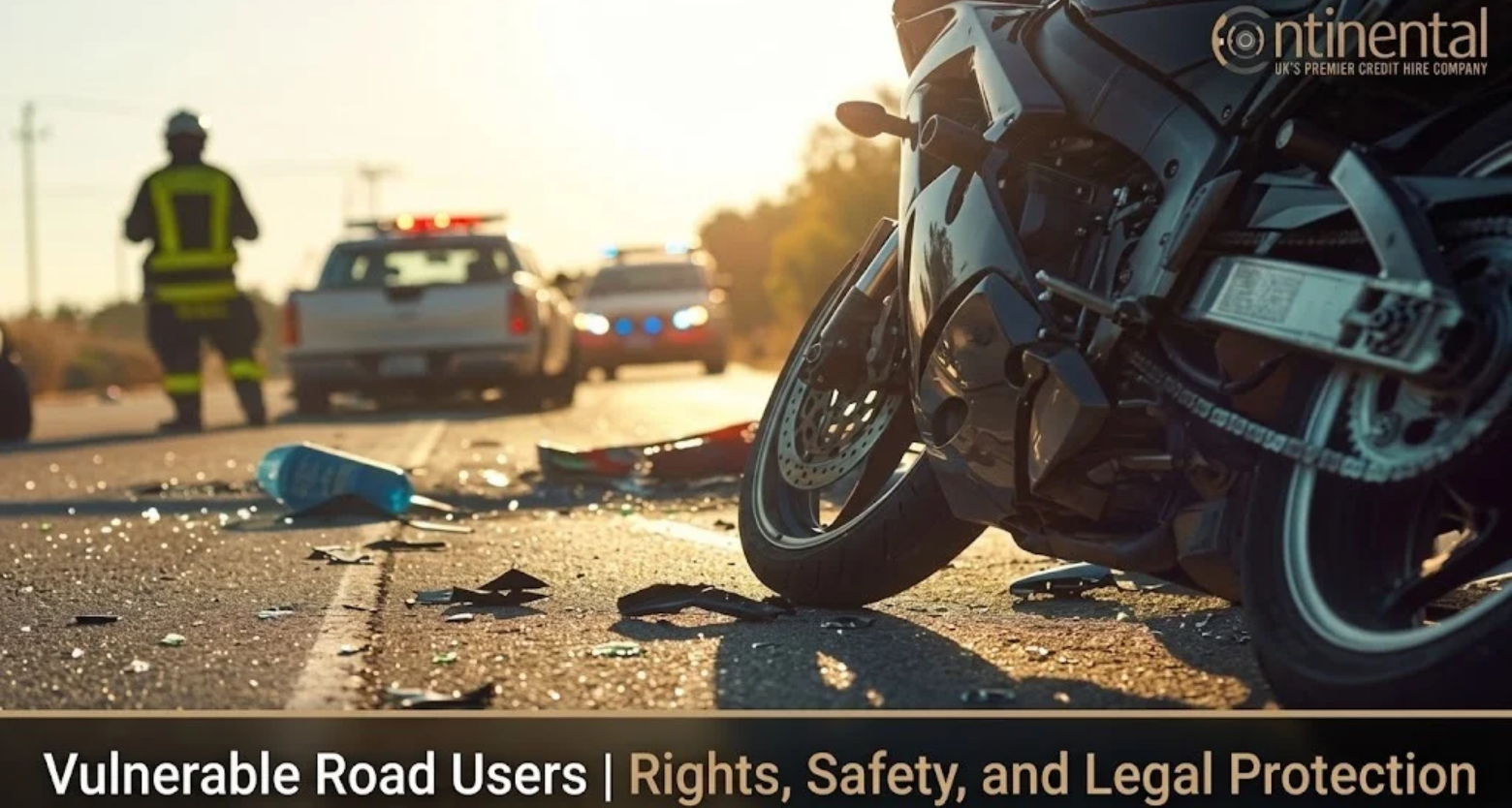
Vulnerable Road Users (VRUs): Rights, Safety, and Legal Protection

Vulnerable Road Users (Vrus): Rights, Safety, And Legal Protection
  Pedestrians, cyclists, motorcyclists, horse riders, and mobility users who have little or no physical protection if they are involved in a road collision are Vulnerable Road Users (VRUs). Because they are exposed to the force of a vehicle impact, even a minor mistake can lead to serious injuries. Therefore, UK road safety rules place greater responsibility on drivers to reduce risks around these groups.  “Data from the Department for Transport highlights the sheer scale of this imbalance: cars are involved in roughly 67% of all pedestrian fatalities and 45% of cyclist fatalities, underscoring why drivers bear a critical responsibility to protect those outside the vehicle.”  This article explains who VRUs are, their legal protections, common accident situations, and what people should know if a collision happens.

Which Road Users Are Most Vulnerable?

Vulnerable road users are people who have a greater risk of injury because they do not have the protection of a vehicle around them. A driver inside a car benefits from a frame, airbags and seatbelts. However, someone walking, cycling or riding a motorcycle has very limited protection when a collision occurs. The term covers more than just pedestrians and cyclists. Under UK road safety guidance, vulnerable road users include anyone who is more exposed to injury because of their position on the road. These include:
  • Pedestrians
  • Cyclists and e-bike riders
  • Motorcyclists
  • Horse riders
  • Mobility scooter users
  • Wheelchair users
  • Road workers and emergency workers
Although these groups have different needs, they share one common issue: they are physically more exposed when they interact with larger vehicles. A collision between a car and a pedestrian, cyclist, or motorcyclist can result in severe injuries because the human body absorbs most of the impact. As a result, speed, visibility and driver awareness play a major role in preventing serious accidents.

The Main Groups Included Under Vulnerable Road Users

Different road users face different risks. Understanding these differences helps drivers recognise situations where extra care is required.

Pedestrians: The Most Exposed Road Users

Pedestrians are one of the largest vulnerable road user groups because they have no physical protection during a collision. They include:
  • People walking on pavements
  • People crossing roads
  • Children travelling to school
  • Older pedestrians
  • Disabled pedestrians
  • People using mobility aids
Children and older adults can face greater risks because they may have reduced awareness, slower reactions, or increased injury severity after a collision. A pedestrian collision can cause:
  • Broken bones
  • Head injuries
  • Spinal injuries
  • Internal injuries
  • Long-term mobility problems
Speed is one of the biggest factors affecting injury severity. Therefore, drivers should reduce speed around crossings, residential areas, and places where pedestrians are likely to appear.

Cyclists and E-Bike Riders

Cyclists are vulnerable because they share road space with vehicles that are much heavier and faster. This includes:
  • Daily commuters
  • Delivery riders
  • Leisure cyclists
  • Children cycling
  • E-bike users

Motorcyclists and Powered Two-Wheelers

Motorcyclists are another major vulnerable road user group because motorcycles provide limited protection compared with cars. Even experienced riders wearing helmets and protective clothing remain exposed because:
  • Motorcycles are smaller and harder to notice
  • They can remain hidden in vehicle blind spots
  • Other drivers may misjudge their speed
Common motorcycle accident situations include:
  • Drivers pulling out at junctions
  • Unsafe lane changes
  • Poor mirror checks
  • Failure to notice approaching riders
Protective equipment can reduce injury severity, but it cannot remove the risks created by a collision with a larger vehicle.

Horse Riders, Mobility Users and Road Workers

Some vulnerable road users are overlooked because they are less common on busy roads. However, they still require consideration from drivers. Horse riders face unique risks because horses can react suddenly to traffic, noise, or fast-moving vehicles. Drivers should slow down, avoid sudden movements, and leave enough space when passing. Mobility scooter and wheelchair users may need extra time when crossing roads. Therefore, drivers should avoid rushing them or assuming they can move quickly out of danger. Road workers and emergency workers also face risks because they often operate close to moving traffic. Drivers should slow down and remain alert near roadside activity.

Rights of Vulnerable Road Users Under UK Road Rules

Vulnerable road users have the same right to use public roads as other road users. However, because they face greater risks in collisions, UK road rules place additional responsibility on drivers and other road users to reduce danger. The Highway Code does not give vulnerable road users unlimited priority. Instead, it creates a safer environment by requiring everyone to consider the risks they create for others. The key principle is that the road should be shared safely. A driver controlling a heavy vehicle has a greater ability to cause serious harm than someone walking or cycling. Therefore, drivers must take extra care around people who have less protection.

The Hierarchy of Road Users and Rule

The Highway Code introduced the Hierarchy of Road Users in 2022 through Rule H1. The rule explains that those who can cause the greatest harm in a collision have the greatest responsibility to reduce the danger they create. This does not mean vulnerable road users can ignore road rules. Everyone still has a responsibility to act safely. For example:
  • Drivers must avoid creating unnecessary danger for pedestrians and cyclists.
  • Cyclists must consider the safety of pedestrians.
  • Pedestrians must also take reasonable care around traffic.
The purpose of the hierarchy is not to assign automatic blame. Instead, it encourages road users to understand how their actions affect people who are more exposed.

Pedestrian Rights at Crossings and Junctions

Pedestrians receive specific protections under the Highway Code. Drivers must give way to pedestrians:
  • Already using a zebra crossing
  • Waiting to cross at a junction where the driver is turning
  • Crossing a road the driver is entering or leaving
Under Rule H2, drivers turning into a road should give way to pedestrians who are crossing or waiting to cross that road. For example, if a driver turns left into a side street while a pedestrian is crossing that road, the driver must wait. However, pedestrians should still remain alert because not every road user will follow the rules correctly.

Rights and Protection for Cyclists

Cyclists are legally recognised as road users and have the right to use roads safely. Drivers must:
  • Check mirrors before turning
  • Avoid cutting across cyclists
  • Leave sufficient space when overtaking
  • Consider cyclists at junctions and roundabouts
Rule H3 also provides specific guidance for drivers and motorcyclists when turning or changing direction around cyclists and horse riders. A common misconception is that cyclists should always stay out of the way of vehicles. This is incorrect. Cyclists have the right to occupy road space when it is safe and appropriate.

Rights of Motorcyclists and Other Vulnerable Groups

The law gives motorcyclists the same rights as other road users. Their smaller size does not reduce their right to safe road use. Drivers should take extra care because motorcycles can be:
  • Less visible
  • Hidden in blind spots
  • Misjudged in terms of speed and distance
Similarly, horse riders, mobility scooter users and wheelchair users require consideration because they may need more time or space to move safely.

Safety Measures That Protect Vulnerable Road Users

Safety depends on everyone using the road responsibly. However, drivers have an important role because vehicles can cause the most serious harm during collisions. Most VRU accidents happen during everyday situations rather than unusual events. Therefore, understanding common risks can help prevent serious injuries.

Common Situations Where VRU Accidents Occur

Junctions and Turning Manoeuvres

Junctions are one of the most common areas where vulnerable road users are injured. Drivers may fail to notice:
  • Pedestrians crossing
  • Cyclists travelling alongside vehicles
  • Motorcyclists approaching from behind
Before turning, drivers should:
  • Check mirrors
  • Look for vulnerable road users
  • Reduce speed
  • Avoid rushing through gaps

Overtaking Cyclists Safely

Cyclists can be seriously injured when vehicles pass too closely. The Highway Code recommends leaving at least:
Road UserRecommended Space
CyclistsKeep at least 1.5 metres of space when passing at speeds up to 30 mph
Horse ridersAt least 2 metres at slower speeds
Pedestrians walking in the roadAround 2 metres where possible
The exact space depends on road conditions. However, giving extra room reduces the chance of a collision.

Legal Protection for Vulnerable Road Users After an Accident

A VRU accident can lead to serious injuries, financial losses and complex insurance discussions. Legal protection exists to help injured people seek compensation where another party was responsible. However, responsibility is not automatically decided based only on whether someone was a pedestrian, cyclist or driver. Every situation is different and depends on the facts. “With annual Department for Transport figures consistently recording tens of thousands of killed or seriously injured (KSI) casualties across Great Britain, road safety is a critical public health issue—particularly for those traveling without structural protection.”

How Liability Is Decided After a VRU Collision

Insurance companies usually consider:
  • How the accident happened
  • Whether road rules were followed
  • Driver behaviour
  • Statements from witnesses
  • Available video evidence
  • Police reports
For example, a driver may be considered responsible if they failed to check properly before turning or drove without reasonable care. However, each accident requires individual assessment.

Highway Code Evidence in Accident Claims

The Highway Code is not a replacement for traffic law. However, some Highway Code rules can be considered when deciding whether someone acted safely. Failure to follow relevant guidance may be used as evidence when determining responsibility in legal proceedings. This means details such as:
  • Unsafe overtaking
  • Failure to give way
  • Poor observation
  • Dangerous manoeuvres
May become important when investigating a collision.

Compensation and Injury Claims

When a vulnerable road user suffers injuries, a claim may involve:
  • Medical treatment costs
  • Rehabilitation expenses
  • Loss of earnings
  • Long-term care needs
  • Damage to bicycles or motorcycles
Serious injuries can require ongoing support, which is why evidence and accurate accident records are important.

Time Limits for Personal Injury Claims

In many personal injury cases in England and Wales, the usual limitation period is three years from the date of injury. Different rules can apply in certain situations, including claims involving children or people who lack mental capacity. Because time limits and claim requirements can vary, people involved in serious accidents often seek specialist legal guidance.

Why VRU Claims Can Become Complex

Vulnerable road user claims can be more complicated because they often involve:
  • Serious injuries
  • Disputed responsibility
  • Multiple sources of evidence
  • Long recovery periods
A collision involving a pedestrian, cyclist, or motorcyclist is not only about vehicle damage. It can affect someone’s health, income and everyday life.

The Role of Technology in Protecting Road Users

Vehicle technology continues to improve road safety by helping drivers identify risks earlier. However, technology works best when combined with careful driving.

Automatic Emergency Braking (AEB)

Many modern vehicles use sensors and cameras to identify possible collisions with pedestrians and cyclists. Depending on the system and driving conditions, AEB may:
  • Warn the driver
  • Support emergency braking
  • Reduce collision impact
It does not replace driver attention, but it can provide an additional safety layer.

Blind Spot Monitoring

Blind spot technology helps drivers identify road users who may not be visible through normal mirrors. This can be particularly useful for:
  • Large vehicles
  • Busy urban roads
  • Lane changes

Vehicle Design Improvements

Manufacturers and transport authorities are also improving vehicle design. Examples include:
  • Better visibility systems
  • Improved camera technology
  • Direct vision improvements for larger vehicles
These changes aim to reduce accidents caused by limited visibility.

What Should Drivers Do to Reduce VRU Risks?

Drivers can reduce the chance of serious collisions by making safer decisions during normal journeys. Good habits include:
  • Checking mirrors before changing direction
  • Reducing speed near crossings and schools
  • Giving cyclists enough space
  • Looking carefully around parked vehicles
  • Staying alert near vulnerable people
Additionally, drivers should avoid distractions. A few seconds looking away from the road can have serious consequences.

Conclusion

Vulnerable Road Users include anyone who faces increased injury risks because they lack the protection of a vehicle. Pedestrians, cyclists, motorcyclists and other exposed road users need extra care from everyone sharing the road. Therefore, safe driving is not only about following rules. It is about understanding how different road users experience risk and taking steps to reduce danger. If you are involved in a non-fault accident and your vehicle is unavailable, getting the right support early can make the process easier. Continental Car Hire (a professional claims support specialist) can help eligible customers with replacement vehicle assistance and accident claim guidance.

FAQs

  1. Who are vulnerable road users in the UK?
Vulnerable road users include pedestrians, cyclists, motorcyclists, horse riders, mobility users and others with limited protection during collisions. They face higher injury risks because they are exposed.
  1. Are cyclists legally protected as vulnerable road users?
Yes, cyclists are recognised as vulnerable road users. They have the same right to use roads safely and should be given appropriate space by drivers.
  1. Do vulnerable road users always have priority?
No, vulnerable road users do not automatically have priority in every situation. However, drivers have greater responsibility because their vehicles can cause more serious harm.
  1. What evidence is needed after a VRU accident?
Useful evidence can include photographs, CCTV footage, witness details, medical records and dashcam recordings. This information can help establish what happened during the collision.
  1. Can a pedestrian claim after being injured by a vehicle?
Yes, a pedestrian may be able to make a claim if another party was responsible. The outcome depends on evidence, circumstances, and whether negligence can be established.
  1. How are VRU accident claims investigated?
Insurers usually review accident details, evidence, witness accounts, and whether road rules were followed. Every claim is assessed individually depending on the situation.
  1. What are the most common causes of VRU accidents?
Common causes include poor observation, unsafe turning, speeding, blind spots, and failure to give way. Many accidents happen during normal driving situations.
  1. What happens if I need a replacement vehicle after a non-fault accident?
Eligible customers may be able to receive replacement vehicle support after a non-fault accident. Availability depends on circumstances, vehicle requirements, location, and eligibility.
  1. How can drivers protect vulnerable road users?
Drivers can help by reducing speed, checking blind spots, leaving enough space and staying alert near crossings, cyclists and pedestrians.
  1. How long do vulnerable road user accident claims take?
The timescale depends on injury severity, evidence, liability decisions, and negotiations. Simple cases may resolve sooner, while complex claims can take longer.

Need Help After a Road Accident?

Navigating insurance disputes, liability claims, or vehicle downtime after an accident can be overwhelming. Whether you were a driver who needs a replacement vehicle or an injured road user seeking guidance, Continental Car Hire is a professional claim handler. With over 22 years of experience, Continental Car Hire (professional accident recovery support) helps eligible customers with non-fault claim support, replacement vehicle assistance, and expert advice. Call our team directly on +44 208 743 7469 to get free accident claim support today.  

Popular Categories

RELATED ARTICLES & GUIDES 👇