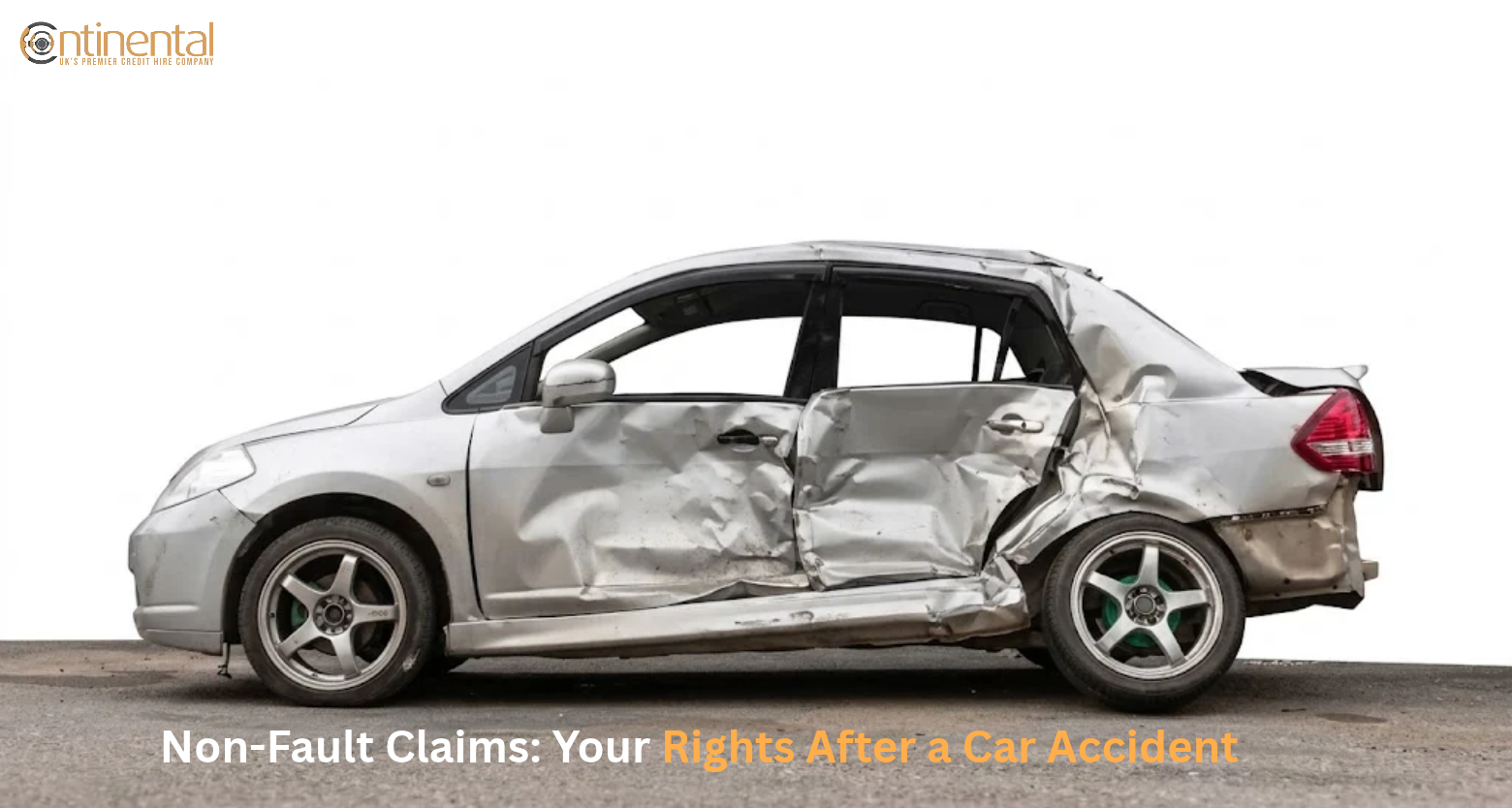
Non-Fault Claims: Your Rights After a Car Accident
A non-fault accident car hire UK service gives you a replacement car
Home » Automotive Blog » Knock-for-Knock Agreement: How This Historic Insurance System Worked
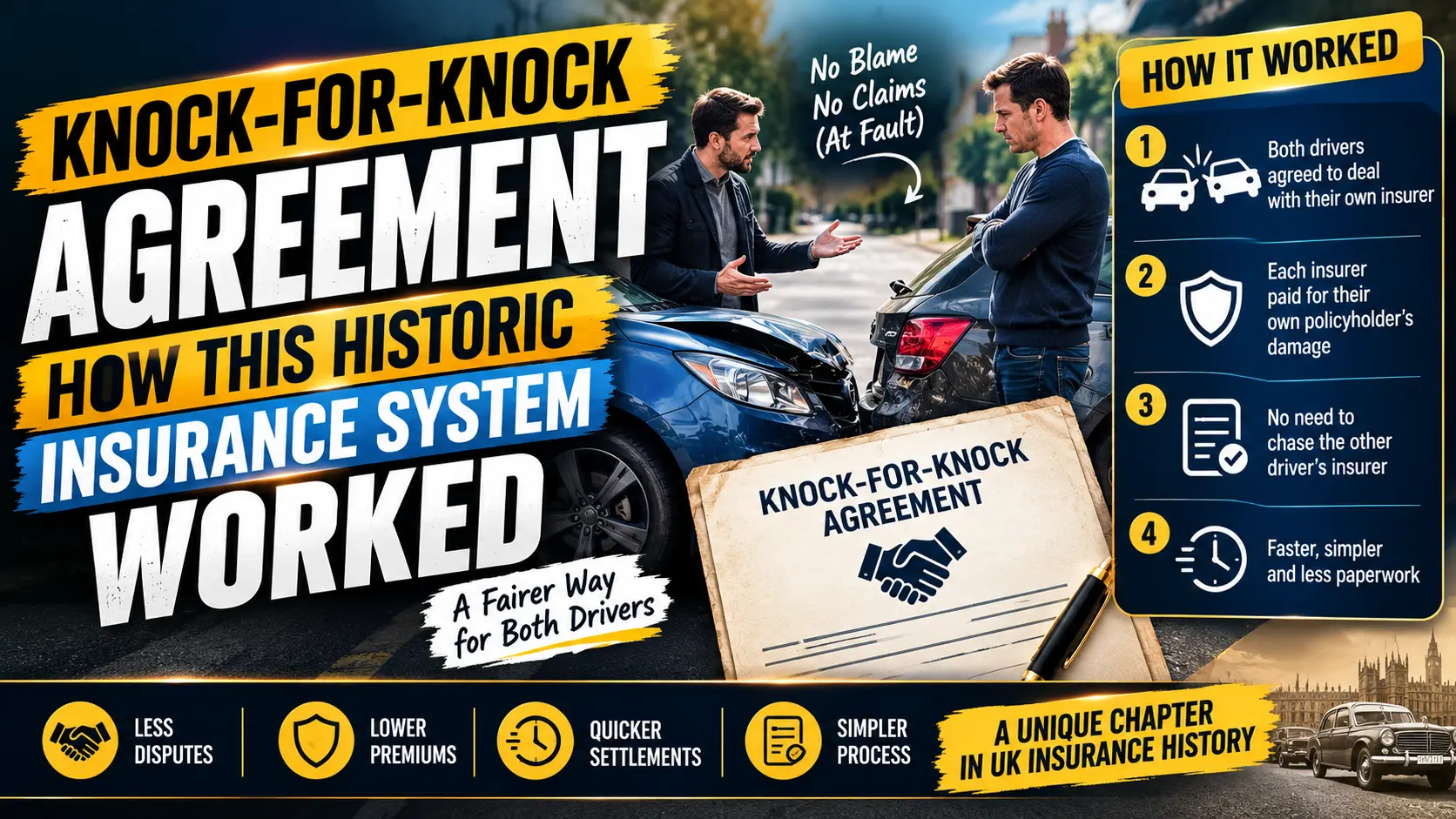
A knock-for-knock agreement was a simple way for insurers to deal with accident damage without arguing over blame for every claim. Each insurer normally paid for its own policyholder’s insured vehicle damage instead of recovering the money from the other insurer. In the UK, this system was widely used in motor insurance before fading during the 1990s. However, the idea did not disappear. Today, similar agreements remain important in offshore energy, shipping and other high-risk industries. This guide explains how the system worked, why motor insurers moved away from it, and why large commercial projects still use it.
A knock-for-knock agreement means each side agrees to deal with certain losses suffered by its own people or property, even if the other side caused the event.
The basic idea is often described as “loss lies where it falls.” Instead of spending time proving who caused every loss, the contract decides in advance who will deal with it. Modern offshore agreements use this approach to create clearer and more predictable risk allocation.
Under a normal fault-based system, the person who caused the damage may ultimately be responsible for paying it.
With knock-for-knock, certain losses stay with the party that agreed to carry them. Therefore, fault may become less important for those specific losses.
For example, Party A may insure its own equipment and staff. Party B does the same. If Party B accidentally damages equipment belonging to Party A, the contract may still leave that loss with Party A.
This does not mean nobody is responsible for anything. The exact contract decides which risks are included and which remain outside the agreement.
Historically, UK motor insurers used knock-for-knock agreements to settle vehicle damage more quickly and reduce recovery disputes between insurers.
A typical accident could work like this:
The agreement was mainly between insurers. It did not mean the drivers had agreed that nobody was at fault.
A 2012 UK competition study described the old system as a voluntary first-party model. Instead of sending the not-at-fault driver’s repair bill to the other insurer, each insurer controlled its own policyholder’s claim costs.
The main reason was efficiency.
Finding fault can require statements, diagrams, witnesses, engineers and sometimes court action. Those costs can become large when thousands of claims are involved.
Therefore, insurers accepted that they might lose money on one accident but save money on another. Across a large book of similar risks, they expected the results to balance out.
The UK’s broad knock-for-knock motor arrangement largely disappeared during the mid-1990s because the insurance market changed.
New insurers were entering the market and targeting lower-risk drivers. Some did not want to join an agreement where they could end up paying their own customer’s repair costs even when another driver caused the accident. The UK competition authorities later identified this change as an important reason the system fell away.
Drivers also had concerns about how claims affected their insurance record.
Common concerns included:
However, it would be wrong to say every innocent driver automatically lost their no-claims bonus. Historical guidance shows that a clearly blameless driver could sometimes keep it, while disputed or partly responsible cases could be treated differently.
Today, motor insurers generally use more conventional fault and recovery processes rather than the old market-wide knock-for-knock arrangement.
Knock-for-knock remains important where many businesses, people and expensive assets work together in a high-risk environment.
The offshore energy sector is the clearest example. BIMCO’s SUPPLYTIME 2017 contract uses a knock-for-knock liability system. Each side normally takes responsibility for its own property and personnel within the agreed contract groups, regardless of fault.
The same principle can also appear in offshore wind, accommodation-vessel and heavy-lift contracts. BIMCO’s ASVTIME and HEAVYCON forms are current examples of contracts using similar risk-allocation structures.
| Area | Typical Approach |
| Property | Each party may bear agreed losses relating to its own property |
| Personnel | Each party may cover injury or death involving its own personnel |
| Insurance Recovery | Insurers may agree not to pursue the other party for covered losses |
| Other Losses | The contract determines which risks remain subject to fault-based claims |
The last point is important. A knock-for-knock clause does not cover every possible loss automatically.
Large offshore projects use knock-for-knock because several companies may be working in the same place at the same time.
Without clear rules, one accident could start a chain of claims between an owner, contractor, vessel operator, subcontractor and several insurers.
Instead, the parties can decide before work starts who will insure each group of people and assets. As a result, insurance can become easier to arrange and duplicate cover may be reduced.
It can also limit long disputes over who caused a loss.
For smaller contractors, this matters even more. Without agreed limits, a small company could face a claim involving equipment worth far more than the value of its own contract.
Therefore, knock-for-knock is mainly about predictable risk, not avoiding responsibility.
A knock-for-knock clause only works within the wording of the contract. Poor drafting, exclusions or conduct outside the agreed scope can change the result.
Gross negligence does not automatically cancel every knock-for-knock agreement.
Under English law, there is no general separate tort of “gross negligence” in the same way some other legal systems use the term. However, businesses can define gross negligence in their contract and make it an exception to an indemnity.
Wilful misconduct usually involves deliberate conduct rather than an ordinary mistake.
Again, the effect depends on the contract. Some agreements remove certain protection where wilful misconduct has occurred.
Knock-for-knock should not be read as permission to ignore contractual duties.
A contractor may still face consequences for delay, defective work, non-performance or another breach if those matters fall outside the agreed indemnity.
Risk managers should therefore check the definition of each “party group”, insurance limits, exclusions, subcontractor protection and any waiver of subrogation.
Subrogation simply means an insurer’s right to recover money from another responsible party after paying a claim.
A knock-for-knock agreement moves selected losses away from the usual blame-based process. It once helped UK motor insurers settle vehicle damage without repeatedly recovering money from each other.
Although that broad motor system faded in the 1990s, the principle remains important in offshore energy and shipping. Today, the wording of the contract matters more than the label itself. Therefore, businesses should always check exactly which people, property and risks the agreement covers before relying on it.
Is a knock-for-knock agreement the same as no-fault insurance?
No. Both may reduce the need to prove fault for certain losses, but they are different systems with different legal and contractual rules.
Are knock-for-knock agreements still used in UK car insurance?
The old broad inter-insurer motor arrangement largely disappeared in the 1990s. Modern motor claims normally use other fault and recovery processes.
Who pays under a knock-for-knock agreement?
Each party normally deals with the losses allocated to its own group. The exact contract determines which people, property and types of damage are covered.
Can an insurer recover money from the other insurer?
Not for losses covered by a valid waiver of recovery or subrogation. However, other losses may still be recoverable if the contract allows it.
Can a knock-for-knock agreement affect a no-claims bonus?
Historically, treatment varied according to the insurer and claim circumstances. A clearly blameless driver did not automatically lose their bonus simply because an agreement existed.
Why are knock-for-knock clauses common offshore?
They give companies clearer responsibility for people and property before an incident happens. This can reduce overlapping insurance and long disputes about fault.
Does gross negligence cancel a knock-for-knock clause?
Not automatically under English law. The result depends heavily on how gross negligence and any exceptions are written into the contract.
What is a waiver of subrogation?
It limits an insurer’s right to recover a paid claim from another protected party. It helps support the agreed knock-for-knock risk structure.
Does BIMCO use knock-for-knock clauses?
Yes. SUPPLYTIME 2017 expressly operates on a knock-for-knock liability regime, and other BIMCO offshore contracts use related risk-allocation structures.
Can a non-fault driver still get a replacement car today?
Yes, depending on the claim, policy and individual circumstances. Eligible drivers may obtain a replacement through an insurer and credit-hire provider.
The historic knock-for-knock motor system is no longer the normal route for UK accident claims. A driver may now deal with their own insurer, the other driver’s insurer or an accident management provider, depending on the circumstances.
For eligible non-fault claims, Continental Car Hire (Accidental Claim Management Company) can help arrange a comparable replacement vehicle while the damaged vehicle is off the road. Options include standard, prestige and PCO vehicles.
Continental Car Hire has operated since 2004 and offers an initial consultation and claim guidance. Its website states that replacement support can reach customers within around 90 minutes in qualifying cases, although timing depends on location, availability and claim checks.
For assistance after a non-fault accident, call +44 208 743 7469.
A non-fault accident car hire UK service gives you a replacement car

A non-fault accident car hire UK service gives you a replacement car
A non-fault accident car hire UK service gives you a replacement car
A non-fault accident car hire UK service gives you a replacement car
A non-fault accident car hire UK service gives you a replacement car
A non-fault accident car hire UK service gives you a replacement car