
Non-Fault Claims: Your Rights After a Car Accident
A non-fault accident car hire UK service gives you a replacement car
Home » Automotive Blog » Notification Window: Why Reporting an Accident on Time Matters
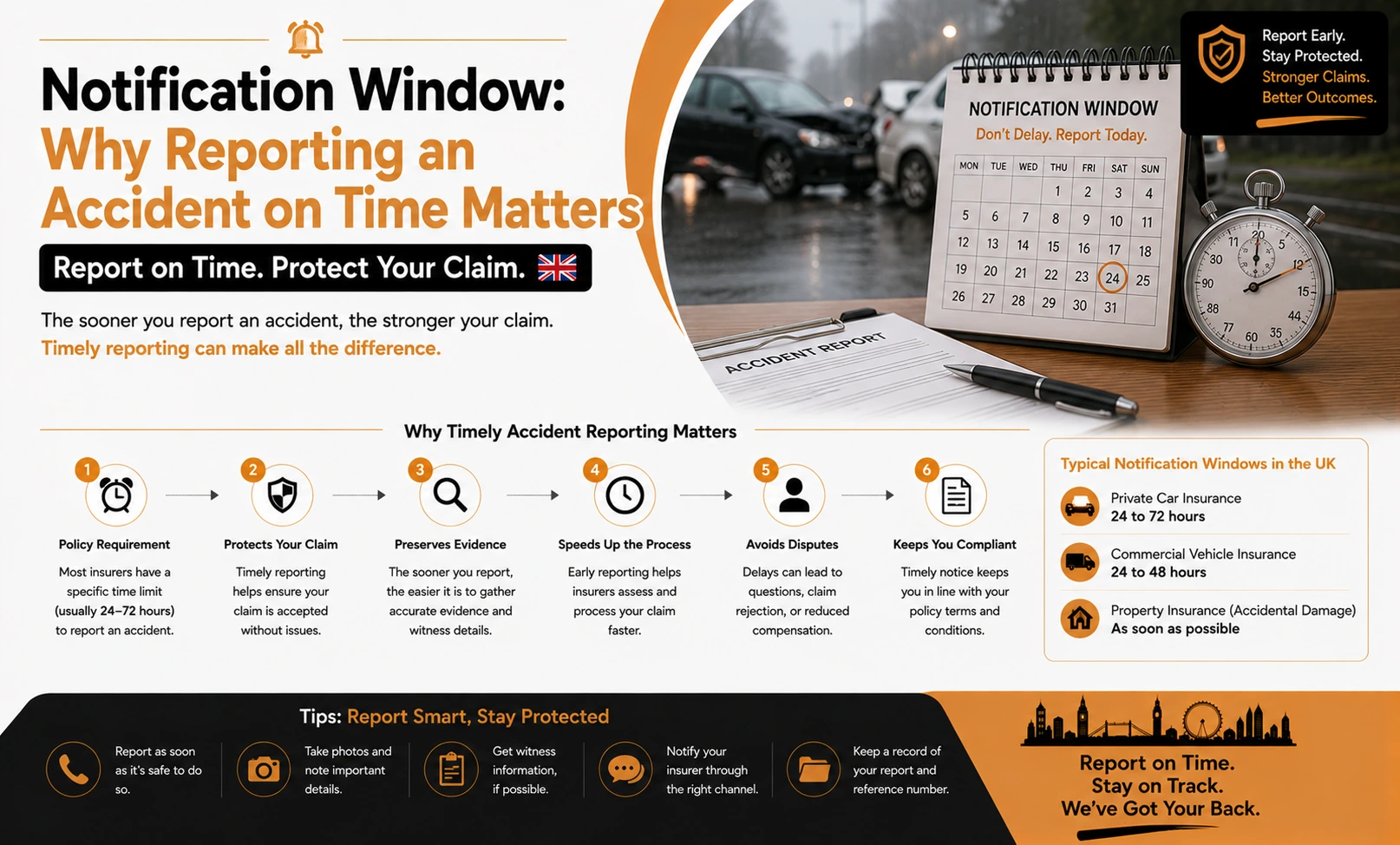
A Notification Window is the time you have to report an accident after it happens. This can matter for your insurer, the police, or anyone else involved in the incident. If you wait too long, your claim may become harder to handle. You may lose proof, forget key details, or create problems with your policy. This guide explains why quick reporting matters, what details to collect, and how to avoid delays in the claim process.
A Notification Window is the allowed time for reporting an accident or loss. In simple words, it tells you how quickly you should tell the right people about what happened.
For car accidents in the UK, there are also legal duties in some cases. GOV.UK says you must report an accident to the police within 24 hours if you do not give your details at the time of the accident.
After an accident, the first few hours are important. Photos, witness details, road conditions, and damage marks can all help explain what happened.
This is why reporting an accident on time is so useful. It gives your insurer fresh details and helps them start checks while the facts are still clear.
Police reporting and insurance reporting are not always the same thing. You may need to report to the police if someone is injured, if details were not exchanged, or if you think an offence happened.
Insurance reporting is about telling your insurer. Many policies expect you to tell them about any accident, even if you do not plan to claim.
An accident reporting deadline is the time limit for telling the police, insurer, employer or another party. The exact deadline depends on the type of accident and the policy wording.
For motor accidents, the police deadline can be 24 hours in some situations. Your insurer may also have its own insurance notification period, so always check your policy documents.
Insurers need quick notice because they may need to inspect damage. They may also need to speak to witnesses, check repair costs, or contact the other driver’s insurer.
A fast report can make the accident claim process smoother. Go. Compare explains that drivers should inform their insurer of every incident, even if it was not their fault.
Late accident reporting can create many problems. The insurer may ask why you waited, especially if the delay made the claim harder to check.
Evidence can also become weaker with time. Cars may be repaired, CCTV may be deleted, witnesses may forget, and photos may not show the full damage later.
| Step | What to Do |
| Stay safe | Move away from danger first. |
| Exchange details | Share your name, address, and vehicle details. |
| Take photos | Capture damage, road signs, and the accident location. |
| Note witnesses | Save witnesses’ names and phone numbers. |
| Contact police | Report the accident if required. |
| Tell insurer | Report the accident as soon as possible. |
| Save proof | Keep receipts, emails, and messages. |
This checklist helps you stay organised. It also supports reporting an accident on time without missing key facts.
Try to collect simple and clear information. You do not need to write a long story at the roadside.
Useful details include:
These details help your insurer understand the event. They can also reduce confusion if the other driver gives a different version later.
The result depends on your policy and the reason for the delay. Some insurers may still handle the claim, but they may ask more questions.
In serious cases, late accident reporting can lead to disputes. It may also slow repairs, delay payment, or affect how easily the insurer can defend your case.
The easiest rule is simple: report early, even if you are unsure. You can tell the insurer that you are reporting the incident for information only.
Also check your insurance notification period before you need it. Keep your insurer’s phone number, app, or claims page saved, so you are not searching for it after an accident.
A Notification Window is not just paperwork. It protects your claim by keeping the facts fresh and the process clear.
The safest approach is to act quickly, keep proof, and tell the right people as soon as you can. A clear report can make the accident claim process easier from the start and reduce stress later.
A notification window is the time you have to report an accident. It may apply to your insurer, the police, or another party. The exact time depends on the situation.
An accident reporting deadline is the limit for reporting the incident. For some UK road accidents, police reporting may be needed within 24 hours. Your insurer may have separate rules.
Yes, you should still tell your insurer. Many policies ask you to report all accidents. This protects you if the other person claims later.
Yes, many insurers allow this. You can say it is for information only. This keeps your record clear and protects your position.
The insurer may ask why there was a delay. They may also need extra proof. In some cases, late reporting can cause claim problems.
You may need to call or report to the police in some cases. This includes injury, failure to exchange details or suspected offences. If unsure, check official police guidance.
Give simple facts about the accident. Include the time, place, damage, driver details and photos. Do not guess if you are unsure.
It can, depending on the claim outcome. A fault claim may reduce your no-claims bonus. Your insurer should explain how this works.
Take photos as soon as it is safe. Capture damage, road layout and vehicle positions. Good photos can help avoid disputes.
No, each insurer can have different rules. Some use words like promptly or as soon as possible. Always check your own policy wording.
A non-fault accident car hire UK service gives you a replacement car

A non-fault accident car hire UK service gives you a replacement car

A non-fault accident car hire UK service gives you a replacement car
A non-fault accident car hire UK service gives you a replacement car
A non-fault accident car hire UK service gives you a replacement car

A non-fault accident car hire UK service gives you a replacement car