
Non-Fault Claims: Your Rights After a Car Accident
A non-fault accident car hire UK service gives you a replacement car
Home » Automotive Blog » Indemnity Explained: How Fair Insurance Payments Work
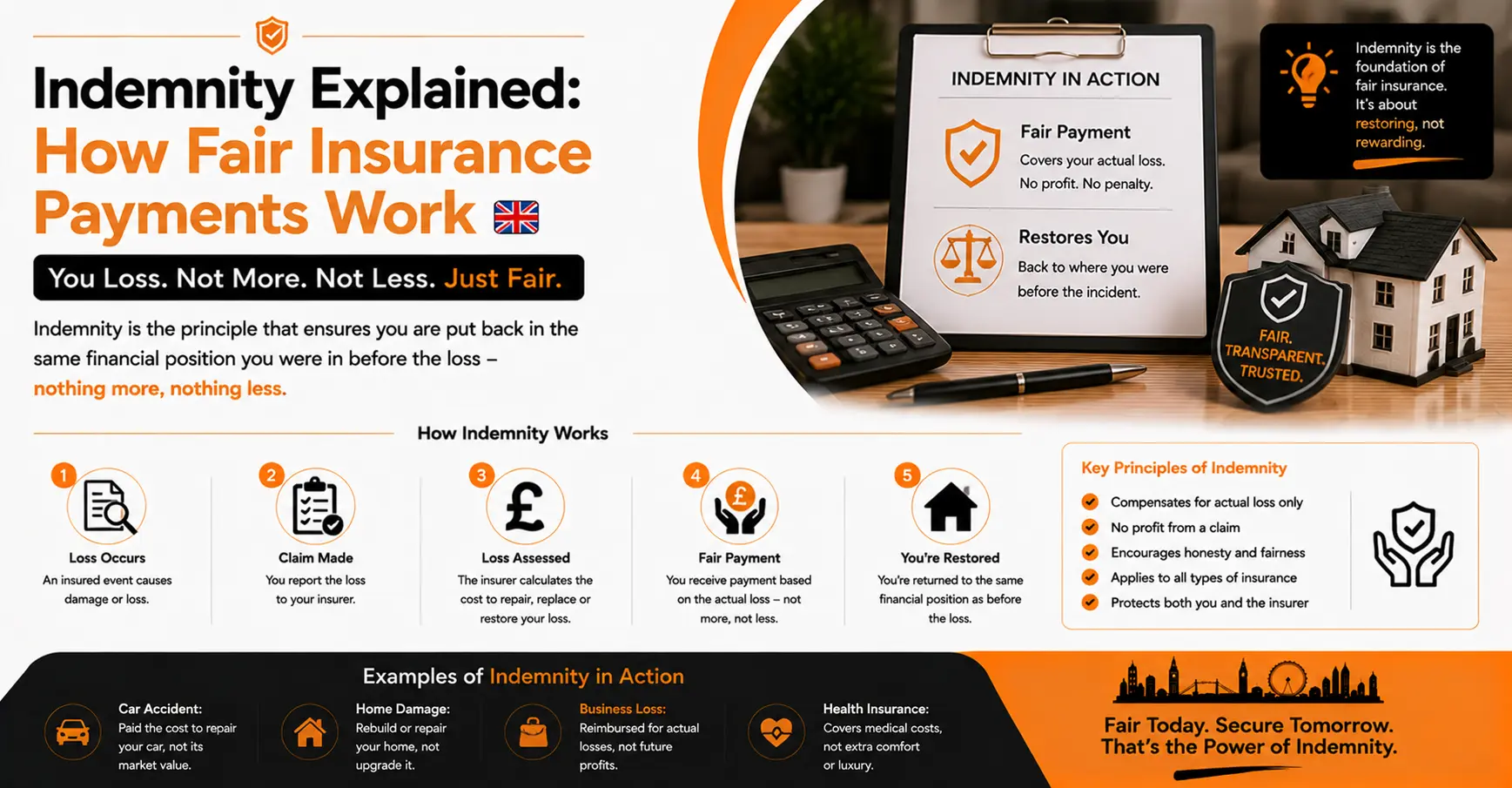
Indemnity is the insurance rule that says a claim should pay for your real loss, not create profit. It helps decide how much money you may receive after damage, theft, or another covered event. The final amount can depend on proof, item value, wear and tear, excess, and policy limits. This is why insurance compensation may be lower than the price you first paid. This guide explains how the rule works, how loss is measured, and why fair payment matters in every claim.
In simple words, this rule means fair payment for real loss. If something is damaged, lost, or stolen, insurance may help with repair, replacement, or payment.
The aim is not to give extra money. It is to put things back as fairly as possible. You should be helped, not rewarded with a profit.
The principle of indemnity helps keep insurance claims fair. It tells the insurer to look at the real loss first.
This means the payment should match the damage or value. It should not be more than the loss. It should also not ignore a valid loss. This balance protects both sides.
Many people expect a claim to pay the full amount. But insurance does not always work that way.
The final figure may change because of:
This can feel annoying at first. Still, the reason is usually simple. The claim is based on the real loss, not the old purchase price.
To measure financial loss, the insurer looks at value. They may check what the item was worth before the event.
A five-year-old laptop may not match its first price. A car may be valued by age, mileage, and condition. A damaged room may be checked by repair cost. Clear proof makes this easier.
This table shows how fair payment can work. It also shows why each claim may be different.
| Situation | What It Usually Means |
| Car damage | The repair cost may be assessed before payment. |
| Stolen phone | The payout may depend on the phone’s age and current value. |
| Water leak | Repair costs are usually estimated before settlement. |
| Broken laptop | Its current market value may be reviewed. |
| Business damage | Evidence of financial loss may be required. |
These examples are not fixed rules. Each policy can work in its own way. Always check the cover before expecting a set amount.
An insurance payout depends on the policy and proof. The same type of damage can still lead to different results.
One policy may offer new-for-old cover. Another may only pay current value. Some policies also have lower limits for certain items. This is why small print matters.
The aim is to restore financial position after a loss. In plain words, this means helping you return close to normal.
If your car is damaged, fair repairs may be arranged. If an item is stolen, a fair value may be offered. If your home is damaged, repair costs may be reviewed. The payment should match the loss.
Some policies replace old items with new ones. This is often called new-for-old cover.
But not every policy includes it. If your cover uses current value, age and condition may reduce payment. The principle of indemnity still guides the fair result here.
Many claim problems start with wrong expectations. People may expect the full purchase price every time.
Common mistakes include:
Good records can support your financial loss. Keep photos, receipts, quotes, and repair notes where possible. This can make the claim smoother.
Indemnity keeps insurance fair and practical. It helps you recover without turning a claim into profit.
The key idea is simple. Insurance should pay for the real loss, within the policy rules. Before accepting any insurance payout, check the offer, excess, and proof used. Good evidence can make insurance compensation easier to understand and challenge. The aim is always to restore financial position, not create extra gain.
It means fair payment for a real loss. The aim is to bring you close to normal again. It does not usually mean extra money.
No, full payment is not always guaranteed. The policy, proof, and item value all matter. Excess and wear can reduce the final amount.
Your offer may be lower due to wear. It may also include a policy excess. Missing proof can also affect the claim amount.
It means the money value of damage. It may include repair cost or item value. The insurer checks this before making a decision.
Yes, it often applies to car claims. Repairs or market value may be reviewed. Your policy type can change the final result.
Yes, it can apply to home claims. Repair costs and policy limits may be checked. New-for-old cover depends on your policy.
Keep receipts, photos, quotes, and reports. These help show what happened and when. They also help show the value lost.
It may replace an old item with a new one. This depends on the policy wording. It is not included in every policy.
Yes, you can ask for a clear breakdown. Check how the amount was worked out. Then compare it with your proof.
It keeps insurance claims fair for everyone. It helps people recover after real loss. It also keeps payments clear and balanced.
A non-fault accident car hire UK service gives you a replacement car

A non-fault accident car hire UK service gives you a replacement car

A non-fault accident car hire UK service gives you a replacement car

A non-fault accident car hire UK service gives you a replacement car

A non-fault accident car hire UK service gives you a replacement car

A non-fault accident car hire UK service gives you a replacement car