Contributory Negligence Explained: When Your Actions Reduce Compensation
A non-fault accident car hire UK service gives you a replacement car
Home » Automotive Blog » First Notification of Loss (FNOL): Everything You Need to Know
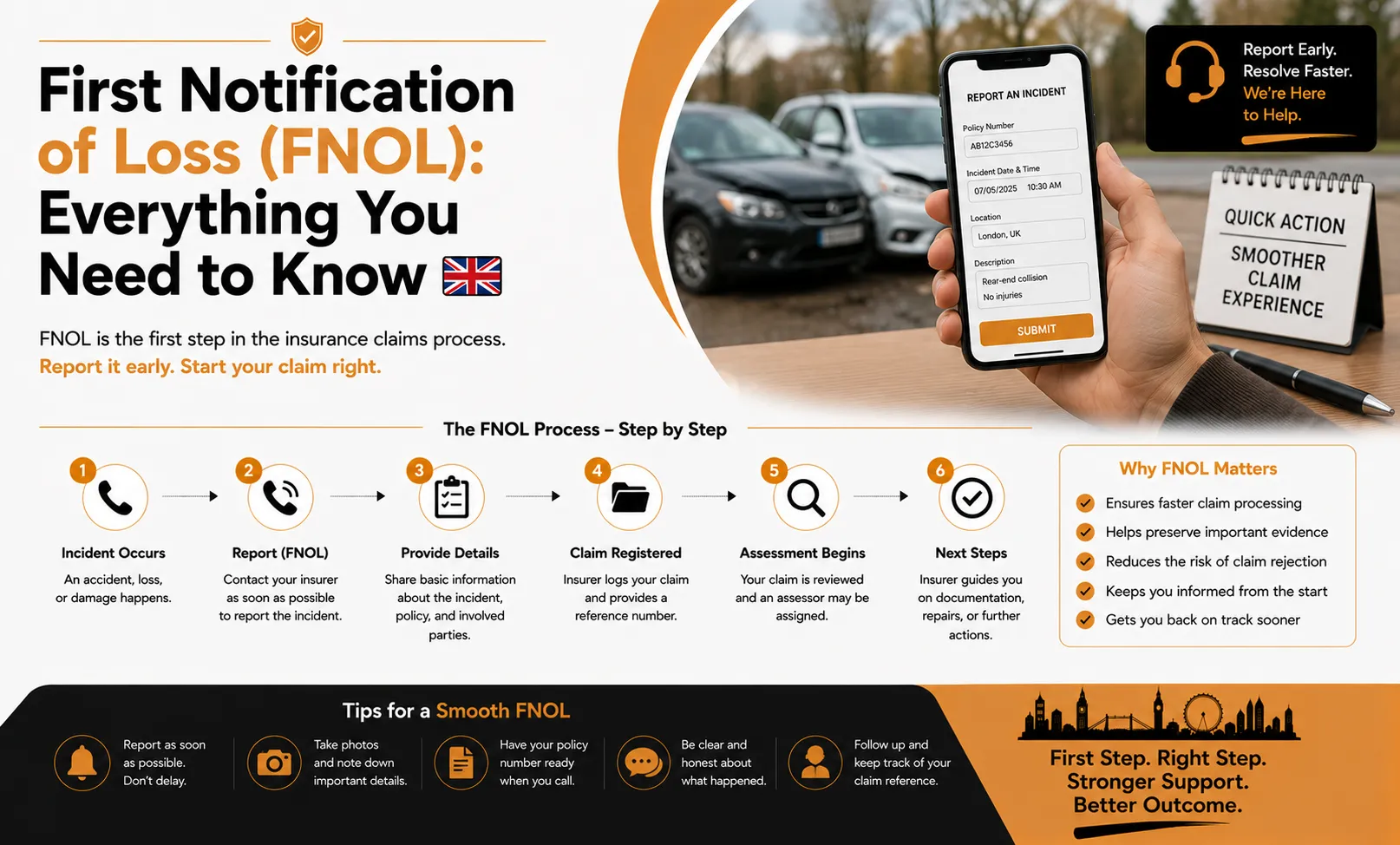
First Notification of Loss is the first step you take when something happens that may lead to an insurance claim. It means telling your insurer about an accident, theft, fire, water leak, damage, or another covered event. This first report helps the insurance company open a case and understand what happened. A clear insurance claim notification can make the whole insurance claim process smoother and less stressful. In this guide, we explain what FNOL means, when to report it, what details you need, and how to avoid common mistakes.
First Notification of Loss, often called FNOL, is the first official report you make to your insurance company after a loss. It tells the insurer that something has happened and that you may need help through your policy.
The loss could be a car crash, home damage, stolen item, business loss or injury. At this stage, the insurer may not decide the final claim straight away. The main aim is to record the event and start the insurance claim process.
First Notification of Loss matters because timing can affect your claim. If you report the loss early, the insurer can tell you what to do before evidence is lost or damage gets worse.
A quick insurance claim notification also helps avoid confusion. For example, if your car is damaged or your home has a leak, the insurer may need photos, repair details or a police report. Early contact helps you give the right information from the start.
You should report a loss as soon as it is safe to do so. Do not wait until you know the full repair cost or every small detail.
Fast claim reporting is useful even if you are unsure whether the claim will be accepted. You can explain what happened and ask what your policy says. This is better than waiting too long and forgetting important facts.
A clear loss report should include simple and honest facts. You do not need to use legal or technical words.
Useful details include:
The better your loss report is, the easier it is for the insurer to understand the claim. Try to keep everything factual, clear and simple. If you are not sure about something, say that instead of guessing.
The FNOL process usually starts by phone, online form, mobile app or email. The insurer records your details and gives you a claim reference number.
After this, the insurer may ask for more proof. They may request photos, repair quotes, police reports, medical notes or a written statement. In some cases, they may send an assessor or loss adjuster to inspect the damage.
| Step | What to Do |
| Stay safe | Deal with danger first. |
| Take photos | Record damage clearly. |
| Note details | Write the time, place, and cause. |
| Contact insurer | Start the report early. |
| Save evidence | Keep receipts and messages. |
| Get a reference | Ask for a claim number. |
| Follow up | Send documents promptly. |
This checklist makes claim reporting easier. It also helps you avoid missing details that may slow the claim down.
One common mistake is waiting too long before contacting the insurer. Late reporting can make it harder to prove what happened, especially if repairs have already started.
Another mistake is giving unclear details. If you do not know something, say that clearly instead of making it up. A simple and honest report is always better than a confusing one.
A clear FNOL process gives the insurer a proper starting point. It helps them decide what proof is needed, who should inspect the damage and what the next step should be.
It also helps you feel more in control. Once the claim starts, you can track updates, send documents and ask questions. Good early information can make the claim smoother from beginning to end.
First Notification of Loss may sound like a difficult insurance term, but the idea is simple. It is the first report you make when something goes wrong, and you may need insurance help.
The best approach is to report early, give clear facts and keep records. A quick report can reduce stress and help your case move forward. Always check your own policy too, because each insurer may have different rules.
FNOL means First Notification of Loss. It is the first report made to an insurer after an incident. It starts the claim journey.
FNOL is the start of a claim. It tells the insurer that something has happened. The full claim is reviewed after evidence is checked.
You should report it as soon as possible. Do this once everyone is safe. Early reporting can help avoid delays.
You need your policy number and contact details. You also need the date, time, place and cause. Photos and receipts can also help.
Many insurers allow online reporting. Some also use apps, email or phone lines. Check your insurer’s website or policy documents.
The insurer opens a claim file. They may ask for proof, photos, or quotes. They may also arrange an inspection.
Yes, late reporting can cause problems. Evidence may be lost, or repairs may hide damage. This can make the claim harder to assess.
Photos are very helpful. They show the damage before repairs. Take them only when it is safe.
Report the damage first if possible. Emergency repairs may be needed to stop more loss. Keep receipts for any urgent work.
Yes, FNOL does not guarantee payment. The insurer still checks your policy and evidence. A clear report can help the review go smoothly.
A non-fault accident car hire UK service gives you a replacement car
A non-fault accident car hire UK service gives you a replacement car
A non-fault accident car hire UK service gives you a replacement car
A non-fault accident car hire UK service gives you a replacement car
A non-fault accident car hire UK service gives you a replacement car
A non-fault accident car hire UK service gives you a replacement car