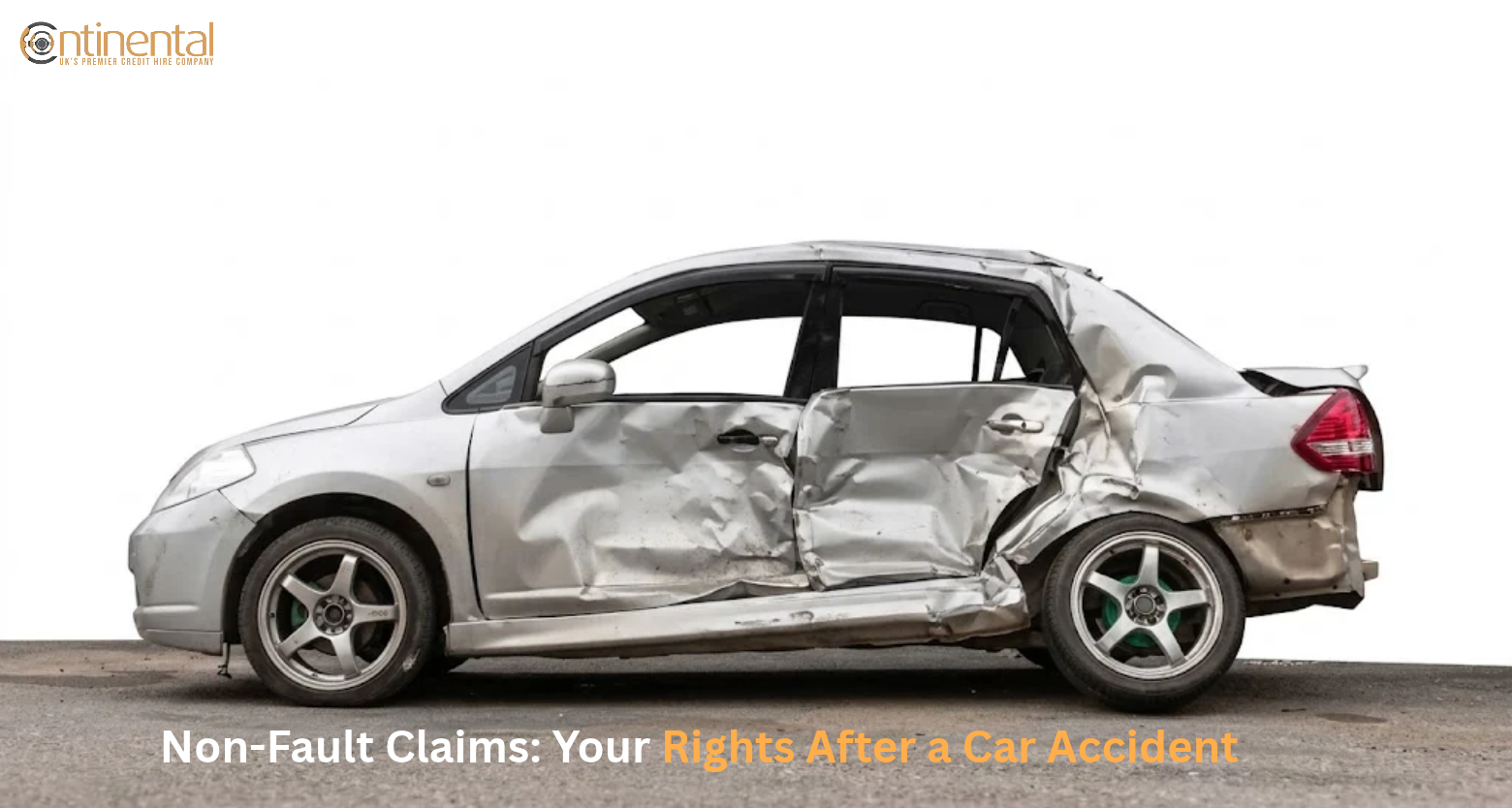
Non-Fault Claims: Your Rights After a Car Accident
A non-fault accident car hire UK service gives you a replacement car
Home » Automotive Blog » Retention of Salvage: Can You Keep Your Written-Off Car?
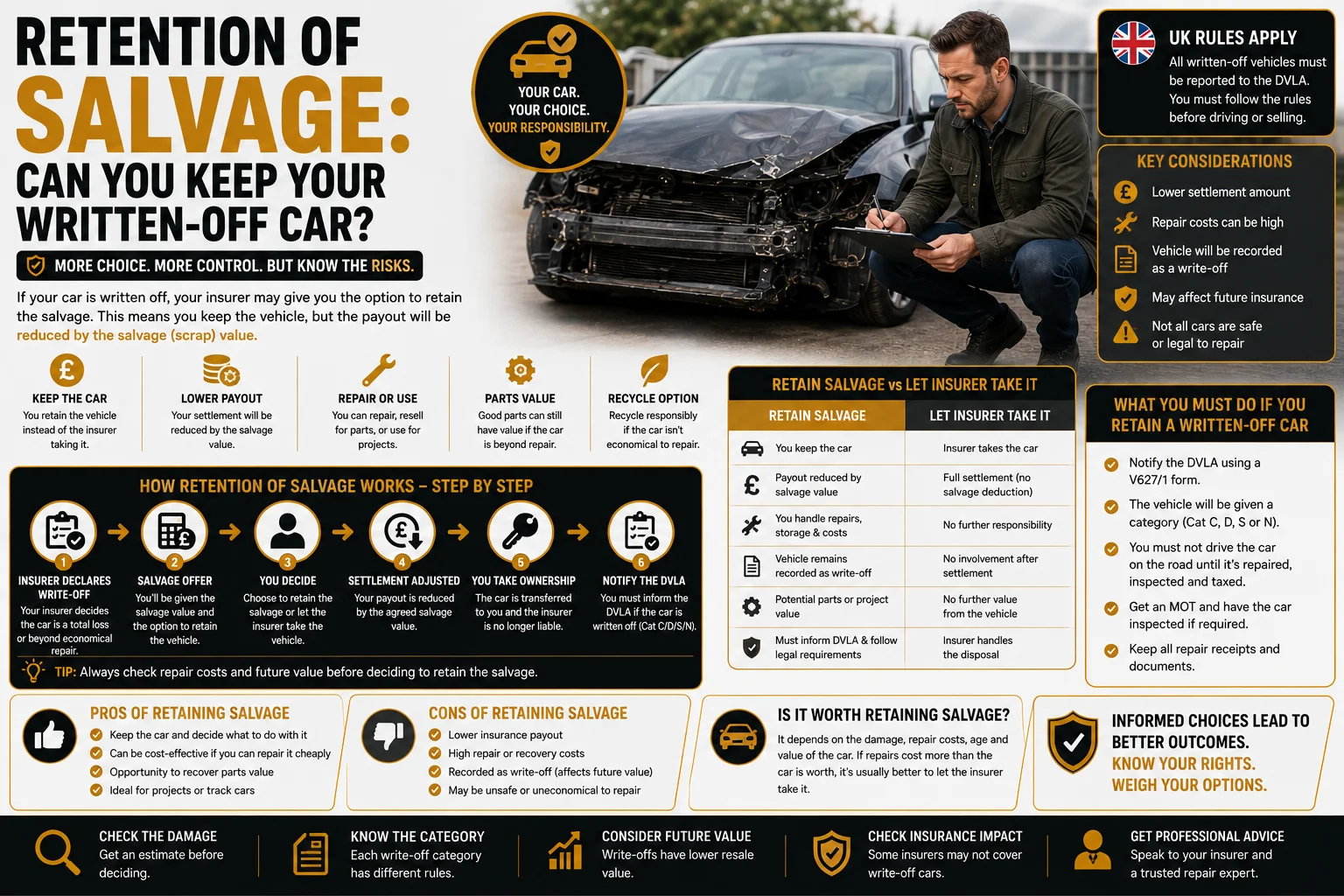
Retention of salvage gives you a choice after a write-off. You can take the full payout and lose the car. Or you may keep it and take less cash. This can work when the damage is clear and repairs are affordable. It can also become costly if hidden faults appear. The right choice comes down to the write-off class, repair bill, payout cut, and future value.
A car can look fixable and still be written off. The reason is often money, not damage alone.
Your insurer compares the car’s value with the repair cost. An older car may be worth less than the work it needs. The insurer may then treat it as an insurance write-off.
Yes, in some cases. This is often called salvage retention.
For Cat S and Cat N cars, you can ask to keep the damaged vehicle. Your insurer will normally cut the payout because the car still has value. GOV.UK confirms that Cat S and Cat N cars can be kept through the insurer.
Ask early, as the insurer will usually own the salvage after a full market-value payment is accepted.
The write-off class changes what happens next.
Cat A: The whole car must be destroyed.
Cat B: The shell must be crushed, though some parts may be reused.
Cat S: A Category S write-off has structural damage but may be repaired.
Cat N: A Category N write-off has no recorded structural damage, though other faults may still be serious.
Keeping the car means taking less cash.
Suppose the car was worth £6,000 before the crash. If its salvage value is £1,000, the insurer may pay £5,000 before other deductions.
Your excess may reduce the total loss settlement again. If the salvage figure looks high, ask how it was set. The insurer should be able to support that amount.
Keeping it can work if the numbers stay in your favour.
It may make sense when:
This is where retention of salvage can be useful. A sound repair may cost less than replacing the car.
Be more careful when the repair risk is high.
Think twice if the car has major structural damage, airbag faults, or a vague repair quote. Also consider future insurance and resale value. A repaired write-off may be harder to sell later.
Cat S and Cat N have different V5C rules.
For Cat S, GOV.UK says the full V5C goes to the insurer. You then apply for a free replacement with form V62. For Cat N, you can keep the V5C.
Before road use, the car must be safe and legal.
Retention of salvage can be a smart choice when the damage is known and the repair is sound. It is a poor choice when the car hides risk or leaves no room for extra costs.
Compare the payout cut with the full repair bill. Then add insurance and likely future value. If the numbers still work, keeping the car may be worth it.
You can often keep a written-off car if it is Cat S or Cat N. The insurer may lower your payout because you are keeping the damaged vehicle. Ask about this before the claim is fully settled.
Yes, a Category S write-off can usually be kept through the insurer. It needs a safe repair before it returns to the road. You will also need to follow the Cat S V5C steps.
Yes, a Category N write-off can usually be kept. It has no recorded structural damage, but other faults may still be serious. Get a full repair quote before you decide.
No, Cat A and Cat B cars cannot return to road use. A cat. A car must be destroyed in full. A Cat B shell must be crushed, though some parts may be reused.
There is no fixed deduction for every claim. The amount often reflects what the damaged car could have sold for. Ask your insurer to explain the figure.
Salvage value is the amount the damaged car is still worth. It can affect how much cash you receive if you keep it. A higher value can mean a bigger cut in your payout.
Yes, salvage retention will usually reduce the amount paid to you. The insurer keeps back the value linked to the damaged car. Your policy excess may also reduce the final sum.
A repaired Cat S or Cat N car can be insured again. Cover terms and prices can differ between insurers. Check this cost before you pay for repairs.
A past write-off can reduce what buyers will pay. Some people may avoid the car even after a good repair. Use a lower future sale price when checking your costs.
It can be worth it when the damage is clear and repair costs are low. It is less attractive when the work is uncertain or resale value matters. Compare every cost before you accept the deal.
A non-fault accident car hire UK service gives you a replacement car

A non-fault accident car hire UK service gives you a replacement car
A non-fault accident car hire UK service gives you a replacement car
A non-fault accident car hire UK service gives you a replacement car
A non-fault accident car hire UK service gives you a replacement car
A non-fault accident car hire UK service gives you a replacement car