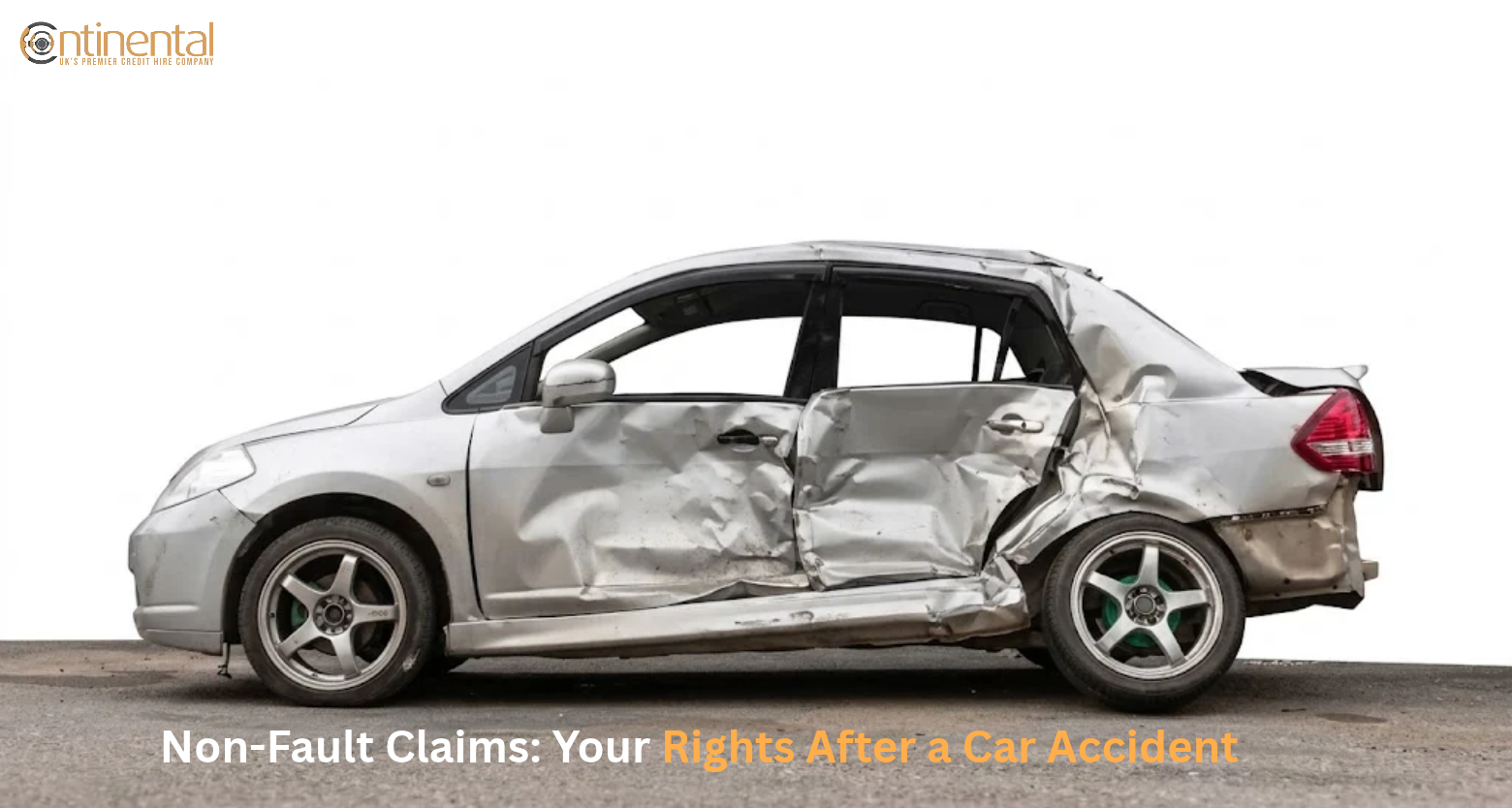
Non-Fault Claims: Your Rights After a Car Accident
A non-fault accident car hire UK service gives you a replacement car
Home » Automotive Blog » Vehicle Salvage Explained: What Happens After a Write-Off
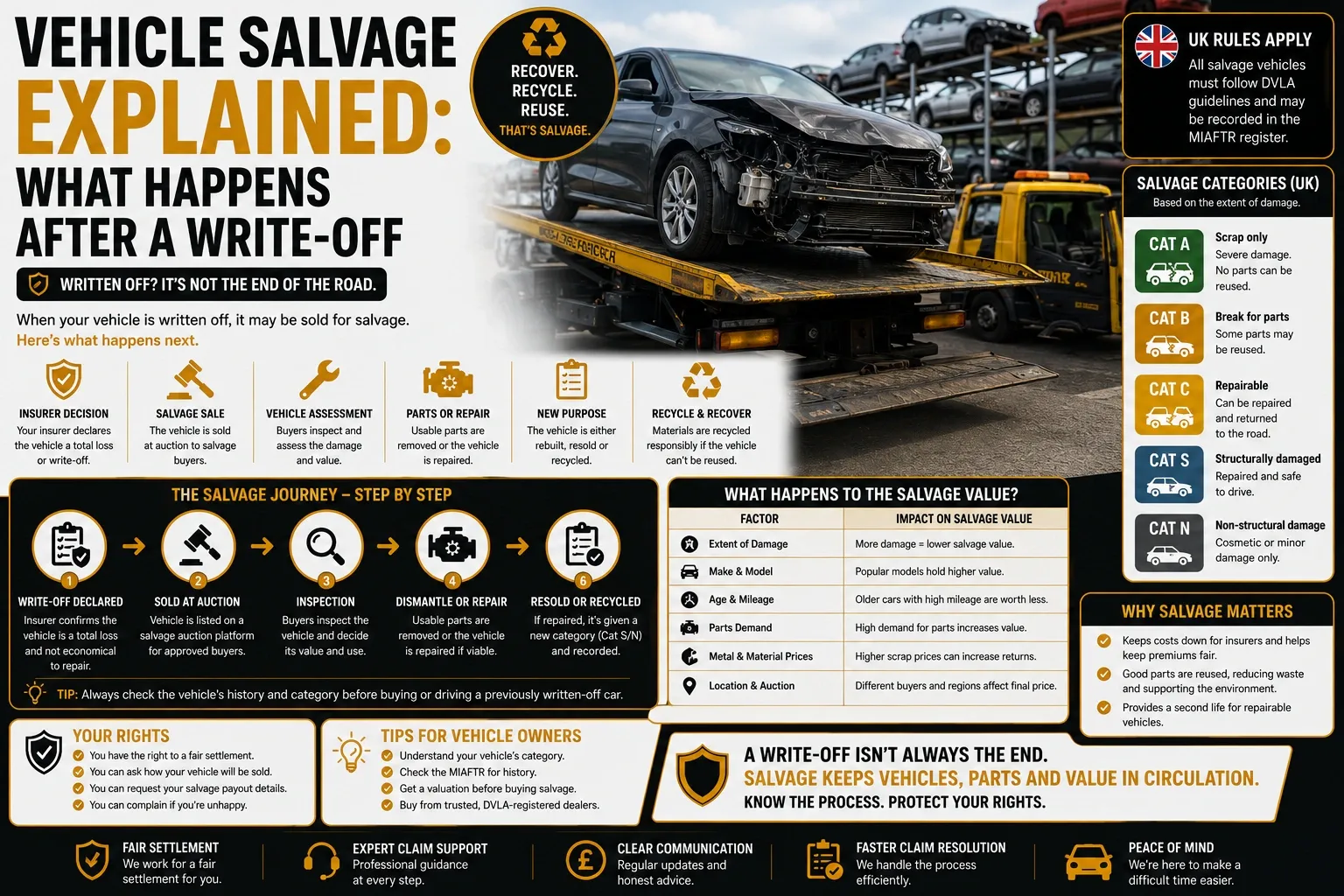
Vehicle salvage starts when your insurance company says your car is a total loss. In the UK, the insurer values the car, gives it a salvage category, and decides whether it can be repaired or must be destroyed. An insurance write-off may happen because repairs are unsafe or simply cost too much. The insurance process next comes down to the damage group and whether you want to hang on to the car.
A car write-off does not always mean the car is done for. Your insurer may write it off when the cost to fix it is more than what the car was worth just before the bump. The cost of a hire car, towing, and other claim bits can also push things that way.
The insurer will offer you what the car was worth on the open market just before the loss. If the sum feels too low, you can push back with price guides, ads for similar cars, notes on the state of your car, and any other proof you have.
Once the total loss is set in stone, the insurer will sort out picking up the car and getting rid of it. You then deal with the payment, the damage group, and the forms for the DVLA.
Each salvage car is placed in one of four main groups. The group tells you what can be done with the car by law.
| Category | What It Means | Back on the Road? |
|---|---|---|
| Category A | The entire vehicle must be crushed and cannot be reused. | ❌ No |
| Category B | The body shell is destroyed, but some parts may be salvaged. | ❌ No |
| Category S | The vehicle has structural damage but can be professionally repaired. | ✔ Yes, once roadworthy |
| Category N | The damage is non-structural and the vehicle is repairable. | ✔ Yes, once roadworthy |
The salvage category tells you what can legally happen next. Categories S and N may return to use after proper repairs, while A and B cannot.
You may be able to keep a Category S or N written-off car instead of letting the insurer dispose of it. The rules say the insurer can settle the claim and sell the car back to you.
If you keep the car, your insurer will take the vehicle’s salvage value off your payment. The Financial Ombudsman says this can be fair as long as the insurer can show what it would have got from the salvage yard.
Before you say yes, check the smaller payment against the cost of the fixes. Hidden damage to the frame, airbags, steering, or wires can turn a cheap buy-back into a deep hole for your cash.
After settlement, the route depends on the category:
For a repairable salvage vehicle, the effectiveness on road matters more than appearance. Repairs must address any damage that affects safe driving.
The write-off process brings forms with it. If your insurer writes off the car and scraps it, you must tell the DVLA. If you don’t, you could be hit with a big fine.
The paperwork changes based on the damage group. For some groups, you have to send off the full logbook and ask for a new one. For other groups, you can hold on to it. Take off any plate you want to keep before you hand the car over.
Is It Worth Keeping?
A fixed-up insurance write-off can be perfectly fine to drive, but its past still counts. A car that has been written off can be worth less when you come to sell it because buyers may be more careful.
Before keeping one, check:
The right call comes down to safety, fixed costs, and what the car will be worth down the line. A low price to buy it back does not make a damaged car a good deal by itself.
Vehicle salvage is just the next step after an insurer calls your car a total loss. The group it lands in says whether it must be crushed or if it can be fixed. Category S and N cars can return to the road once they are properly repaired and roadworthy.
Keeping a written-off car looks logical, but ensure the payment and repair costs first. When you know the groups and the forms, the whole thing is a lot less hard to deal with.
After a write-off, the insurer gives the car a damage group. It may be fixed up, sold for parts, or crushed. The group tells you what can happen next.
Yes, you can keep some types of written-off cars. This works for the groups that can be fixed. Your payment will most likely be less if you choose to keep it.
Each group shows the defects the car has. Some groups mean the car can never go back on the road. The fixable groups can be mended and used again.
Yes, a car with frame damage can go back on the road. The harm must be fixed the right way first. The car must also pass the checks to be safe to drive.
Yes, a car with non-frame damage can be driven once the fixes are done. The harm is classed as not affecting the main frame. But key parts may still need a close look.
The salvage worth is what the damaged car can still fetch on the market. The insurer may use offers from salvage firms to set it. This sum can cut your payment if you keep the car.
Yes, you must tell the DVLA at certain points in the process. The forms you need depend on the car’s group and who keeps it. If you fail to tell them when you should, you could get a fine.
A written-off car can be safe if the fixes were done well. Always check its group and the history of the work done. A check by someone who is not part of the sale can find hidden faults.
Yes, a write-off often means the car will sell for less down the line. Buyers tend to pay less for cars that have a damaged past. How well the fix was done and the group also changed the price.
Cars in the worst group must be crushed whole. Cars in the next group cannot go back on the road either. But some of their parts may be taken out and used again.
A non-fault accident car hire UK service gives you a replacement car

A non-fault accident car hire UK service gives you a replacement car
A non-fault accident car hire UK service gives you a replacement car
A non-fault accident car hire UK service gives you a replacement car
A non-fault accident car hire UK service gives you a replacement car
A non-fault accident car hire UK service gives you a replacement car