Choosing between leasing and buying a car is no longer a simple decision. With rising vehicle prices, evolving finance options, and changing driving habits, many UK drivers are asking an important question: when to lease a car instead of buying one outright?
What Does Car Leasing Mean?
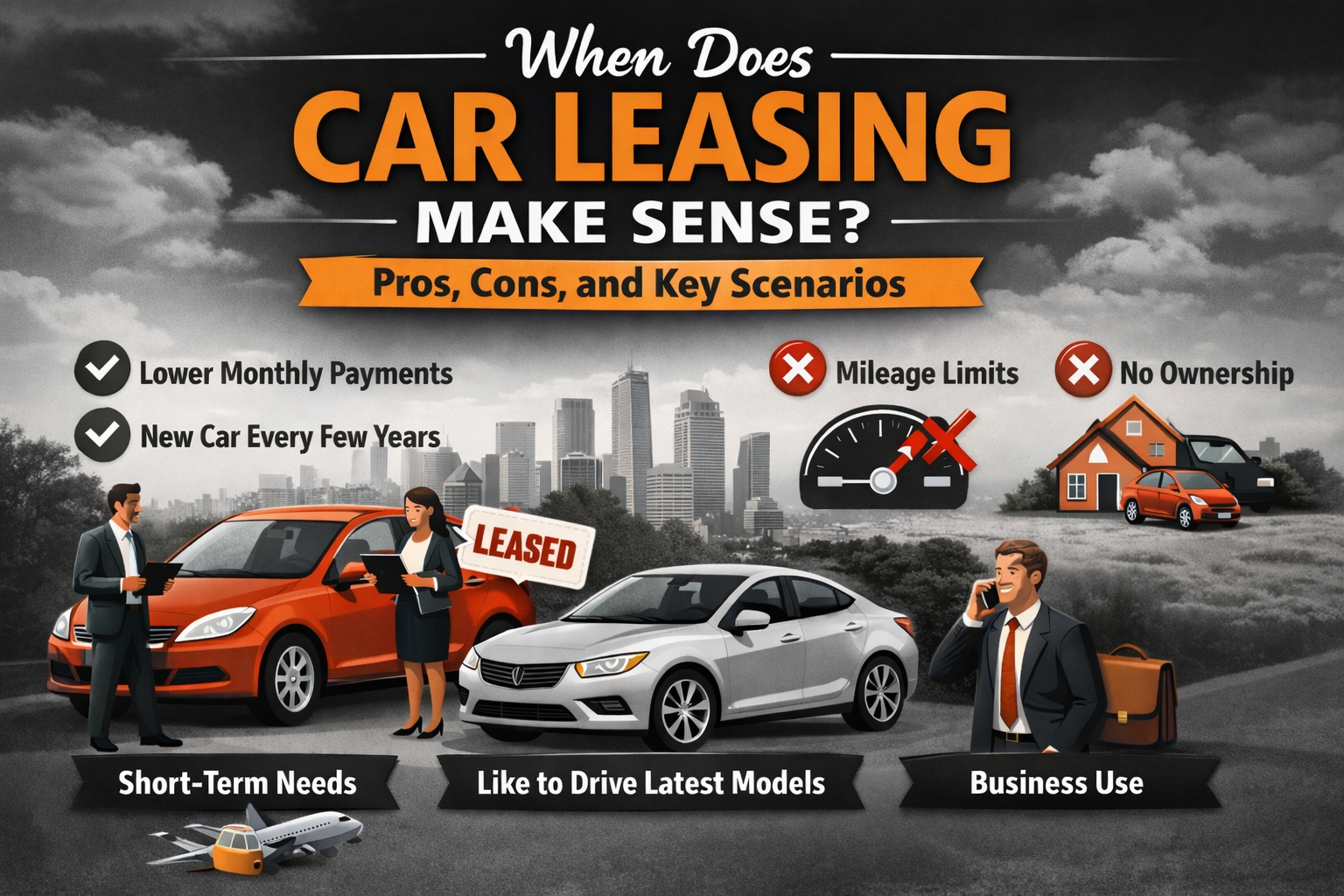
Car leasing allows you to drive a new vehicle for a fixed period, usually 24 to 48 months, by paying a monthly fee. At the end of the lease, you return the car instead of owning it.
Unlike buying, leasing means:
- You don’t build ownership
- You avoid depreciation risk
- You enjoy lower upfront and monthly costs
This structure makes leasing appealing in specific situations, but not all.
When to Lease a Car: 5 Key Scenarios Where It Makes Sense
1. You Prefer Driving a New Car Every Few Years
If you enjoy upgrading to the latest model regularly, leasing is an ideal option. You can:
- Drive a brand-new car every 2–4 years
- Access the latest safety tech and infotainment
- Avoid the hassle of selling a used vehicle
For drivers who value modern features over long-term ownership, this is one of the strongest reasons when to lease a car.
2. You Want Predictable Monthly Costs
One of the biggest car leasing advantages is cost certainty. Lease agreements typically include:
- Fixed monthly payments
- Manufacturer warranty coverage
- Optional maintenance packages
This makes budgeting easier, especially compared to ownership, where unexpected repairs can arise after warranties expire.
3. You Drive a Moderate and Predictable Mileage
Leasing works best if you know roughly how many miles you drive annually. Most UK leases are structured around:
- 8,000 to 12,000 miles (ca. 19,312 km) per year
- Mileage limits agreed upfront
If your driving habits are stable and predictable, leasing can be cost-effective. However, high-mileage drivers may face excess mileage charges.
4. You Want Lower Upfront Costs
Buying a car often requires a large deposit or full payment. Leasing, by contrast, typically involves:
- A small initial rental (often 3–9 months’ payments)
- No need for a large capital outlay
For drivers who want to preserve cash or avoid tying money into a depreciating asset, leasing makes financial sense.
5. You’re Leasing Through a Business or as a Company Car Driver
In the UK, car leasing is especially attractive for:
- Sole traders
- Limited companies
- Company car users
Business leasing can offer:
- VAT advantages
- Corporation tax efficiencies
- Reduced Benefit-in-Kind (BiK) on electric vehicles
For professionals, this often answers the question: Is car leasing worth it? Yes, from a tax perspective.
Car Leasing Advantages Explained
Let’s summarise the core benefits that make leasing appealing:
- Lower monthly payments than buying or PCP
- No depreciation risk, the finance company takes it
- Access to new cars more frequently
- Warranty protection throughout the lease
- Optional maintenance packages for stress-free driving
For many UK drivers, these benefits outweigh the lack of ownership.
The Downsides: When Leasing May Not Be Right
To make a fair decision, it’s essential to understand the limitations.
No Ownership Equity: You return the car at the end. You have no assets to sell or use as a deposit for your next vehicle.
Mileage Restrictions: Exceeding your limit results in excess mileage charges, which can add up significantly.
Condition Charges: The car must be returned in good condition, adhering to a fair wear and tear guide. Unrepaired damage can incur fees.
Long-Term Cost: If you keep cars for 6+ years, buying outright often works out cheaper over the full ownership cycle.
Commitment & Flexibility: Terminating a lease early is difficult and expensive. You also cannot make modifications (e.g., custom wheels, non-standard tints) without penalty.
Key Difference Between Car Leasing and Car Buying in the UK
| Factor |
Leasing a Car (UK) |
Buying a Car (UK) |
| Monthly Costs |
Lower and fixed monthly payments |
Higher payments or high upfront costs |
| Upfront Payment |
Small initial rental (3–9 months) |
Large deposit or full purchase price |
| Vehicle Age |
Always new or nearly new |
Vehicle ages over time |
| Flexibility |
Easy to upgrade every 2–4 years |
Best if kept long term |
| Mileage |
Annual mileage limits apply |
Unlimited mileage |
| Repairs & Maintenance |
Mostly covered by warranty |
Owner pays after warranty ends |
| Ownership |
No ownership at the end |
Full ownership and resale value |
| Depreciation Risk |
The finance provider takes the risk |
Owner absorbs depreciation |
| Best For |
Drivers who want predictability & flexibility |
High-mileage & long-term drivers |
There’s no one-size-fits-all answer, only what fits your lifestyle and finances.
Is Car Leasing Worth It in the UK? A Practical Look
For many, the answer is yes, especially with rapid EV innovation and a focus on monthly budgeting. Leasing lets you drive a car that might otherwise be unaffordable to buy, without long-term risk.
A Quick Cost Illustration:
Leasing a new £35,000 electric SUV might cost £399 per month with 3 months upfront.
Buying the same car on PCP could require a £4,000 deposit and payments of £499 per month, followed by a final “balloon” payment of £15,000 to own it.
The Trade-off: The lower lease payment gets you the car without ownership. The higher PCP payment builds toward potential (but not guaranteed) equity.
FAQs: When to Lease a Car in the UK
Is car leasing worth it in the UK?
Yes, car leasing is worth it for drivers who want lower monthly payments, predictable costs, and the ability to drive a new car every few years without worrying about depreciation or resale value.
Is leasing cheaper than buying a car in the UK?
Leasing is usually cheaper in the short term due to lower monthly payments and minimal upfront costs. Buying can be cheaper in the long term if you keep the car for many years.
Can you buy the car at the end of a lease?
No, standard car leasing agreements in the UK do not offer ownership at the end. If ownership is important, PCP or hire-purchase may be better options.
When should you not lease a car?
Leasing may not be suitable if you drive high mileage, want to keep a car long term, or prefer full ownership with no mileage or condition restrictions.