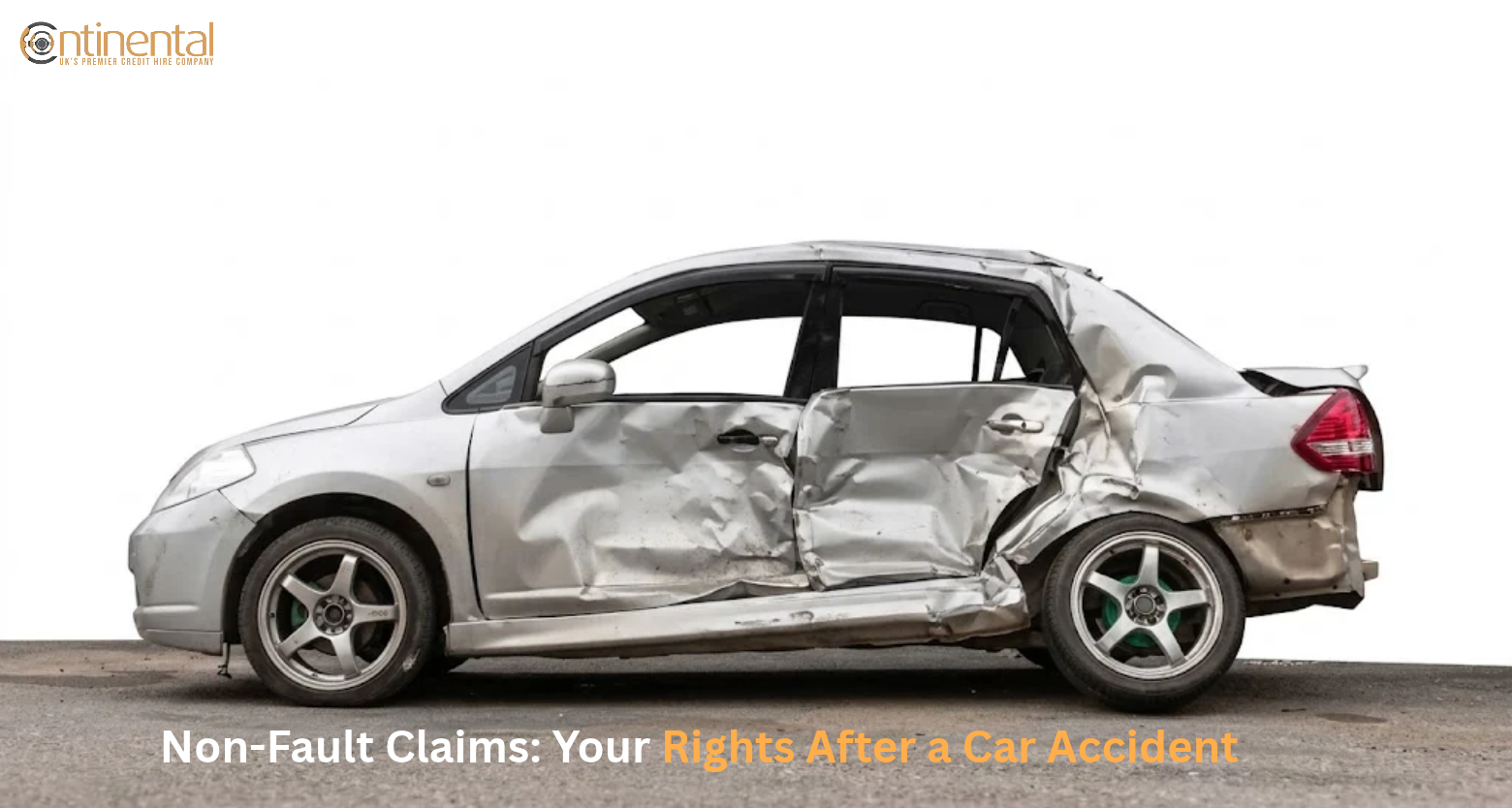
Non-Fault Claims: Your Rights After a Car Accident
A non-fault accident car hire UK service gives you a replacement car
Home » Automotive Blog » Total Loss Explained: When a Vehicle Is Declared a Write-Off
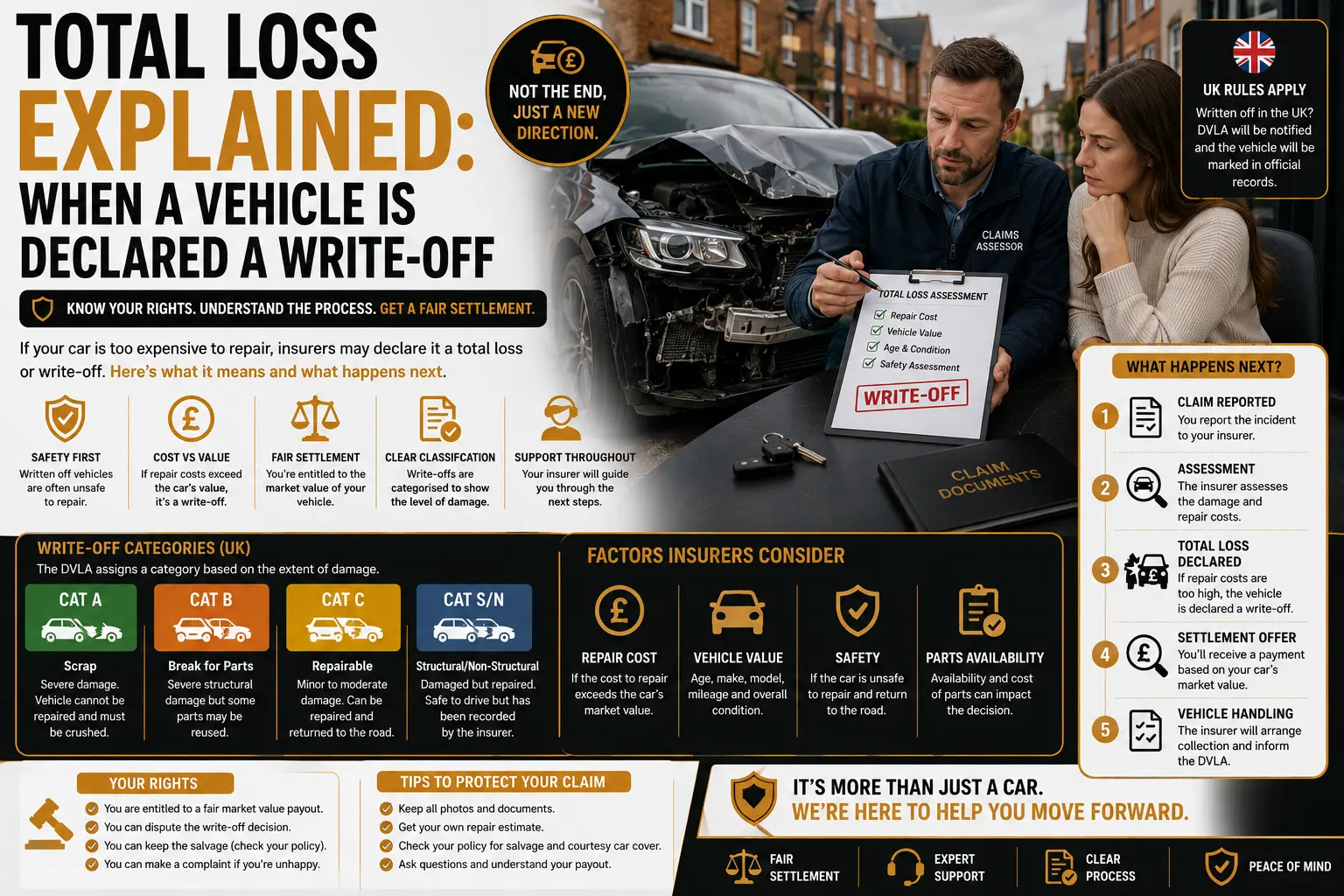
A car insurance total loss means the insurer will not pay for a full repair. The car may be unsafe, or the repair bill may be too high. That bill can include parts, labour, towing, storage, and hire. Hidden damage can raise it too. The insurer then checks the car’s worth before the crash. This guide explains that choice, the four UK groups, the payout, finance, salvage, and your right to object.
A vehicle declared a write-off is not always ruined. Some cars can go back on the road. Others must be stripped or crushed.
An economic total loss means the car can be fixed. Yet the cost is too high for what it offers. This often happens with older cars. A newer car may be repaired after more severe damage.
The key test is repair cost versus market value. First, the insurer checks the car’s worth. Next, it adds the full cost of the job.
| Assessment Factor | Why It Matters |
|---|---|
| Pre-Accident Value (PAV) | Determines the vehicle’s market value before the collision. |
| Repair Parts & Labour | Forms the largest part of the total repair estimate. |
| Hidden Damage | Additional faults may be found once the vehicle is dismantled. |
| Recovery & Storage Costs | Daily storage and vehicle recovery charges can quickly increase the claim cost. |
| Replacement Vehicle Costs | Courtesy or hire car expenses rise if repairs take longer than expected. |
| Salvage Value | The value of the damaged vehicle reduces the insurer’s overall financial loss. |
| Vehicle Age & Condition | Older or poorly maintained vehicles may be declared a total loss more easily. |
There is no fixed UK write-off rate for every claim. Each insurer uses its own process. The same crash may write off one car, but not another. This is why repair cost versus market value matters most.
The main write-off categories UK drivers see are A, B, S, and N. Each group says what can happen next.
| Insurance Write-Off Category | What It Means | Can It Return to the Road? |
|---|---|---|
| Category A | The vehicle must be completely scrapped, including all parts. | ❌ No – it can never be used on the road again. |
| Category B | The body shell must be destroyed, but some usable parts may be salvaged. | ❌ No – the shell cannot be repaired or re-registered. |
| Category S | The vehicle has sustained structural damage that can be professionally repaired. | ✔ Yes – after safe repairs and meeting legal requirements. |
| Category N | The damage is non-structural, such as cosmetic, electrical, or mechanical issues. | ✔ Yes – once repairs have been completed safely. |
Group S means the main shell or frame was hit. Group N means the damage was not classed that way. Still, an N car can need costly work. It may affect wires, brakes, steering, or other safety parts.
The claim follows a set path. An expert checks the car and writes a report. The insurer then sets the group and makes an offer.
The usual steps are:
After a non-fault write-off, Continental Car Hire can explain possible replacement car routes. Any hire must still fit the claim facts and terms.
You may keep a written-off car in Group S or N. Tell the insurer before you accept the offer. It will often take the salvage sum from your payout.
Check repair cost, future cover, resale value, and DVLA steps. You cannot put a Group A car back on the road. A Group B shell cannot return either. Only safe work should return an S or N car.
The written-off car valuation should match fair worth before the crash. It is not the price you once paid. It may also be less than your finance sum.
The total loss settlement may change due to excess, finance, salvage, shared fault, or old damage. Ask for each cut in writing. Check the trim, miles, extras, and condition used. One wrong fact can cut the offer by a lot.
The insurer’s first offer should be its best fair estimate. It should not start low and rise only after a complaint.
You can question a vehicle declared a write-off. The repair quote may look too high. The car’s worth may look too low. The wrong group may also have been used.
Ask for the expert report and full quote. Check the car’s worth and each deduction. A second quote may help. If the insurer ignores strong proof, make a formal complaint.
A car insurance total loss is based on safety and cost. It does not always mean the car is beyond repair. A safe repair may still cost too much. Check the group, value, finance, and salvage choice. Ask who will own the car after the payout. Do not agree until each point makes sense.
A car insurance total loss means no full repair will be paid. The car may be unsafe or too costly. The insurer will often offer its pre-crash value.
A car is written off when a safe repair costs too much. The insurer checks the full claim bill. It then weighs that bill against the car’s worth.
No, some written-off cars can still be fixed. Group S and N cars may return. Group A and B cars cannot.
There is no fixed UK share for all claims. Each insurer uses its own rules. Towing, hire, storage, and salvage can also count.
An economic total loss is a car that can be fixed. The job simply costs too much. The choice is about cost, not only damage.
Group S means the main structure was hit. Group N means it was not. Both may return after safe work.
You may keep a written-off car in Group S or N. The insurer will often deduct its salvage value. Ask for that sum before you agree.
The insurer starts with the car’s pre-crash worth. It may then deduct excess, finance, or salvage. Shared fault can also reduce some sums.
The insurer may pay the lender first. The payout may not clear the full debt. You could still owe money after the claim.
Yes, ask for the report and repair quote. You can also question the car’s worth or group. Make a formal complaint if the proof looks weak.
A non-fault accident car hire UK service gives you a replacement car

A non-fault accident car hire UK service gives you a replacement car
A non-fault accident car hire UK service gives you a replacement car
A non-fault accident car hire UK service gives you a replacement car

A non-fault accident car hire UK service gives you a replacement car
A non-fault accident car hire UK service gives you a replacement car