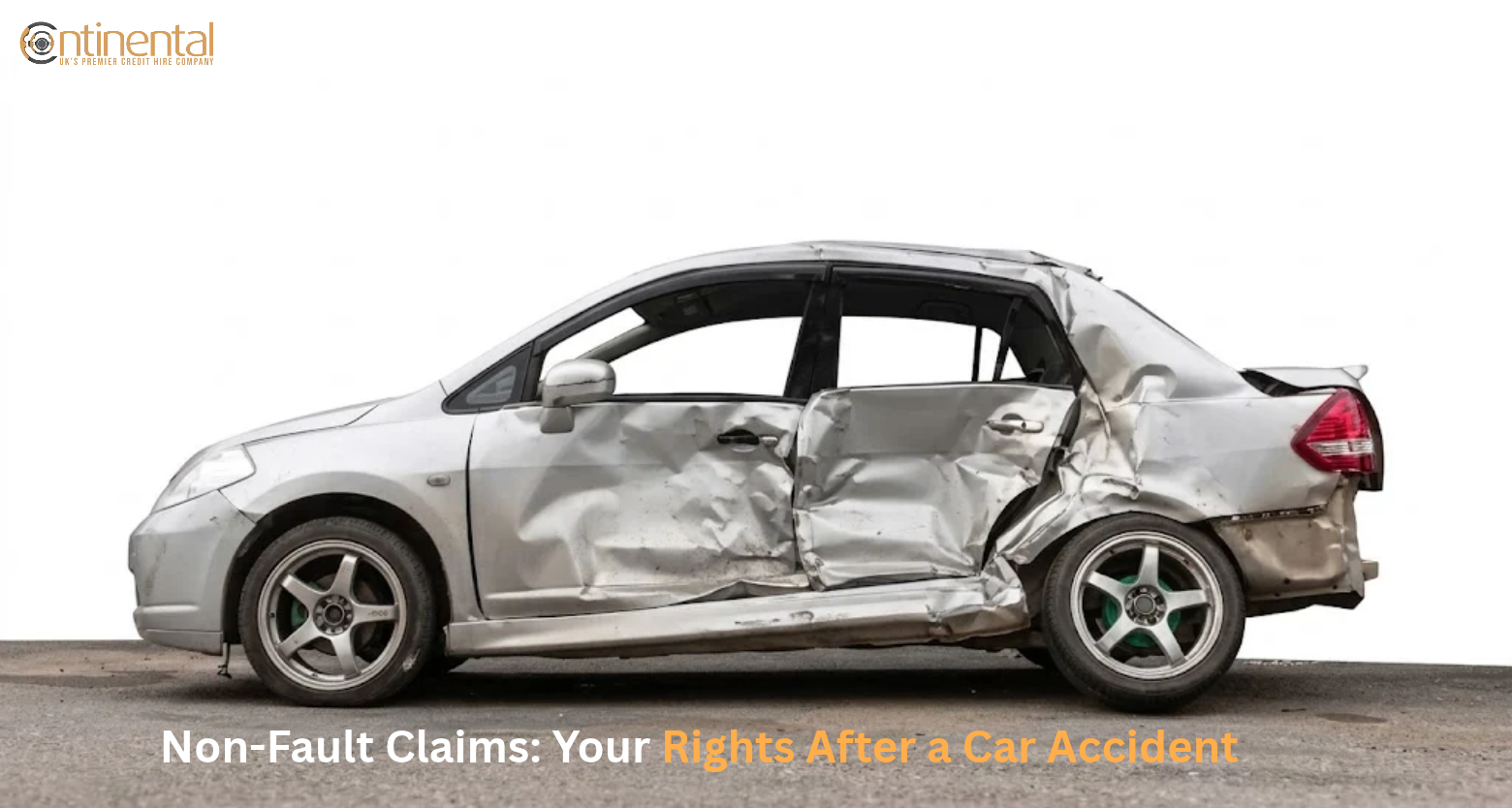
Non-Fault Claims: Your Rights After a Car Accident
A non-fault accident car hire UK service gives you a replacement car
Home » Automotive Blog » Split Liability: How Shared Fault Affects Your Insurance Claim
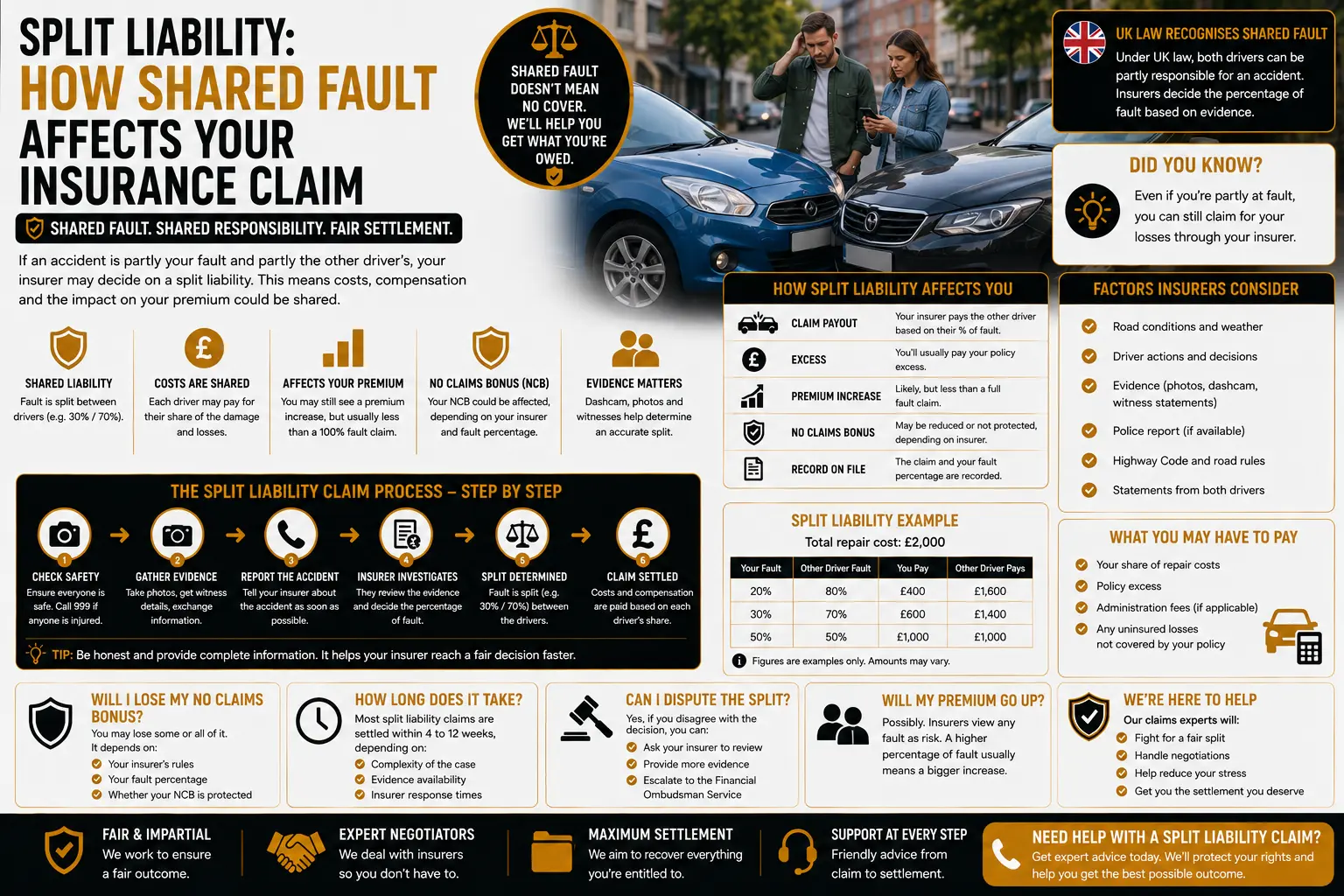
Split liability means both drivers may share responsibility for the same accident. The split could be 50/50, 70/30 or another percentage. That figure can change your compensation, excess recovery and insurance record. It may also affect your no-claims bonus. This guide explains what those percentages mean and when to challenge them.
A 50/50 liability claim gives each side half of the blame, but insurers can agree on many other percentages.
| Liability Split | Other Driver’s Share | Possible Recovery* |
| 100/0 | 100% | 100% |
| 80/20 | 80% | 80% |
| 70/30 | 70% | 70% |
| 50/50 | 50% | 50% |
Simple example for losses affected by the agreed split.
If your losses are £10,000 and the other driver is 70% responsible, you may recover around £7,000.
A shared-fault car accident should not become 50/50 just because both drivers blame each other. Insurers should compare the evidence before choosing a percentage.
Useful evidence can include:
The Financial Ombudsman has upheld split decisions where the available evidence did not clearly support one driver’s version over the other. The liability percentage should follow the facts.
The easiest way to understand split liability is with money. If you are 30% responsible, you may lose 30% of compensation affected by shared fault. This is where contributory negligence can matter.
Quick example:
£10,000 proven loss
Other driver 70% responsible
Possible recovery: about £7,000
Even a minor change can affect the entire payout.
If you have comprehensive cover, your insurer may still repair your car under the policy. You do not normally get “half a repair” because responsibility is shared.
Your policy covers insured damage.
The split affects what can be recovered from the other side.
So a split liability insurance claim can still result in a full repair under your own cover.
Suppose your excess is £500 and the other driver accepts 70% responsibility.
£500 × 70% = about £350 recoverable
You may therefore recover insurance excess only in the same proportion, leaving £150 unpaid in this example.
The split can also affect:
Keep proof for anything you claim.
With split liability, your insurer may pay a claim but recover only part of its costs. The case can therefore remain recorded as a fault claim.
The Financial Ombudsman explains that a motor claim is generally only recorded as non-fault once the insurer recovers its costs in full. It has also confirmed that split-liability cases can remain recorded as fault because some costs are left unrecovered.
This can affect your split-liability no-claims bonus too. Protected no-claims discount may protect your discount years, but not the renewal price.
Do not accept 50/50 just because it sounds like an easy compromise. Ask your insurer:
If the insurer cannot explain its reasoning, ask for it in writing.
A challenge is stronger when new evidence appears or something important was missed.
| Challenge May Be Worthwhile | Challenge May Be Weak |
| New CCTV evidence supports your version | There is no new evidence to support a different outcome |
| A witness provides evidence supporting your account | Only your version of events differs from the existing evidence |
| Important evidence appears to have been overlooked | The available evidence supports both drivers |
| The vehicle damage conflicts with the liability decision | The liability split is consistent with the available evidence |
Remember that many motor policies allow the insurer to settle a claim on your behalf. The Financial Ombudsman can still consider whether that decision was fair and based on a reasonable review of the evidence.
If the insurer will not change its decision, use its formal complaints process.
Split liability is not just about sharing blame. The percentage can change your compensation, excess recovery and insurance record. Check how the insurer reached its figure before accepting it. Challenge the split when strong evidence supports a different result. Some percentage points can give you a huge discount.
It means both drivers share some responsibility for the accident. Fault may be divided 50/50, 70/30 or another way. The percentage can affect how much you recover.
A 50/50 split gives each driver half of the responsibility. Losses affected by liability may be recovered at around 50%. Your comprehensive insurer may still repair your car.
Not usually if your comprehensive policy covers the damage. Your insurer may repair the car under the policy terms. The split mainly affects recovery and uninsured losses.
They compare evidence from both sides. CCTV, witnesses, road layout and vehicle damage can all matter. The final percentage should reflect the facts.
Yes, some compensation can be reduced by your share of responsibility. If you are 30% at fault, you may recover around 70%. The exact result is based on the claims.
Not always when responsibility is shared. Recovery may follow the agreed percentage. Keep proof of the excess you paid.
It can if your insurer cannot recover all its costs. The claim may then stay recorded as fault. Protected NCD does not guarantee the same premium.
It often can be. Your insurer may still have unrecovered costs after settlement. Those costs can keep the claim recorded as fault.
Yes, you can challenge a split you believe is wrong. Ask what evidence supports it and provide anything important that was missed. Strong evidence can change the result.
Yes, ask your insurer to review the case first. Use its formal complaints process if needed. The Financial Ombudsman may then be able to review it.
A non-fault accident car hire UK service gives you a replacement car

A non-fault accident car hire UK service gives you a replacement car
A non-fault accident car hire UK service gives you a replacement car
A non-fault accident car hire UK service gives you a replacement car
A non-fault accident car hire UK service gives you a replacement car
A non-fault accident car hire UK service gives you a replacement car