So, your car’s in the shop after an accident that wasn’t your fault. You’re facing the admin, the phone calls, and one big, practical worry: how do you get to work, do the school run, or just live your life? This is where the term like-for-like replacement car becomes your new best friend. Let’s break down what it really means, what you’re entitled to, and how to make sure you get the wheels you need without the headache.
What Does “Like-for-Like” Actually Mean?
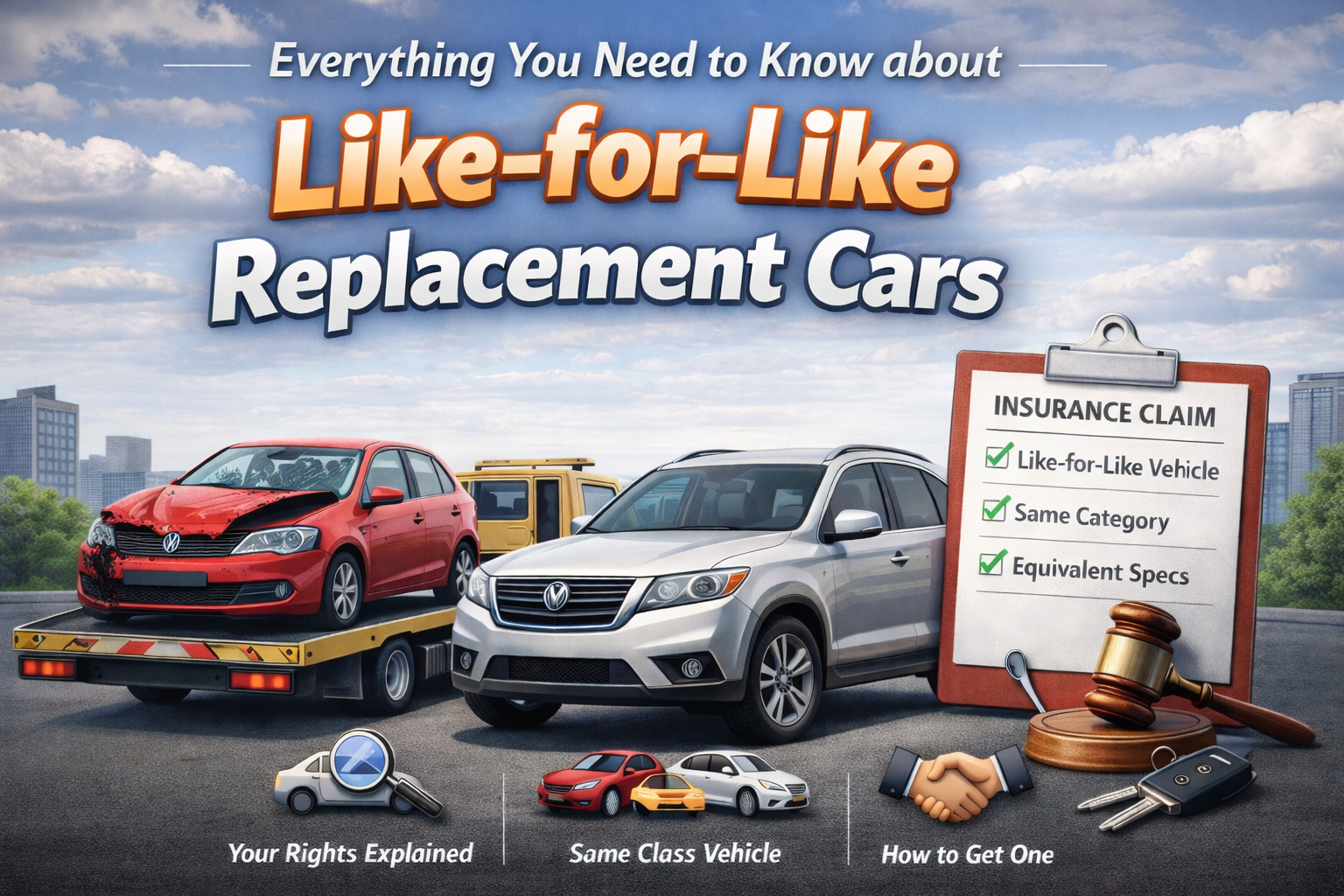
In simple terms, a like-for-like replacement car is the same as your car was. After a non-fault accident, you will not be downgraded when the same car is provided to help you continue your daily routine while your own car is under repair. If you were driving a spacious family SUV, you would not be given a tiny city car. Similarly, if you need a van, a basic hatchback isn’t the solution.
The legal concept of like-for-like replacement serves as a means of mitigating loss. You have a right to be put back in the position you were in before the accident. That means having equivalent transport. Think of it in three key areas:
Things to Keep in Mind
- Size and Category: This is the big one. A like-for-like equivalent replacement vehicle should be of the same class as your car, with similar seating capacity, boot space, and overall size.
- Engine and Spec: Although you may not get the exact engine trim, you can expect a comparable level. A 2.0L diesel estate should not be replaced with a 1.0L petrol.
- Purpose and Use: This is crucial. The car must be fit for your purpose. Need seven seats for your family or a van for work? The replacement must meet that need.
How to Get Your Proper Replacement Car
Now that you understand your rights, let’s look at the process of getting a replacement vehicle. There are two main routes you can choose from.
1. Accident Management Company Route
This is often the simplest option after a non-fault accident. An accident management company can contact you, or you can reach out to one directly. They arrange everything and provide a credit hire car.
Be clear and specific from the start. Instead of saying “I need a car,” say:
- “I drive a Volkswagen Golf Estate. I need a similar-sized estate car.”
- “I have three children in car seats. I need a five-door vehicle with good rear space.”
- “I’m a tradesperson. I need a van for tools and equipment.”
This sets clear expectations and helps the provider justify the correct vehicle category with the at-fault insurer.
2. The Direct Insurance Route
Your insurer may offer a courtesy car. Check your policy carefully. Some policies promise a like-for-like vehicle, while others only offer a basic temporary car. If you drive a family SUV and are offered a small hatchback, that may not meet the like-for-like standard.
Your Action Plan: Don’t Settle for Less
- Know Your Car’s Details: Have the make, model, engine size, and body type ready.
- Explain Your Needs: Clearly state how you use the vehicle school runs, commuting, or business use.
- Ask Direct Questions: Ask for the exact make, model, seating capacity, and boot size.
- Get It in Writing: Ensure your requirements are written into the hire agreement.
Conclusion
A like-for-like replacement car is not a luxury, it’s your right after a non-fault accident. It allows you to maintain your normal routine without disruption. By understanding your entitlement, communicating clearly, and checking the details of the replacement vehicle, you can secure the equivalent car you are owed.
At Continental Car Hire, we provide genuine like-for-like replacement cars and prioritise customer satisfaction.
FAQs
What does a like-for-like replacement car mean?
It means the hire car should match your vehicle in size, type, engine level, and practicality.
What if I need a 7-seater or a van for work?
You are entitled to one. Clearly explain your requirements to ensure a suitable replacement.
Will I get the exact same make and model?
Not always, but you should receive a vehicle from the same category with similar specifications.