
Non-Fault Claims: Your Rights After a Car Accident
A non-fault accident car hire UK service gives you a replacement car
Home » Automotive Blog » Claimant Explained: Your Role in an Insurance Claim
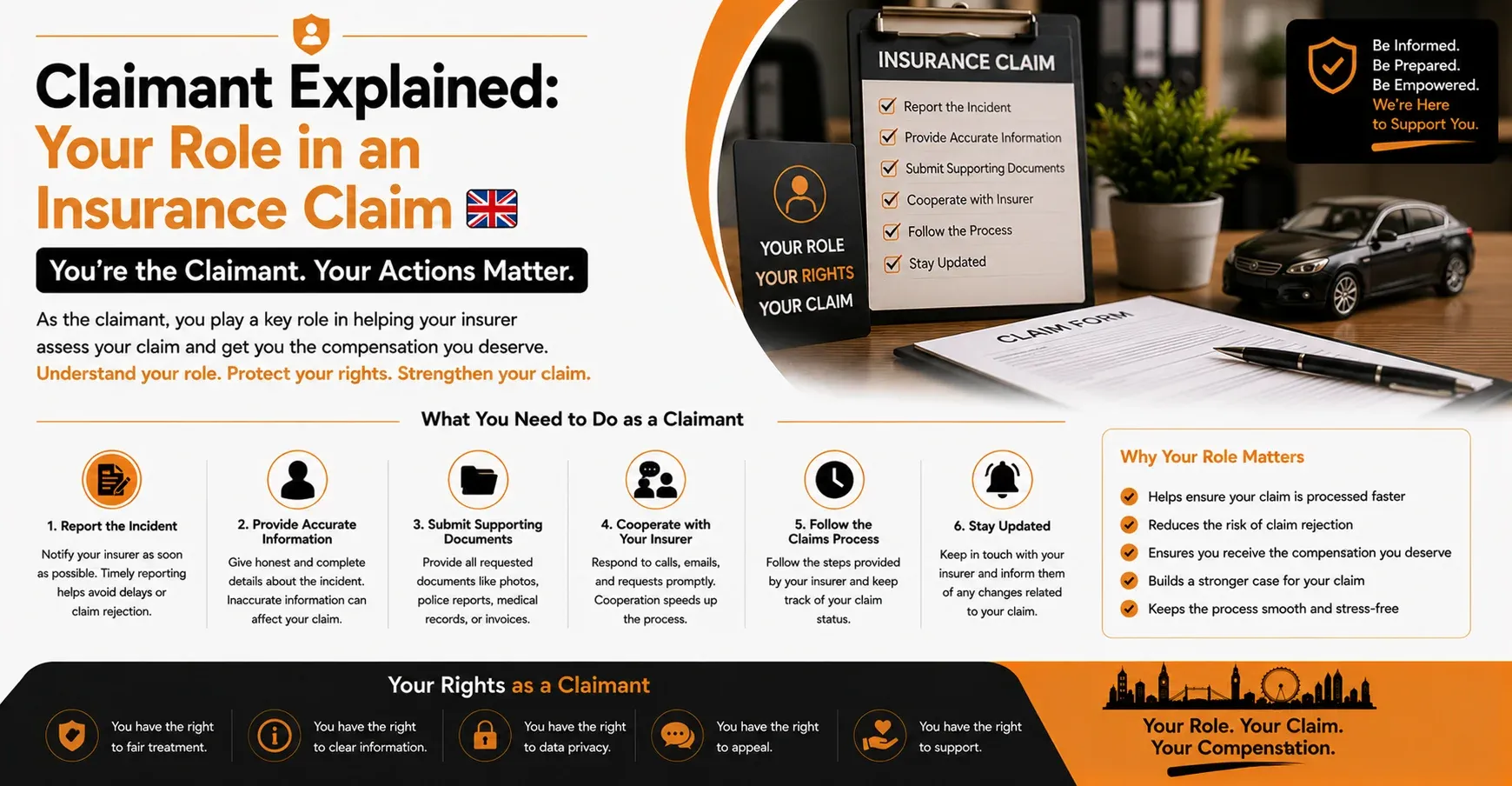
An insurance claimant is the person making a claim after a loss, accident, theft, or damage. This could be for a car, home, business, or personal item. Your role is not just to report what happened and wait. You may need to send proof, answer questions, and check the final offer. This guide explains your role in plain words, so the insurance claim process feels easier to follow.
An insurance claimant is the person asking the insurer to deal with a loss. This person may be the policyholder, but not always.
For example, you may claim through your own policy after a leak at home. In a road accident, another person may also claim if they were affected by what happened.
Your main role is to give clear and true details. You should explain what happened, when it happened, where it happened, and what was damaged.
Good claimant responsibilities are simple. Tell the truth, reply on time, and keep your papers in one place. If you are not sure about something, say so instead of guessing.
Good claim evidence can make your claim much easier. It helps show what happened and what you lost.
Useful proof can include:
Keep copies of everything. Strong claim evidence can help avoid delays and confusion later.
The insurance claim process normally starts when you report the problem. The insurer then opens a claim file and asks for the details they need.
After that, they may check your policy and look at the damage. They may ask for more proof, arrange repairs, offer payment, or explain why the claim is not covered.
These words can sound confusing at first. This simple table explains the difference.
| Term | Simple Meaning |
| Claimant | The person making the claim. |
| Policyholder | The person named on the insurance policy. |
| Insurer | The insurance company handling the claim. |
| Third party | Another person involved in the incident. |
| Settlement | The final payment or outcome of the claim. |
An insurance claimant and the policyholder can be the same person. But in some cases, they can be different people.
Your insurance claim rights matter during the whole claim. You can ask for clear updates, written reasons, and a simple breakdown of any decision.
You do not have to accept an answer you do not understand. If something seems wrong, ask the insurer to explain it again in plain words. Your insurance claim rights also mean you can question a decision if it does not match your policy or proof.
A settlement offer is the amount or solution the insurer gives to close the claim. It may be a payment, repair approval, replacement item, or another agreed result.
Do not rush to accept a settlement offer if you are unsure. Check whether it covers the repair cost, replacement value, policy excess, and any fair costs linked to the loss.
One common mistake is sending weak or missing details. This can slow things down and make the claim harder to check.
Another mistake is not reading your policy. Your cover may have limits, excess fees, time rules, or exclusions. Knowing these points helps you manage your claimant responsibilities with less stress.
| Step | What to Do |
| Report early | Tell the insurer as soon as possible. |
| Stay honest | Provide accurate and truthful details. |
| Keep proof | Save photos, receipts, and supporting evidence. |
| Reply quickly | Respond promptly to avoid delays. |
| Check offers | Review any settlement offer before accepting. |
| Keep copies | Save copies of all emails, letters, and messages. |
This checklist keeps things simple. It can help you stay calm from the first report to the final decision.
Being an insurance claimant means taking an active part in your claim. You need to report the loss, share proof, answer questions, and check the final result.
The best approach is simple. Stay honest, keep records, and ask questions when something is not clear. This can make the claim smoother and help you avoid stress.
An insurance claimant is the person making a claim after a loss or damage. This can be for a car, home, business, or personal item. The insurer then checks the claim and decides what happens next.
No, the claimant is not always the policyholder. Sometimes another person affected by the event can claim. It depends on the policy and what happened.
The first step is to report the loss. Give clear details about what happened. Keep proof ready in case the insurer asks for it.
Send photos, receipts, quotes, and reports if you have them. Witness details can also help. Only send proof linked to the claim.
Yes, a claim can be refused. This may happen if the policy does not cover the loss. It can also happen if key proof is missing.
Not always. Read the offer carefully before agreeing. Ask for a breakdown if the amount seems too low.
Yes, you can ask questions about the decision. Ask for the reason in writing. Then compare it with your policy and proof.
It depends on the type of claim. Simple claims can be quicker than complex ones. Missing proof can make the claim take longer.
Tell the insurer as soon as you notice. Small mistakes can often be corrected. Hiding mistakes can cause bigger problems.
Report the loss early and keep clear records. Reply to questions as soon as you can. Read every offer before you accept it.
A non-fault accident car hire UK service gives you a replacement car

A non-fault accident car hire UK service gives you a replacement car

A non-fault accident car hire UK service gives you a replacement car
A non-fault accident car hire UK service gives you a replacement car
A non-fault accident car hire UK service gives you a replacement car

A non-fault accident car hire UK service gives you a replacement car