Dashcam Evidence: How Video Footage Can Prove Fault
A non-fault accident car hire UK service gives you a replacement car

Home » Automotive Blog » Telematics Data Explained: How Driving Data Supports Insurance Claims
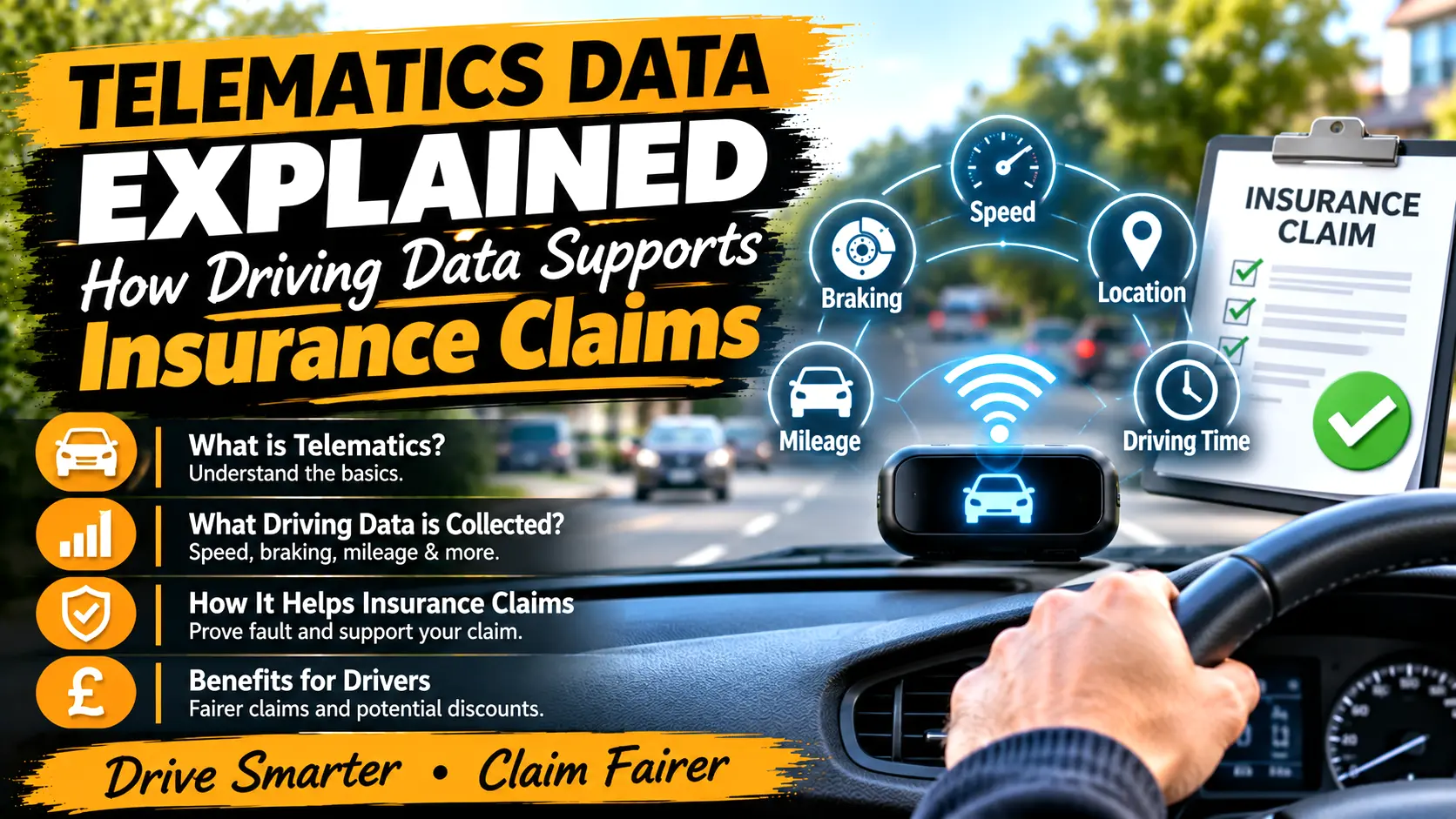
Telematics data can support an insurance claim by helping insurers check recorded driving against an account of an accident. It may help clarify where a vehicle was and how it was moving. Insurers can use that information to assess responsibility and investigate conflicting accounts. But data does not automatically prove who caused a crash. Its accuracy, meaning and limits still need checking.
This guide explains what telematics records and how it can help. It also covers other evidence, requests for your information and ways to question a reading. The aim is a clearer claim, not blind trust in a device.
Telematics data is information collected about a vehicle’s use. In motor insurance, it helps an insurer understand when and how the vehicle is driven. The technology may be built into the car, fitted as a separate “black box” or supplied through an app. The records can influence insurance pricing and help after an accident.
The device records information; people and systems then interpret it. That distinction matters. A record may help explain an event, but its meaning depends on the question being asked. If the information is disputed, the insurer should be able to explain how its accuracy was checked.
No. A driving score summarises selected behaviour using an insurer’s method. The underlying records contain the information used to produce that score. Different insurers may assess driving behaviour differently, so their scores are not directly interchangeable.
A low score is not, by itself, a verdict on an accident. If a particular journey is in dispute, the relevant records need attention. The Ombudsman may examine both trip data and cumulative scores when investigating telematics complaints. It may also request an explanation of the scoring method.
Telematics systems do not all collect or present the same information. Common measures include distance, journey time, speed, road types and braking patterns. Check your policy and privacy information to understand your own system. Do not assume that an app screen shows everything held about you.
| Information | What It May Help Examine | What Still Needs Checking |
| Recorded Location | Whether a recorded journey is consistent with the reported location. | Whether the location data is accurate and sufficiently precise. |
| Journey Time | Whether the recorded journey aligns with the reported incident timeline. | The period covered by the record, including timestamps and possible delays. |
| Speed | How the vehicle was travelling at a particular point during the journey. | The accuracy of the readings, road conditions and applicable speed limits. |
| Braking Patterns | Changes in vehicle movement, including sudden or repeated braking. | The circumstances that caused the driver to brake and the wider traffic conditions. |
| Distance and Route Information | Whether the recorded journey and route are consistent with the driver’s account. | Whether the information is complete, reliable and relevant to the incident. |
| Driving Score | How the insurer summarises recorded driving behaviour using its scoring system. | The underlying telematics data, scoring criteria and limitations of the assessment. |
These are possible uses, not proof that every system can answer every question. The Ombudsman specifically checks how insurers validate information such as vehicle location and the applicable speed limit.
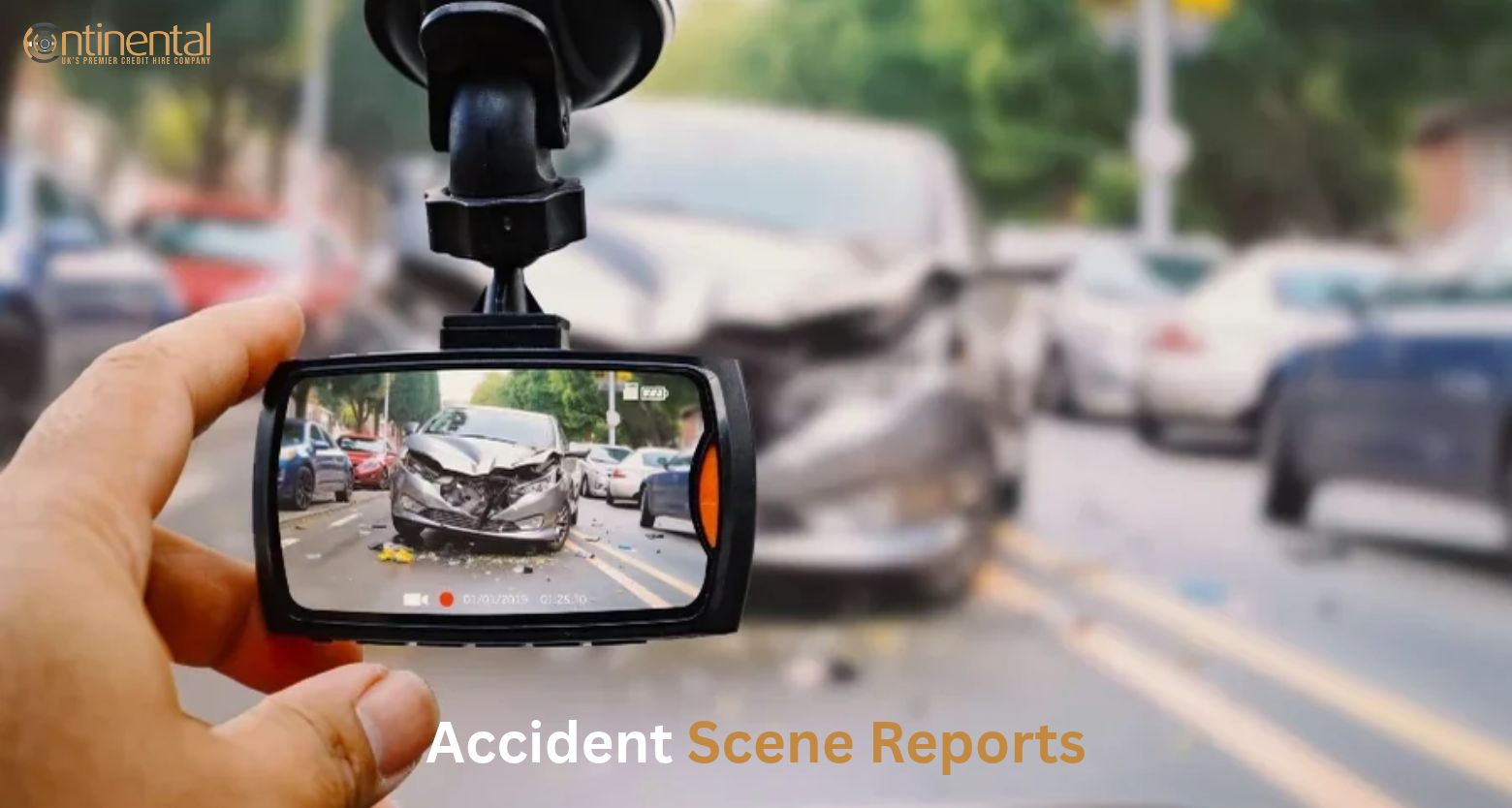
Do not assume that it does. The insurance guidance describes black boxes and apps collecting driving information; it does not mean every system records the road scene. Check whether your own setup includes a camera. Driving records and video should not be treated as the same evidence.
Telematics can provide an independent record against which an account can be checked. Industry guidance identifies improved claims handling as a potential benefit. It says the information can help assess responsibility and reduce the risk of honest drivers becoming victims of fraud. These are possible benefits, not guaranteed outcomes.
The useful question is not simply, “Is there data?” It is, “Which disputed fact can this information help examine?” Keep that question at the centre of the investigation.
A claim may involve disagreement about when or where an event happened. Relevant journey records may help test whether an account fits the recorded information. However, the insurer must first establish that the records are accurate. A timestamp or map point should not be accepted without question when there is a specific reason to doubt it.
If two accounts differ, driving information may provide another source of evidence. It could support part of an account or raise questions needing further checks. It should not be treated as a shortcut around investigating those questions. The wider circumstances still matter.
Telematics may help identify inconsistencies in a claim. That is one reason industry guidance links it with reducing fraud risk. But an inconsistency is not automatically fraud. Errors and disputes about recorded information also occur and need investigation.
It may help clarify a disputed point sooner. However, there is no fixed settlement time that follows from having a black box. The benefit depends on what information exists and whether it answers the issue. A claim can still need further checks.
Context matters as much as a number. A speed reading describes a measurement, while a braking record describes movement. Neither should be treated as a complete account of the surrounding road scene. Accuracy checks and interpretation remain important.
A sensible claims process distinguishes the recorded fact from the conclusion drawn from it. Ask what the information shows, what it does not show and how it supports the decision. If the explanation relies on a driving score, ask how the relevant journey records were considered.
A record of braking does not, by itself, explain why the driver reacted. That needs context from the account and any other evidence available. The Ombudsman recognises complaints where drivers dispute what braking scores say about their behaviour. It examines the records and how the scores were produced.
A disagreement does not prove that a device failed. Equally, the presence of a reading does not remove the need to investigate a credible concern. The insurer should explain its checks rather than simply repeat the result. Those checks may include the device, location and speed-limit information.
Imagine a driver brakes to avoid an object in the road. A braking record may help place that action within the journey. It would not, by itself, identify the object or explain the full scene. This is an illustration, not a reported case or a claim handled by professionals.
Treat telematics as one part of the evidence, not a replacement for everything else. A useful investigation compares the records with the accounts and supporting material available. In telematics complaints, the Ombudsman considers both sides and the evidence presented. It may also request policy documents, contact records and detailed driving data.
For your own records, keep relevant photographs, messages and any footage you hold. Write a clear account while the event is fresh. Separate what you saw from what you later inferred. If another record appears to conflict with your account, explain the specific difference.
Once immediate safety needs have been addressed:
Do not rely on a driving-score screenshot alone. If the issue concerns a particular trip, identify that journey and ask about the relevant records. The data behind a score may be more useful than the summary shown in an app.
Start with a precise concern. “The data is wrong” is less useful than identifying the journey, time or location you dispute. Explain what you believe happened and provide any relevant supporting information. Ask the insurer to explain how the reading was checked.
The Ombudsman’s guidance describes checks on the device, the vehicle’s location and the correct speed limit. It also examines data behind scores over time. That gives you a useful framework for questions, though it does not guarantee a particular complaint outcome.
Keep the exchange in writing where possible. A clear record helps show what you asked and how the business responded.
You can ask an organisation for copies of personal information it holds about you. This is known as a subject access request. Your request can identify the incident date and relevant journey. The right concerns your personal information, not an automatic entitlement to every internal document or another person’s data.
Organisations usually have one month to respond. Some requests can take longer, and identity or clarification requirements can affect the timing. Ask separately for a plain-English explanation of the claims decision; receiving data and understanding a decision are related but different tasks.
Use the business’s formal complaint process and keep its response. For telematics insurance complaints, the Ombudsman’s guidance says businesses should respond within eight weeks. If there is no response in time, or you disagree with it, you can ask the Ombudsman to consider an eligible complaint. Follow the referral instructions and deadlines in the final response.
Could driving data help explain what happened in your accident? It may provide useful evidence about the recorded journey. But a reading needs accuracy checks and context before conclusions are drawn. A driving score is not a substitute for that work.
Keep your account clear, save relevant records and question specific errors. Ask the insurer to explain both the information and its reasoning. Telematics is most useful when it helps build a clearer picture—not when it is treated as an unquestionable verdict.
It is information collected about a vehicle’s use. It can come from built-in technology, a fitted device or an app. Insurers use it for purposes including pricing and claims handling.
It may support your account and help assess responsibility. Its value depends on what was recorded and whether it is accurate. It does not guarantee a finding in your favour.
No, systems and insurance policies differ. Common measures include mileage, speed, journey times and braking patterns. Check your policy and data information for details.
A score is a summary produced by a scoring method. It is not a complete account of an accident. Relevant trip records and their accuracy need separate attention.
Yes, accuracy is a recognised source of complaints. Insurers may need to check the device, location and speed-limit information. A disputed reading should be investigated rather than assumed wrong.
You can request personal information held about you. This is called a subject access request. Some information may be withheld where a lawful exemption applies.
It may help clarify relevant facts. It does not create a guaranteed settlement deadline. Further investigation may still be needed.
Most telematics policies assess how the vehicle is driven overall. This can include driving by other authorised users. Ask how a particular journey has been attributed if that matters to the dispute.
Insurers must protect personal data and have a lawful basis for sharing it. Specialist providers may access information while delivering the policy. Read the privacy information to understand the purposes and recipients.
Complain to the relevant business first. If you remain unhappy or do not receive a response in time, the Ombudsman may consider an eligible complaint. Check the applicable referral requirements.
Has an accident left you unsure what to do next? Continental Car Hire offers specialist non-fault accident support, including replacement credit hire, vehicle recovery and accident repair services. Its website lists a fleet of 200+ vehicles and fee-free consultations. Call 0208 743 7469 or email info@continentalcarhire.co.uk to discuss your circumstances. You can also visit 142 Bentworth Road, London W12 7AH. Before accepting any service, ask the team to confirm eligibility, availability, charges and your obligations under the proposed agreement. Support should begin with clear terms, not assumptions.
A non-fault accident car hire UK service gives you a replacement car
A non-fault accident car hire UK service gives you a replacement car

A non-fault accident car hire UK service gives you a replacement car
A non-fault accident car hire UK service gives you a replacement car

A non-fault accident car hire UK service gives you a replacement car
A non-fault accident car hire UK service gives you a replacement car
Copyright © 2026 Continental Car Hire Ltd. All Rights Reserved.
Continental Car Hire Ltd is authorised and regulated by the Financial Conduct authority (FRN 711301)