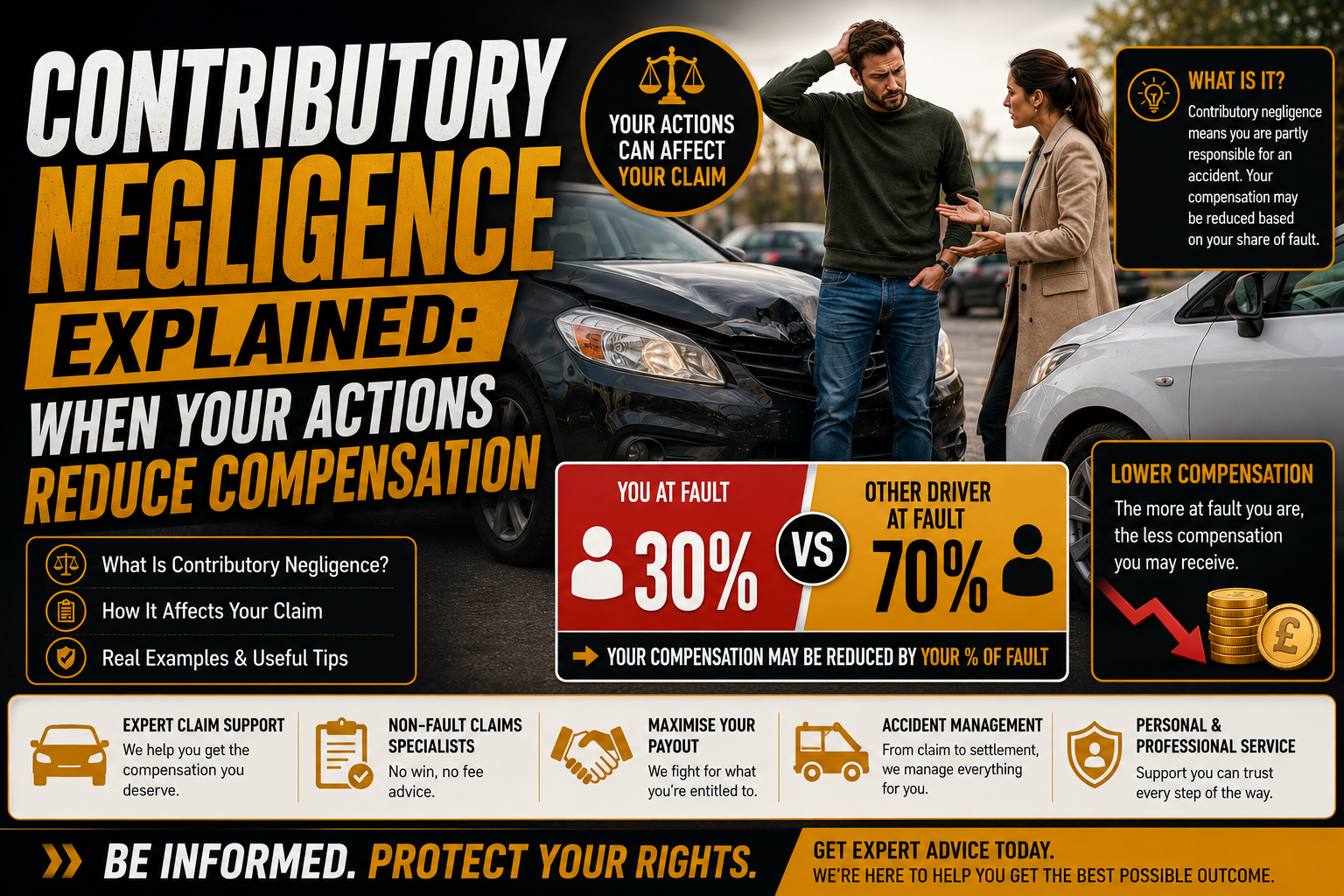
Contributory Negligence Explained: When Your Actions Reduce Compensation
A non-fault accident car hire UK service gives you a replacement car
Home » Automotive Blog » Non-Fault Claim: How to Claim When Another Driver Is Responsible
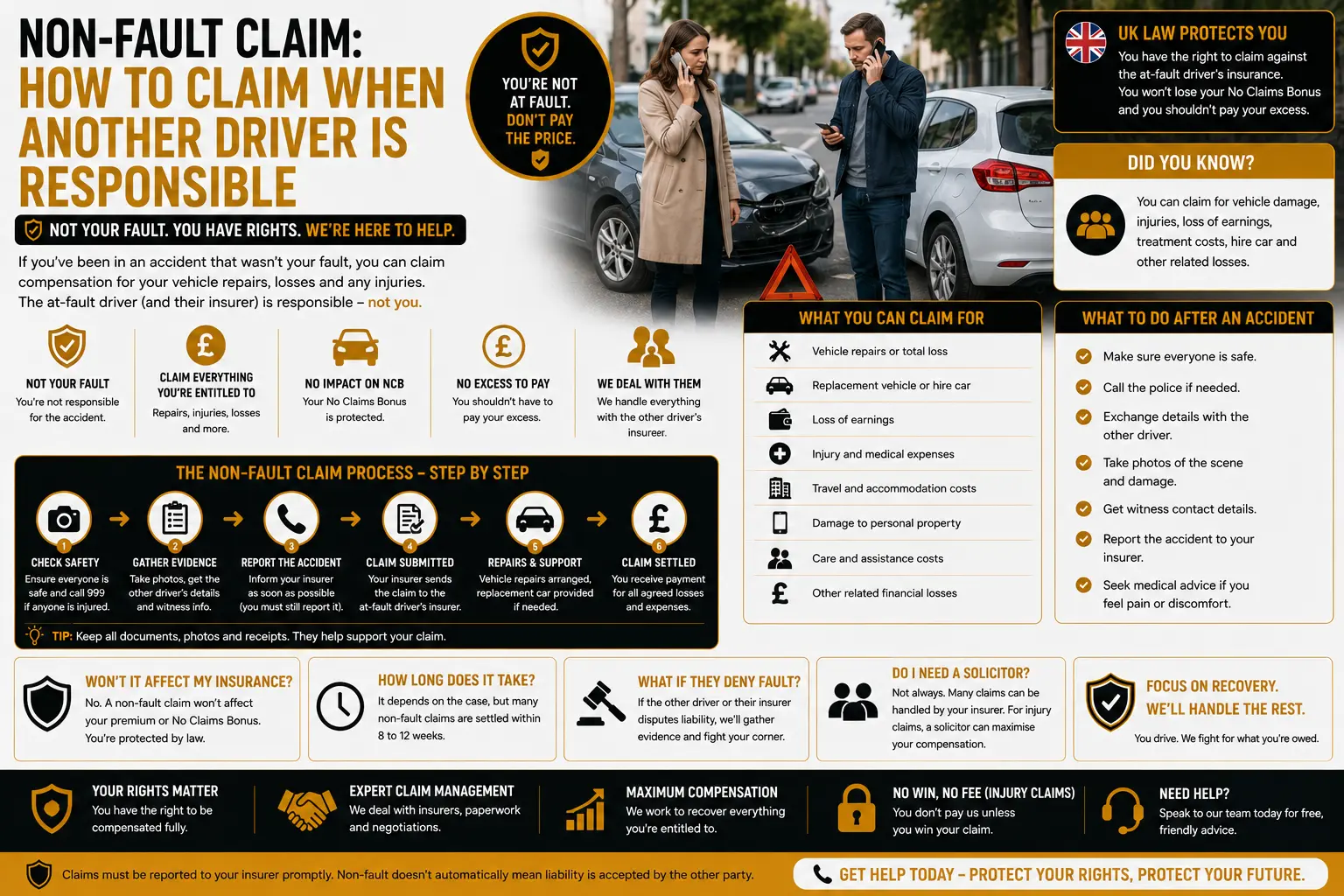
A non-fault claim starts when another driver causes the accident, but proving what happened is still important. You need to report the crash, collect evidence and decide who should handle the case. Repairs, a replacement car, your policy excess and other losses may all form part of the process. Liability can also affect how the claim appears on your insurance record. This guide takes you through each stage in simple terms.
Good evidence makes a non-fault car accident claim easier to handle. Once everyone is safe, collect as much information as you reasonably can.
Try to get:
You should also tell your insurer about the accident, even if you do not plan to claim through them. GOV.UK confirms that drivers must report accidents to their insurer.
There are three common ways to manage a non-fault claim.
| Route | What Happens | Good to Know |
| Your insurer | Deals with repairs and may recover its costs from the responsible party | You may need to pay your excess initially |
| Other driver’s insurer | You claim against the third-party insurer directly | Usually easier when liability is clear |
| Accident management company | May arrange repairs, recovery and a replacement vehicle | Check any credit hire or other agreement carefully |
The Financial Ombudsman confirms that all three routes are commonly used after a non-fault accident.
There is no perfect route for everyone. Your insurance cover, the evidence and whether liability is accepted should guide the choice.
Insurers do not decide blame simply because one driver insists they were right. A strong non-fault claim is built around facts.
Useful evidence includes:
Keep original files and give a clear account of what happened. The Financial Ombudsman says insurers may consider driver accounts, witness statements, CCTV and engineer evidence when deciding liability.
If your car is damaged, your insurer or the at-fault insurer may arrange repairs or settle it as a total loss. You may also need a non-fault replacement car while yours is off the road.
| Option | What It Means |
| Courtesy car | Usually provided through your insurer or an approved repairer while your car is being repaired |
| Credit hire car | Provided under a separate credit hire agreement, with the hire costs typically claimed from the at-fault insurer |
Credit hire is not automatically free. Read the agreement carefully, as the other insurer may dispute the hire cost or how long the car was needed.
If your own insurer handles the case, you may pay your policy excess first. Once responsibility is settled, you can usually try to recover the insurance excess from the other side.
An uninsured losses claim can also cover reasonable costs that your own policy does not pay.
These may include:
Keep receipts, wage records and invoices. Citizens Advice says these types of losses may be claimed from the responsible party.
The position on a no claims bonus after non-fault accident can be confusing.
If your insurer pays your repair costs, your bonus may be affected while it tries to recover that money. If you are confirmed as not at fault by renewal, the Financial Ombudsman says your existing bonus should not be reduced because of the claim.
However, you may not earn an extra no-claims year for that policy period.
A disputed non-fault claim does not mean you have lost. It simply means the evidence becomes more important.
If liability is challenged:
If you think your insurer made an unfair liability decision, complain to the insurer first. The Financial Ombudsman may then be able to review how the decision was reached.
If the responsible driver has no insurance or cannot be traced, the Motor Insurers’ Bureau may be able to help.
This can include uninsured and hit-and-run cases. Report the incident promptly and keep registration details, photos, video and witness information. GOV.UK also says accidents involving uninsured drivers should be reported to the police.
A non-fault claim is easier to protect when evidence is collected from the start. Report the crash quickly, choose the right claim route and keep proof of every reasonable cost. Understand the difference between courtesy cars and credit hire before agreeing to replacement transport. If liability is disputed, strong evidence can make a major difference. The aim is to recover genuine losses without creating extra costs you did not need.
It generally means another party was responsible and the insurer can recover its costs. Liability may take time to confirm. The insurance record can change while recovery remains open.
Report the accident and collect evidence as soon as possible. You can use your own insurer, the other driver’s insurer or a suitable claims service. The best route depends on your cover and liability.
Yes, you should report the accident even if you do not make a claim. This is normally required under your policy. GOV.UK also tells drivers to notify their insurer.
You may pay it if you claim through your own policy. It can usually be claimed back once the other side accepts liability. Legal expenses cover may help with recovery.
Yes, you can contact them directly after the accident. This can work well when their driver accepts responsibility. Disputed liability may make the process slower.
You may qualify for a courtesy car or another form of replacement transport. Credit hire is also an option in some cases. Always check the agreement and your responsibilities first.
It may have a temporary effect while your insurer recovers its costs. If non-fault liability is confirmed by renewal, your existing bonus should normally remain. You may still miss an extra year’s bonus.
Reasonable uninsured losses may be recoverable from the responsible party. These can include excess, travel costs and lost earnings. Keep clear proof for every amount claimed.
Your insurer will compare both accounts with the available evidence. Photos, witnesses, CCTV and dashcam footage can become very useful. A dispute may delay the case rather than end it.
The Motor Insurers’ Bureau may be able to deal with the case. It handles many claims involving uninsured or untraced motorists. Keep evidence and report the incident promptly.
A non-fault accident car hire UK service gives you a replacement car
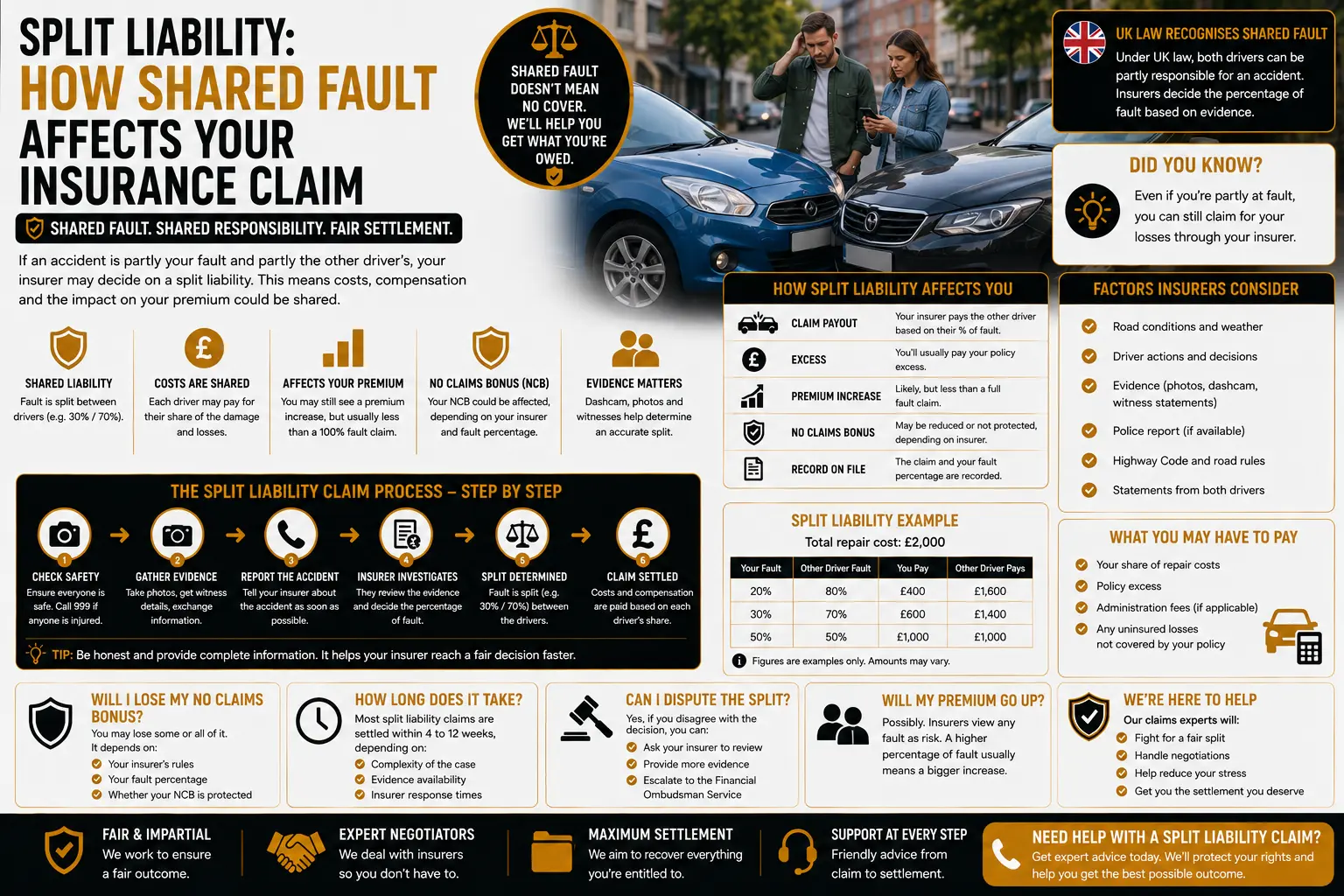
A non-fault accident car hire UK service gives you a replacement car
A non-fault accident car hire UK service gives you a replacement car
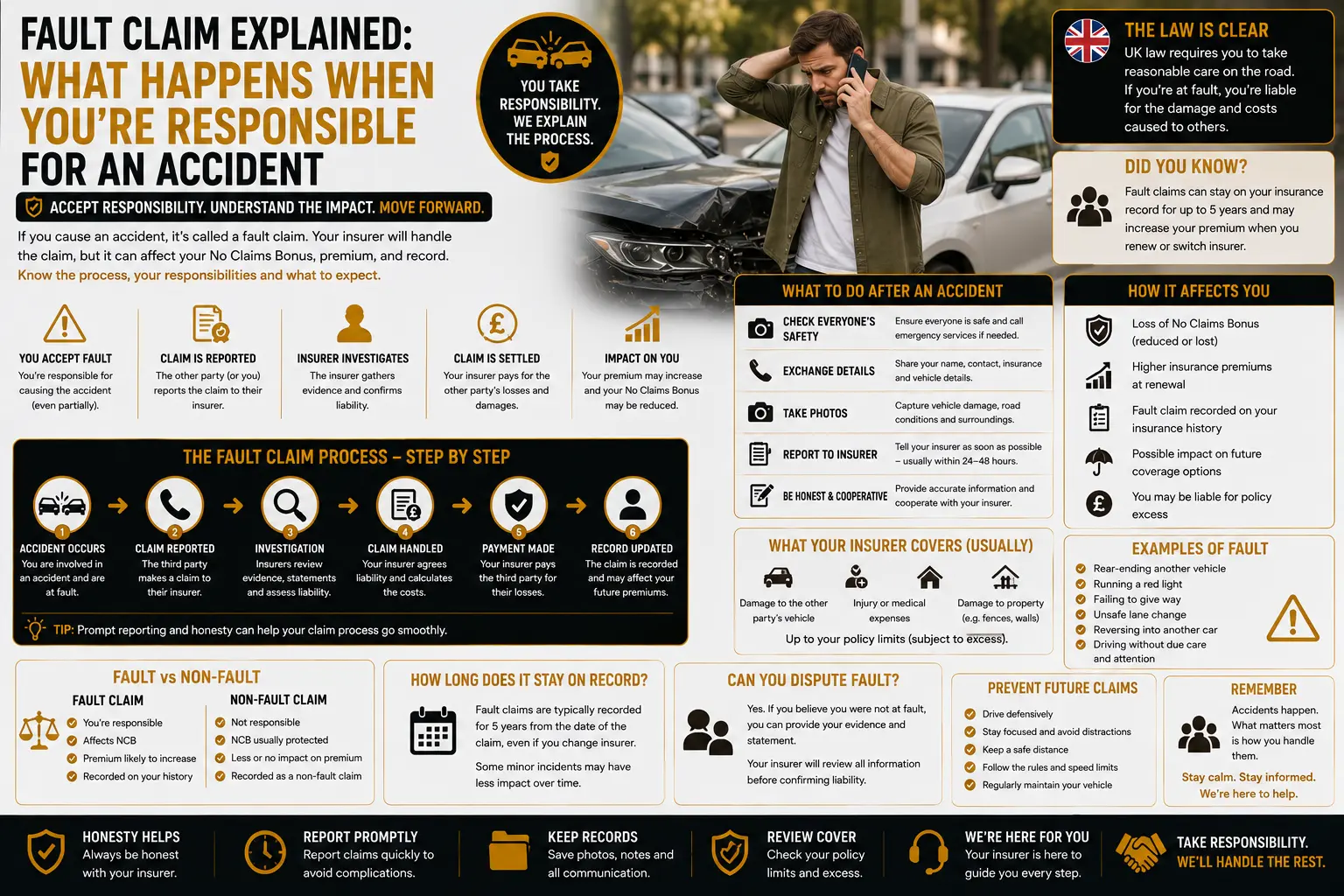
A non-fault accident car hire UK service gives you a replacement car
A non-fault accident car hire UK service gives you a replacement car
A non-fault accident car hire UK service gives you a replacement car