
Contributory Negligence Explained: When Your Actions Reduce Compensation
A non-fault accident car hire UK service gives you a replacement car
Home » Automotive Blog » Personal Injury Claim: A Complete Guide to Injury Compensation
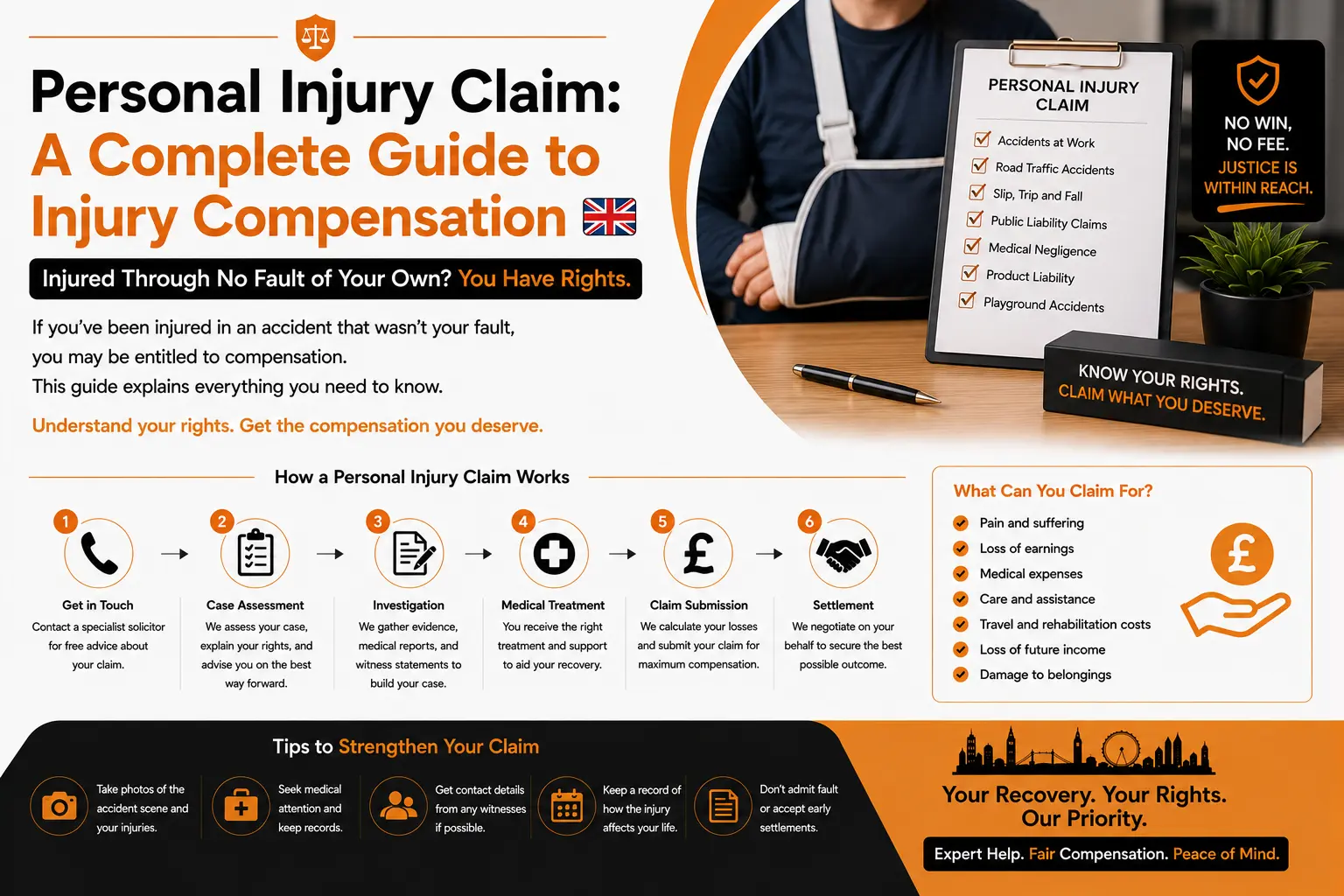
A personal injury claim starts when an accident harms your body or health. It may happen after a road crash, fall, work accident, or unsafe place. The claim is not only about saying you feel pain. You need to show what happened, how you were hurt, and what changed after it. This guide explains proof, medical checks, lost wages, costs, delays, and settlement in simple words.
A PI claim is a request for payment after an injury. It is about harm to your body, health, or daily life. It is not mainly about car damage or broken property.
Simple examples include a driver hurt in a crash, a worker hurt by unsafe tools, or a shopper hurt by a wet floor. The main point is simple. Someone was hurt, and another person or business may have failed to take proper care.
You may make an accident injury claim when the accident was not fully your fault. This can happen when someone acts carelessly. It can also happen when a place, vehicle, tool, or system is unsafe.
You do not need every answer on the first day. Start with the basics. Write down the date, place, people involved, and what happened. Early notes help because memories fade quickly.
Most claims need three clear points. These points make the story easy to follow.
| What to Show | Simple Meaning |
| What happened | Explain the accident or unsafe event that caused the claim. |
| How you were hurt | Show the connection between the incident and your injuries. |
| What changed | Describe how the injury affected your pain, finances, work, care needs, or daily life. |
A strong claim connects all three parts. If one part is missing, the claim may slow down. Clear notes and records can make the link easier to prove.
Medical evidence helps prove the injury. It may include GP notes, hospital records, scan results, treatment plans, or a medical report. These records show what was found and how recovery may look.
Get checked if you feel pain or symptoms. Some injuries feel worse after a day or two. For whiplash road injury claims, GOV.UK says settlement cannot happen without medical evidence.
Injury compensation may cover pain and the effect on daily life. It may also cover real costs caused by the accident. These can include travel, medicine, care, and damaged personal items.
The amount depends on the proof. A short injury may be valued differently from a long injury. Keep receipts, appointment notes, travel records, and messages. Small records can help show the real impact.
Loss of earnings can matter if you missed work. It may include wages, overtime, bonuses, or future work problems. Clear money proof is important.
Keep payslips, bank records, and employer letters. They show what you earned before the accident. They also show what changed after it. If you paid for care or treatment, keep proof of those treatment costs too.
The claim journey is usually quite simple. The accident is reported. Proof is collected. The injury is checked. Losses are added. Then an offer is reviewed.
In a PI claim, you may need to answer questions. Keep your answers clear and honest. Do not guess if you are unsure. Say what you know and what still needs checking.
A compensation settlement should match the injury and the proof. It may look at pain, recovery time, lost pay, costs, care, and future impact. The first offer is not always the final answer.
Ask for a clear breakdown before accepting. Check what has been included and what has been missed. Do not rush if your recovery is still changing. A fair offer should reflect the real effect of the injury.
Delays often happen when records are missing. They can also happen when the injury link is unclear. Weak wage proof can slow the money side too.
Recovery can also take time to understand. Some injuries need more checks before the value is clear. Keep short notes after appointments. This can help support fair injury compensation later.
A personal injury claim works best when the accident, injury, and losses are clear. Get medical help early. Save receipts, work records, photos, messages, and appointment notes. Keep everything in one place. The aim is fair payment for real injury and real life impact.
A personal injury claim is made after an accident causes injury. It focuses on harm to your body, health, or daily life. It may include pain, costs, treatment, care, and missed work.
A PI claim means a claim for harm caused by an accident. The harm may affect your body, work, sleep, travel, or home life. It is often used as a short name for this claim type.
You may be able to claim if someone else caused harm. This may involve unsafe actions, poor care, or an unsafe place. You need proof that links the accident to your injury.
Useful proof includes photos, messages, receipts, and witness details. Medical records and work records can also help. Keep dates clear from the start, so the story is easy to follow.
It helps show what injury you suffered. It also shows treatment, symptoms, and recovery time. Without it, the injury may be harder to prove.
It can include pain, recovery time, and daily life impact. It may also include travel, care, medicine, and damaged items. The final amount depends on proof and the injury level.
Yes, you may claim lost pay if the injury stopped work. Payslips and employer letters can support this. Bank records may also help show income changes.
Yes, you may claim treatment costs if they are linked to the injury. Keep receipts, appointment records, and payment proof. These records help show what you had to spend.
The time can change from case to case. Simple claims may finish faster than serious ones. Ongoing symptoms can make the process take longer.
It is worked out by checking injury and losses. Recovery time, costs, lost work, and future impact may count. Ask for a clear breakdown before accepting any offer.
A non-fault accident car hire UK service gives you a replacement car
A non-fault accident car hire UK service gives you a replacement car
A non-fault accident car hire UK service gives you a replacement car
A non-fault accident car hire UK service gives you a replacement car

A non-fault accident car hire UK service gives you a replacement car
A non-fault accident car hire UK service gives you a replacement car