Contributory Negligence Explained: When Your Actions Reduce Compensation
A non-fault accident car hire UK service gives you a replacement car
Home » Automotive Blog » Third Party in Car Insurance: What It Means and Why It Matters
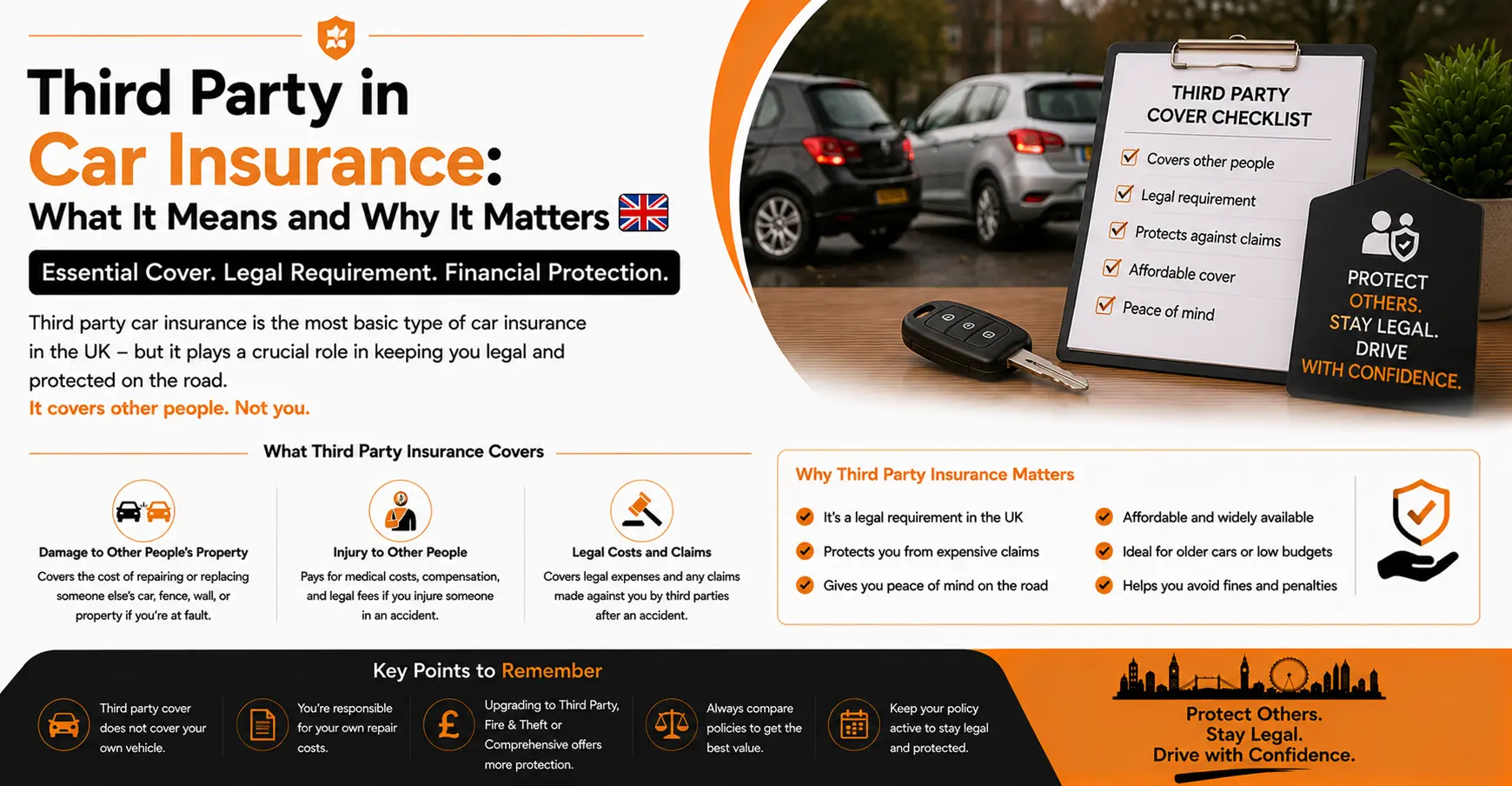
Third party in car insurance is a common term, but many drivers still find it confusing. It does not mean you, and it does not mean your insurance company. It usually means another person affected by your driving, such as another driver, passenger, cyclist, or property owner. This guide explains who the third party is, what cover may pay for, and what happens after a crash. It also compares cover types, so you can choose with more care.
Third party in car insurance means the other person involved in an accident or loss. You are the first party because you bought the policy. Your insurance company is the second party because it gives the cover.
The third party is the person who suffers loss or damage. This could be a driver, walker, cyclist, passenger, or shop owner. It can also be someone whose parked car, wall, fence, or gate was damaged.
This table makes the wording easier to understand. It also helps you see who is involved after a crash.
| Party | Simple Meaning |
| First party | You, the driver or policyholder covered by the insurance policy. |
| Second party | Your insurance company that provides the cover. |
| Third party | The other person, vehicle owner, or property affected by the incident. |
This matters because each side has a different role. You report the accident. The insurance company checks the claim. The third party may ask for repair costs or injury costs.
Third party car insurance is the basic level of car insurance. In the UK, third-party cover is the legal minimum needed to drive on public roads. It covers injury or damage you cause to other people, vehicles, animals, or property. It does not usually pay to repair your own car.
This is where many drivers get caught out. They think basic cover protects their own car too. In most cases, it does not. If your car is damaged in a fault accident, you may need to pay for your own repairs.
Third party liability means your possible responsibility for harm caused to another person. This can include damage to their car, injury, or damage to their property.
For example, you may hit another vehicle at a junction. You may reverse into a wall or damage a shopfront. If the accident was your fault, your insurance may deal with the other person’s loss.
The cover you choose changes what gets paid. This is why drivers should compare more than price.
| Cover Type | Covers Other People? | Covers Your Own Car? |
| Third party only cover | Yes | Usually no |
| Third party, fire and theft | Yes | Fire and theft only |
| Comprehensive cover | Yes | Usually yes |
This is where comprehensive vs third party insurance becomes important. Comprehensive cover usually gives wider protection. It may cost more, but not always. Always check both cover types before buying.
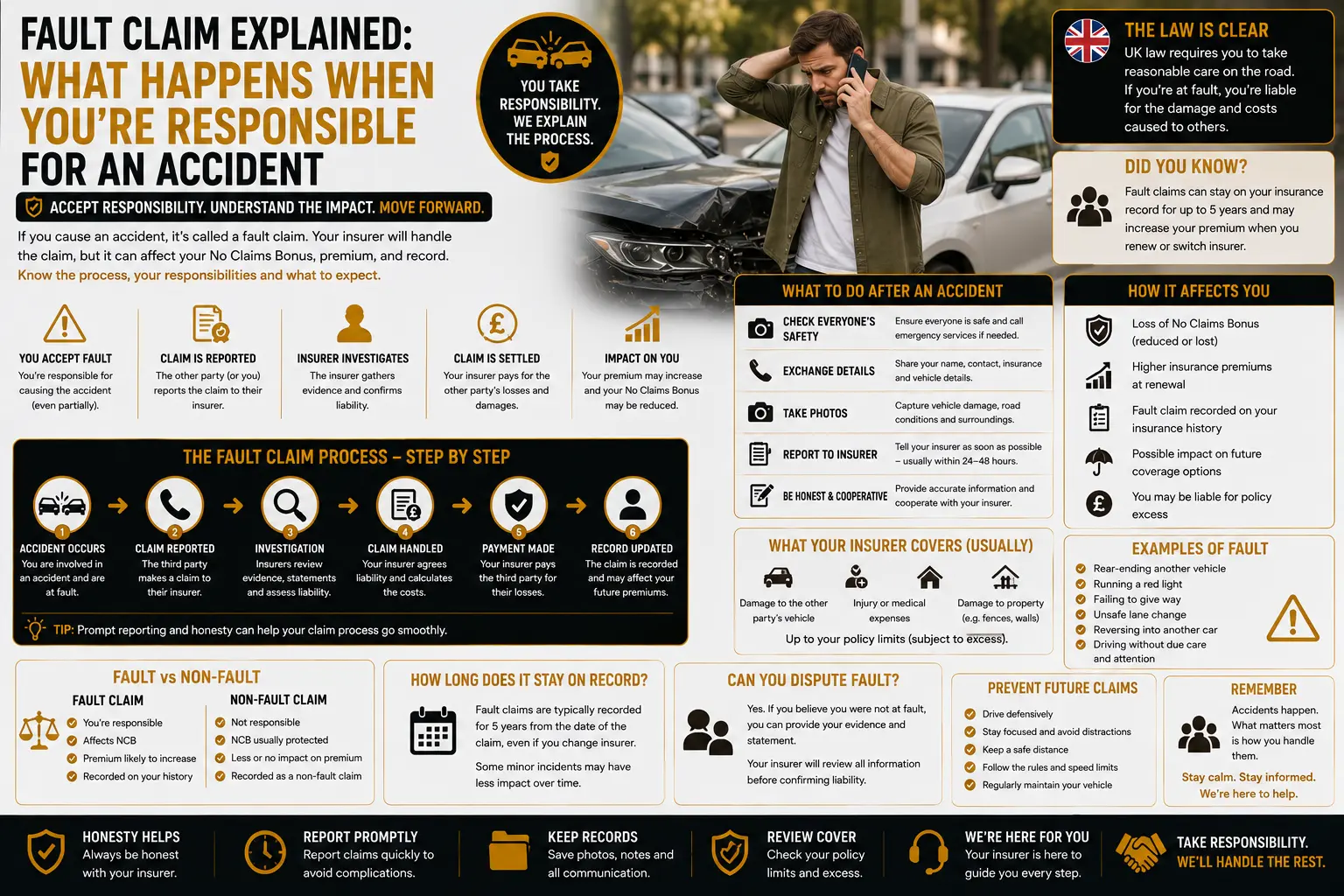
A third party claim starts when another affected person asks for help after an accident. This may involve vehicle damage, property damage, or injury.
The usual steps are simple. You report the crash to your insurance company. They ask for details, check the evidence, and decide what happened. Then they may arrange payment, repairs, or further checks.
After a crash, your first job is safety. Stop the car if it is safe, check for injuries, and move away from danger if needed.
Then collect clear details:
If details are not shared at the scene, some accidents must be reported to the police within 24 hours. You must also give your name, address, and vehicle registration to anyone with a fair reason to ask.
Many people think third party only cover is always cheaper. That sounds logical, but prices do not always work that way.
Insurance prices depend on risk. Your age, car, job, postcode, mileage, and driving history can all change the cost. Some drivers may find wider cover costs the same, or even less. This is why comparing comprehensive vs third party insurance is always worth doing.
One common mistake is thinking third party car insurance covers your own car. It usually covers other people, not your own damage.
Another mistake is admitting blame too quickly. You can check everyone is safe without saying it was your fault. You should also report even a small crash. A third party claim can appear later, even when damage looked minor.
Third party in car insurance is more than a policy phrase. It helps you understand who may be paid after an accident. It also shows what your cover may not pay for.
Understanding third party liability can help you choose better cover. It can also help you act with more care after a crash. If you know the difference, the claim process feels less confusing.
Third-party in car insurance matters because it affects real people. It can decide who gets help after a crash and who pays for repairs.
Basic cover may be enough for legal driving, but it may not protect your own car. Before buying, compare cover levels, repair risks, and monthly costs. The right policy should match your car, budget, and daily driving needs.
Third party means another person affected by your driving. This could be another driver, a cyclist, a passenger, or a property owner. It does not mean you or your insurance company.
Yes, third-party cover is the legal minimum for UK road use. It helps cover damage or injury caused to other people. You should still check what your own policy includes.
It usually does not repair your own car. It mainly covers damage or injury caused to others. You may need wider cover for your own repairs.
The third party is the other affected person. It may be another driver, passenger, walker, cyclist, or property owner. It can also include someone whose parked car was damaged.
Third party liability means responsibility for harm caused to someone else. This may include car damage, injury, or property damage. Your insurance may handle this if your policy applies.
A third party claim is made by another affected person. They may ask for repair costs, injury costs, or property damage costs. Your insurance company checks the facts before paying.
No, basic cover is not always cheaper. Some drivers may find comprehensive cover costs less. Always compare prices before choosing.
New drivers should not choose by price alone. They should compare what each policy includes. Wider cover may offer better value in some cases.
You should stop, stay safe, and check for injuries. Then share details and take photos if possible. You should also report the accident as your policy asks.
This term helps you understand who is covered. It also explains what your policy may pay for. Knowing it can reduce stress after an accident.
A non-fault accident car hire UK service gives you a replacement car
A non-fault accident car hire UK service gives you a replacement car
A non-fault accident car hire UK service gives you a replacement car
A non-fault accident car hire UK service gives you a replacement car
A non-fault accident car hire UK service gives you a replacement car
A non-fault accident car hire UK service gives you a replacement car